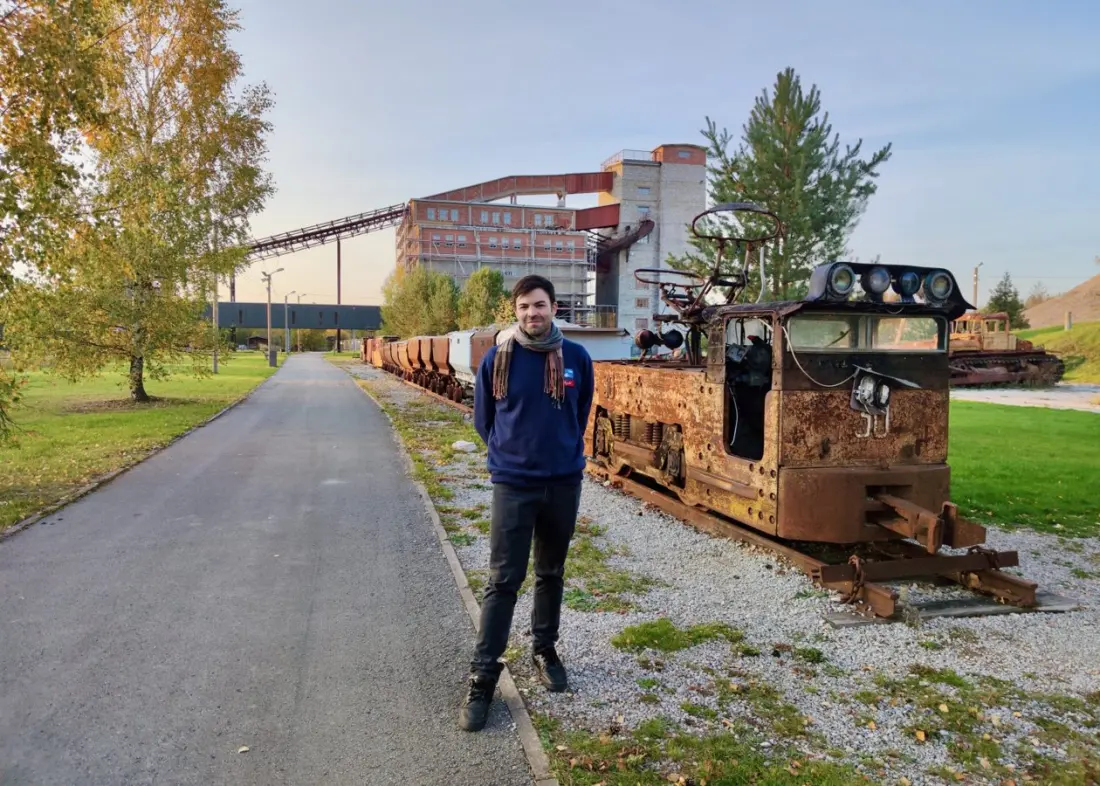
Ida-Virumaa, the oil-shale country on Estonia's north-eastern border with Russia, is often dismissed as the country's "Siberia" — a place people leave, not visit. A new book by anthropologist Francisco Martínez, The Future of Hiding, argues the region deserves a closer look, not despite its awkwardness but because of it.
Martínez spent five years doing fieldwork in towns like Narva, Kiviõli and Sillamäe, getting into places most outsiders never see: private basements, garages, bunkers and dachas. His point is that these shadow spaces aren't eccentric quirks — they're social infrastructure. In them, residents of a region where Estonian, Russian and Soviet histories collide can step back from the pressure to perform an identity, experiment with who they are, and store memories that don't fit the official national story. A basement, in his framing, is where you keep the grandmother's things from Siberia, the Soviet-era cartoons, the parts of yourself the present doesn't quite allow.
The nickname "Siberia" has layered roots. Teachers of Estonian relocating to the region use it half-jokingly to describe a place that feels like Estonia but somehow outside Europe. Yet in the 1930s the same label referred to opportunity: oil shale drew Finnish, Polish, Swedish and Latvian workers to boomtowns where, as Martínez quips, a Peaky Blinders remake would be perfectly at home. After the war, deportations and repopulation left half the original population permanently locked out — some who fled to Sweden or Canada even buried their possessions and drew maps, waiting fifty years to dig them up.
Why should a traveller care? Because Ida-Virumaa is one of Europe's most layered borderlands, and it reads very differently on the ground than in headlines. Sillamäe's Soviet-era architecture, Narva's castle facing Ivangorod across the river, the surreal mining landscapes of Kiviõli — these are places where the twentieth century is still visibly present. Martínez's interviews show the human texture behind them: people wary of institutions, fluid in their identity, and generous once you arrive without judgement (even if some initially mistook the Spanish researcher for a spy or a burglar).
Since the war in Ukraine began, the region has been recast as a geopolitical problem — monument removals, language-policy overhauls and voting restrictions for "grey passport" holders have deepened a sense of incomplete belonging. Travelling there with curiosity rather than assumptions is a small counterweight to that. You won't find polished tourism infrastructure, but you will find one of the most thought-provoking corners of the Baltic — and a book that explains, better than any guidebook, what hiding places mean to the people who keep them.
Story via Estonian World.