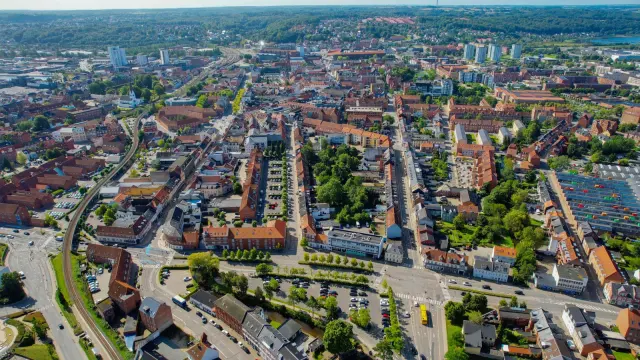
Bergerac has two claims to fame: serious wine and a fictional soldier with an enormous nose. Both are unavoidable, in the best way, in this compact town on the Dordogne river in southern Dordogne-Périgord.
Start at the quay, where flat-bottomed gabarre boats once loaded around 100,000 barrels of wine a year for export to England and the Netherlands, until rail took over. Replica gabarres still cruise the river today, with bilingual commentary covering the port's history plus the flora and fauna — the Dordogne is the last river in Europe to host all eight species of migratory fish, and kingfishers, black kites and nesting geese are regularly spotted.
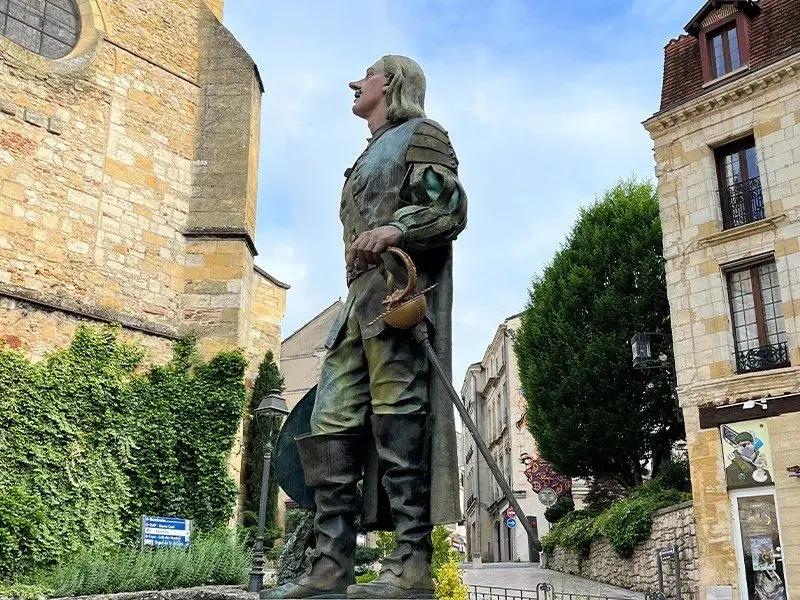
The town itself is easy on foot, a mix of white stone and half-timbered colombage facades. Cyrano de Bergerac, Edmond Rostand's melancholy poet-hero, pops up everywhere: a painted figure gazing up at Roxanne in a church window, and a stone statue in Place de la Myrpe that visitors keep stealing the nose from. The impressive Quai Cyrano tourist office doubles as a wine bar — its upstairs Espace Vin pours free tastings from around 150 local producers, sells at vineyard prices, and throws in cheese and charcuterie platters plus free summer concerts in an ancient cloister. For history, the Dordonha heritage centre is free and covers the town's story (Henry III granted trading privileges in 1254, launching the wine trade with England) alongside bronzes donated by Italian sculptor Costi.
Out in the vineyards, Château de Bridoire near Ribagnac is worth a detour. Known as the 'Castle of Games', it sat abandoned for over 30 years before the Guyot family bought it in 2011; today you can wander 15-plus restored rooms, then play indoor games, tackle a summer maze and meet the farm animals — a good one for families.
Then there's the wine proper. Bergerac and neighbouring Duras produce 17 AOP-status wines across seven Grands Terroirs, in five colours: red, white, rosé, moelleux and dessert. At Domaine Albert de Conti in St-Julien-d'Eymet, third-generation winemaker Guillaume de Conti pours organic whites alongside experimental vintages like Mondeuse. Ten minutes from town, Château de Monbazillac — the world's largest dessert wine producer, run as a co-operative of around 40 growers — makes its sweet wines the hard way: river mist and afternoon sun encourage a fungus that concentrates grape sugar, and everything is hand-picked in multiple passes. Look out for the 2015 and 2025 vintages if you want something special. Lunch with a vineyard view at the nearby Bistrot de Malfourat rounds off the day nicely.
Bergerac suits travellers who want southwest France without the Bordeaux price tag or crowds: a walkable old town, a genuinely interesting wine scene, river trips and castles, all within a short drive of a small international airport. It's an easy base for a slow food-and-wine week, with the honey-coloured villages around Sarlat an option further north in the Black Périgord.
Thanks to The Good Life France for the original story.