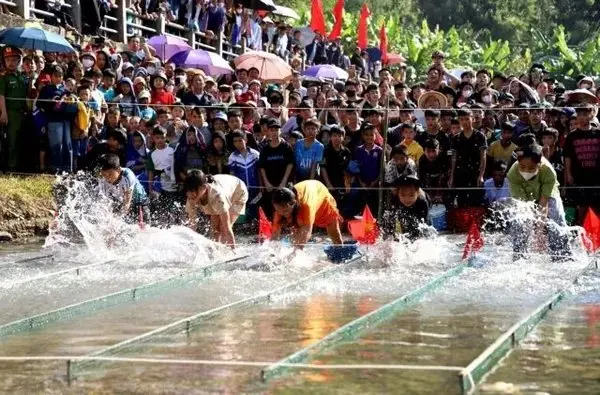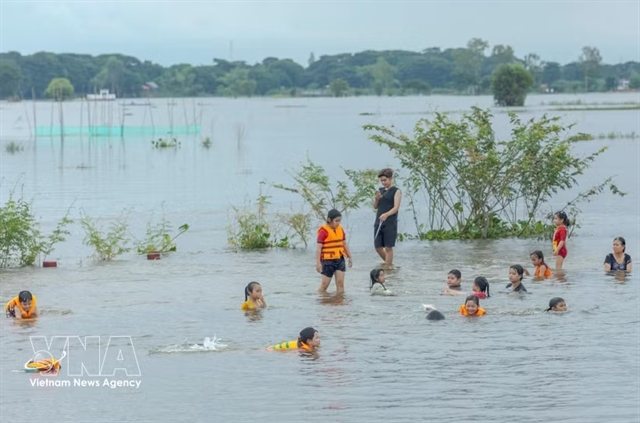
Every year, when the Mekong's floodwaters spill across Vietnam's southern delta, the fields around Cống Bùn Rền in Phú Hữu Commune, An Giang province, turn into an impromptu water park. Locals gather around 4pm daily to swim, splash, drift along the flood-control dyke in small boats and picnic at the water's edge — and visitors are increasingly joining them.
This is the mùa nước nổi, the flood season that shapes life in the Mekong Delta's border headwaters. Rather than a disaster, the annual inundation is welcomed here: it deposits fertile silt, restocks fish stocks and brings wild vegetables and flowers back to life. For generations, children waited for the waters after the summer-autumn rice harvest, then spent afternoons swimming, catching fish, collecting snails and racing rafts made of banana stems. Since modern closed dyke systems have reduced how often fields flood, each return of the water has become something of an event.
The spectacle is low-cost and community-run. Boat rides cost about VNĐ20,000 (under US$1) per person, and roadside vendors sell drinks, snacks and even life jackets. Weekends draw families and friend groups from neighbouring areas, some hiring boats to explore the inundated fields. Local officials in Phú Hữu see an opportunity: combining boat trips, rural activities and local produce into a genuine flood-season tourism product that could create seasonal jobs and boost household incomes — provided safety and the landscape's character are protected.
That safety caveat matters. Water in parts of Phú Hữu has topped 1.3 metres, and depths vary sharply from spot to spot. Authorities have put up warning signs at dangerous locations and urge visitors to wear life jackets, stay near the banks, keep children under constant supervision and steer clear of sluice gates, spillways and strong currents.
Why should a traveller care? Because this is delta culture at its most authentic and unpolished — no ticket booths, no staged performances, just locals sharing the pastime that defined their childhoods. If you're visiting the Mekong Delta between roughly August and November, when the floods arrive, an afternoon in An Giang's flooded fields puts you in the water with the people who live this rhythm every year. Pair it with nearby Châu Đốc, its markets and the sam mountain temples, for a genuinely off-the-beaten-path delta stop before the package tours catch on.