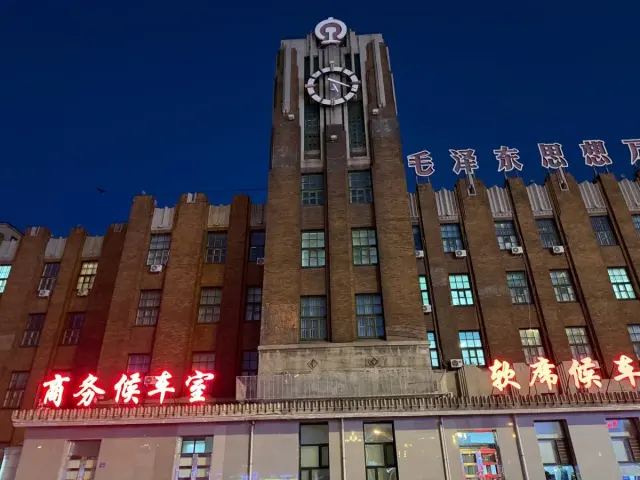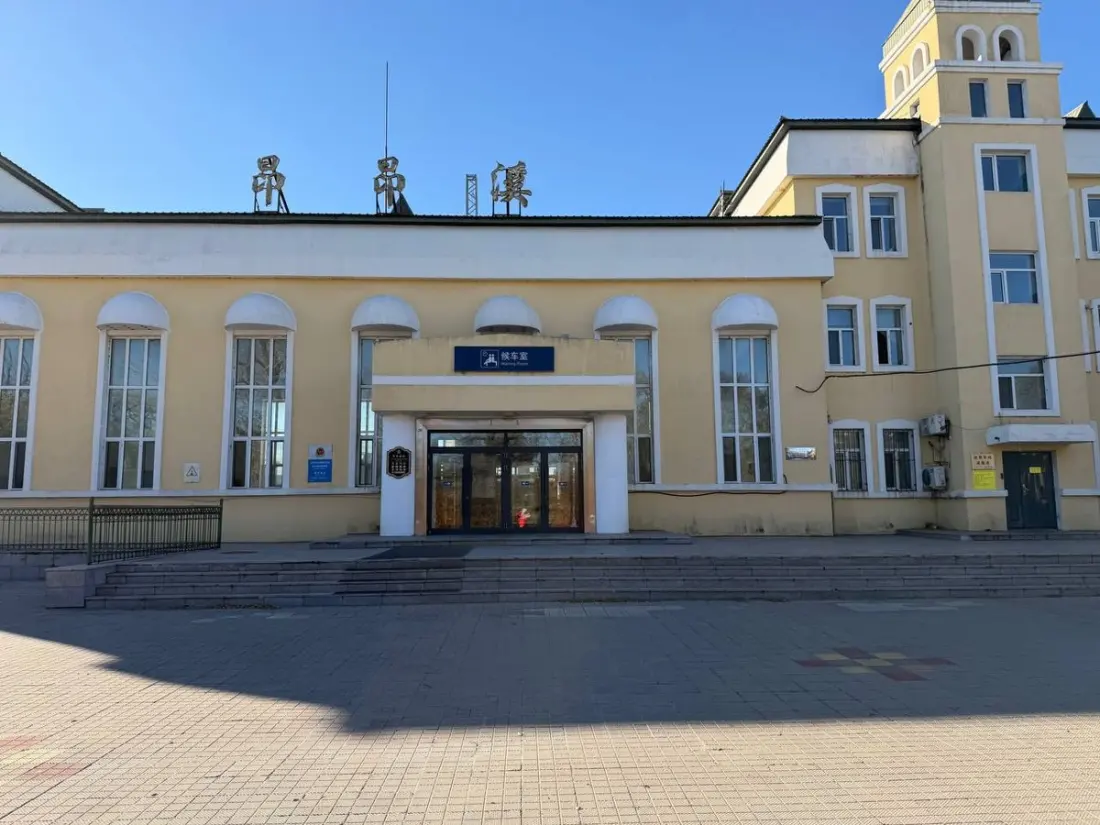
Two hours of exploring old Russian brick buildings in a working-class district of Qiqihar sounds like a niche afternoon — and it is exactly the appeal of Ang'angxi Railway Station in Heilongjiang province, north-east China.
The station opened in 1903 as Qiqihar Station on the Chinese Eastern Railway, a network built by Imperial Russia across Manchuria. Oddly, it sat some 28 km from the city it was named after, so a whole railway settlement grew up around it instead: Russian engineers and their families moved in, followed by merchants and Chinese workers, and by 1907 there was housing, a hospital, a church and a workers' club. The station took its current name in 1924. Its ownership history reads like a summary of the region's 20th century — Russia, the Republic of China, Japanese occupation, the Manchukuo puppet state, then back to China. The original station building served passengers until 1994, when a new station opened, and it was restored in 2020 as part of a wider preservation of the old Russian quarter. A big reason for the polish-up: Chairman Mao travelled through in February 1950 on his way home from the USSR, and former emperor Pu Yi is also among the station's alumni.
What you actually see today is a compact two-storey brick-and-timber station with a wooden veranda — roughly 107 square metres — plus a plaque about the Mao connection. Around it lies Rossiyskaya Street, the old Russian high street, lined with preserved railway workers' houses (some still lived in), the former workers' club, the old railway hospital, engineers' residences, Orthodox church buildings, a historic footbridge and a Russian cemetery. Not everything is accessible; our source couldn't get into the cemetery or reach a Russian statue, and noted the area is still genuinely lived-in, mixing local tourists with residents surprised to see foreigners at all.
Getting there is straightforward. The 1994 station is still functioning, so you can arrive by conventional (not high-speed) train: about 25–40 minutes from Qiqihar for RMB 5–9, around 3.5–4 hours from Harbin for a hard seat at roughly RMB 41.50, or connections west towards Manzhouli for about RMB 91. Services are sparse, so check timetables before planning around them. By car or taxi from downtown Qiqihar it's roughly 40 minutes (an hour with detours), costing RMB 50–80, and negotiating a half-day rate with a driver is easy enough.
Ang'angxi isn't a reason on its own to visit Qiqihar, but it's a genuinely rewarding stop for railway enthusiasts, anyone into early-20th-century architecture, or travellers following China's 'red tourism' trail — and it sits near some abandoned buildings and a giant steel Mao statue worth folding into the same trip.