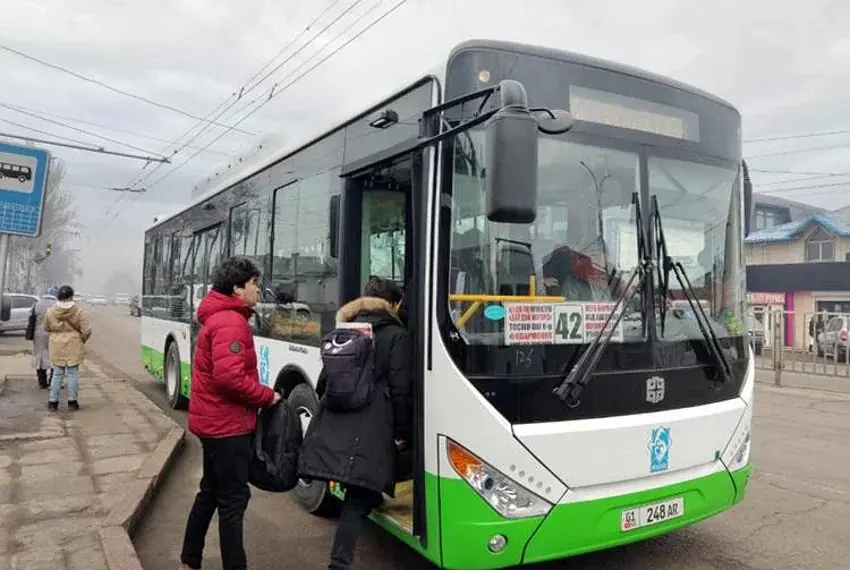
Bishkek's public transport operator is quietly weighing an unusual fix for its driver shortage: recruiting foreign nationals to drive city buses. Bakyt Tabaldiev, chief engineer of the second bus depot of the municipal enterprise Bishkek City Transport, told the Kabar news agency that the idea is under active consideration, though nothing has been decided. For now, the enterprise continues to rely on local drivers.
Tabaldiev framed the potential recruitment as a form of labour migration, drawing a parallel with the hundreds of thousands of Kyrgyz citizens who head to Russia each year for work. In other words, if Kyrgyzstan exports workers, it is open to importing them too — at least behind the wheel of a city bus.
The language question came up naturally, and the answer is pragmatic. Tabaldiev said driver-passenger conversations are kept to a minimum: route information is displayed inside the buses and available through the My City app, so a foreign driver would only need a handful of basic phrases — enough to introduce themselves and state which route they are running. That low bar suggests the city is serious about widening the applicant pool rather than adding restrictive requirements.
In the meantime, the operator is still actively courting local candidates. Kyrgyz citizens holding a Category D driving licence — the category required for large passenger vehicles — are being urged to apply. Two conditions apply: applicants must not be registered with a psychiatric or narcological clinic. Applications can be made through the enterprise, which is based at the intersection of Kurmanjan Datka and Isakeev streets in the capital.
Why does this matter to travellers? Buses and marshrutka minibuses are the backbone of getting around Bishkek, and they're famously cheap — a far cry from Western European fares. A staffing shortfall in a city of over a million people can mean gaps, delays or overcrowded services on the routes visitors actually use, for example between Osh Bazaar, the central Ala-Too Square area and the western bus stations that feed onward travel to Almaty or the Chüy valley. Any move to stabilise the driver workforce, whether local or foreign, should eventually translate into more reliable urban transport for visitors navigating the capital on a budget.
The story also offers a small window into how Bishkek works. The My City app is the city's digital companion for transport information, and knowing it exists saves travellers from fumbling with paper route maps. And the framing of bus driving as labour migration reflects a broader reality: Kyrgyzstan's workforce is deeply shaped by employment flows to Russia, which leaves gaps at home in essential services — from construction to, apparently, the driver's seat of the number 13.
For now, treat this as a watch-this-space development. If Bishkek City Transport does go ahead with foreign recruitment, don't expect visible changes overnight — but do expect the city's already affordable bus network to keep running, staffed by whoever can pass the licence check and learn a few phrases of Kyrgyz or Russian.