
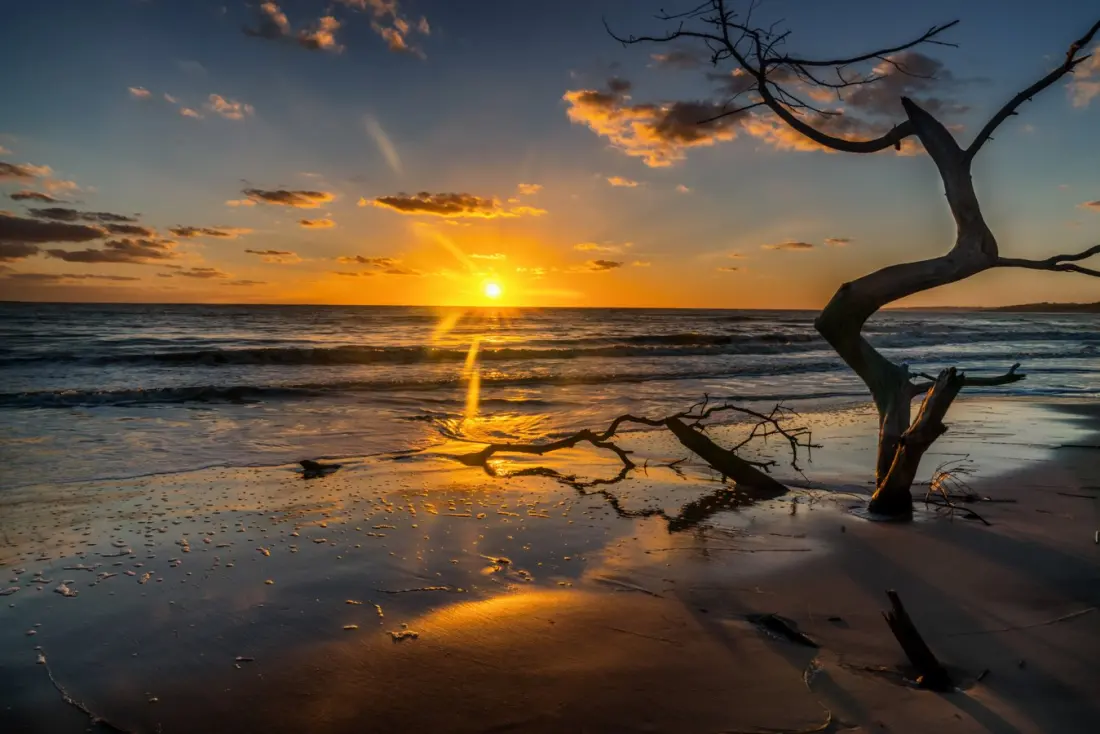
A short drive from Jacksonville's busy beach strips, the shoreline at Big Talbot Island State Park looks almost like a whale graveyard. Pale trunks and root systems, stripped and sun-bleached, lie tangled across the sand. Locals call it Boneyard Beach, and it's one of the strangest — and most photogenic — stretches of coast in the American Southeast.
The trees aren't the result of a single storm. Less than two centuries ago, the shore here was thickly forested. Gradual coastal erosion has swallowed the land, toppling cedars and oaks into the surf, where the tide strips and bleaches them into Dr Seuss-like sculptures. Far from being debris, the fallen trees now do a job: they trap sand and blunt hurricane winds and storm surge. Nearby beaches where driftwood gets cleared away tend to erode noticeably faster.
The beach sits on Nassau Sound, which keeps things noticeably quieter than the high-rises to the south. Swimming is off-limits — the driftwood and currents make it a walking beach rather than a bathing one — but you're free to wander among the timber, scramble over the bigger pieces, and linger. Because it's inside a state park, pocketing a piece of driftwood as a souvenir isn't allowed. Entry costs $3 per vehicle, and most people find an hour or two is plenty to walk, shoot photos and scan the water.
For photographers, the appeal is obvious and ever-changing: no two visits look quite the same, especially at low tide and golden hour. Birders get a bonus line-up too — piping plovers, ospreys and terns are regulars, and bottlenose dolphins sometimes show offshore.
If you want more walking, the Black Rock Trail on neighbouring Amelia Island threads along a dark, rocky shoreline that looks closer to Iceland or Hawaii than to postcard Florida. It's uneven underfoot, so wear proper shoes rather than flip-flops. Head inland on Big Talbot and the park turns into proper wildlife territory: white-tailed deer, opossums and even bobcats live in the protected preserve.
Boneyard Beach is the counter-argument to the spring-break image of Florida. It's rugged, quiet, cheap to enter and unlike anything else on the state's Atlantic coast — an easy half-day trip for anyone based in Jacksonville or Amelia Island who'd rather see nature working than a manicured strip of sand.