Bordeaux has spent centuries perfecting wine. A young distillery called Maison Lineti, based near Saint-Émilion, is now betting those same skills translate to single malt whisky – and its first three bottles, released this winter, make a convincing case.
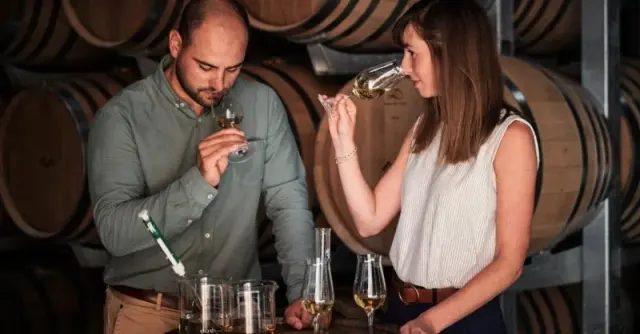
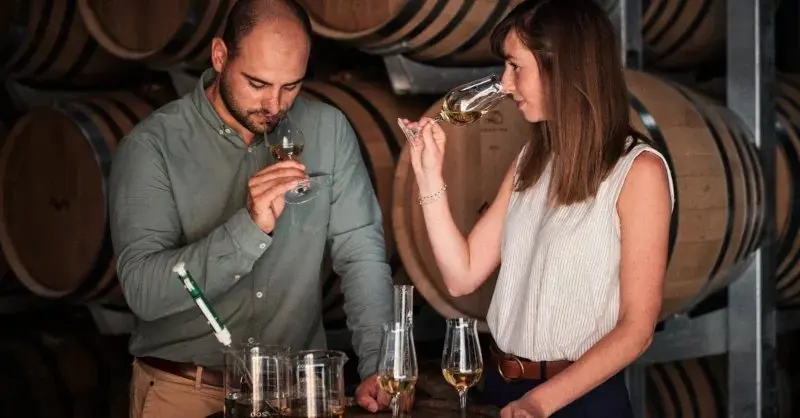
The venture was started by a married couple with serious wine credentials. Alex Cosculluela brings the winemaking side; his wife, Dr Magali Picard, holds a PhD in the sensory analysis of wine and runs R&D at Demptos, one of France's leading barrel makers. Every distillate they produce is analysed down to the molecular level before it goes anywhere near a bottle.
That scientific streak shows up in techniques borrowed straight from the wine cellar. Fermentation happens in tall concrete 'eggs', which increase sediment contact and build body and complexity. Some ferments rest on their lees, champagne-style, for extra texture and floral, fruity aromatics. Others go through malolactic fermentation – the trick used to soften sharp acidity in white wine – which Cosculluela credits to inspiration from Burgundy, the Loire and Alsace. The house style he's aiming for sits between two famous whisky worlds: the fine aromatics of Japanese whisky with the body of Speyside, finished floral, fresh, mineral and faintly salty.
The debut line-up is accessible too. The flagship Calibre costs $67 and tastes of almond, lemon peel and shortbread. Two limited 'Complication' editions run $94; Complication #1 leans on that malolactic creaminess, layered with green apple and lemon curd. These are whiskies pitched as much on texture as on flavour.
The backstory is nearly as interesting as the liquid. Lineti began as a joint venture with the Thienpont family, owners of the celebrated Pomerol estate Le Pin, but the family exited during a wine industry downturn. Enter Benjamin Leneman, a French entrepreneur who spent three decades running one of the world's top workshops crafting jewellery and watch 'habillage' for major luxury houses, specialising in the notoriously difficult invisible stone-setting technique. He saw the same obsessive craftsmanship in Lineti and bought the business, treating the whisky as a luxury product first and a spirit second. His horology background even explains the label design, which uses a watch-face layout to display each cuvée's production variables. Leneman also owns Château de Verduzan, a 17th-century Armagnac estate where he first learned how hard artisanal spirits are to get right.
Why should a traveller care? Because it adds a genuinely new reason to visit a region most people already have on their list. Bordeaux holidays have long meant château tours and cellar doors; a working distillery applying winemaking science to single malt gives wine-fatigued visitors something different, and the bottles are priced well below what most famous-name single malts fetch. As Cosculluela puts it, without the weight of whisky tradition, the team is free to experiment – and to show drinkers how hundreds of tiny decisions shape what ends up in the glass. For anyone touring Saint-Émilion, a tasting here would pair neatly with the region's more established cellars.