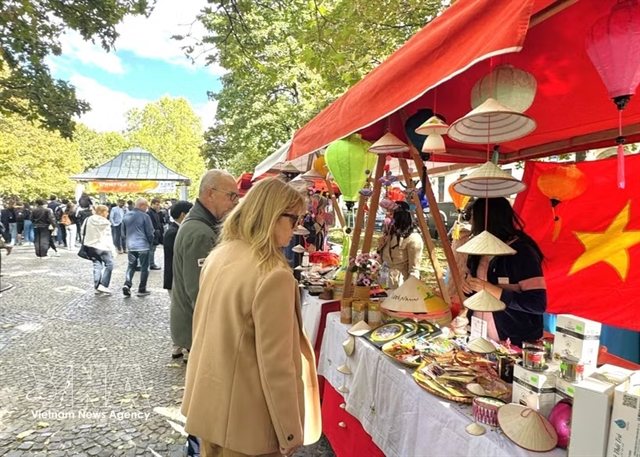
Hviezdoslavovo Square, one of Bratislava's most-visited public spaces, recently turned into a showcase for Asia. At Asia Day 2026, Vietnam presented its heritage alongside China, India, Indonesia, Japan, Kazakhstan and Palestine, in an event organised by the Vietnamese Embassy in Slovakia and the participating countries' diplomatic missions. The crowd mixed diplomats, local residents, international visitors and members of the Vietnamese community living in Slovakia.
The Vietnamese programme leaned heavily on performance. The Nam Hưng Sư lion dance club drew one of the biggest crowds with a lively lion dance, while the Vietnamese Women's Association and the Pan-European Singing and Theatre Club added music, dance and costume throughout the day. Highlights included conical-hat dancing set to modern music, an ao dai display pairing tradition with contemporary styling, and a showing of the Nhat Binh royal costume — a garment whose intricate patterns and craftsmanship date back to Vietnam's imperial era.
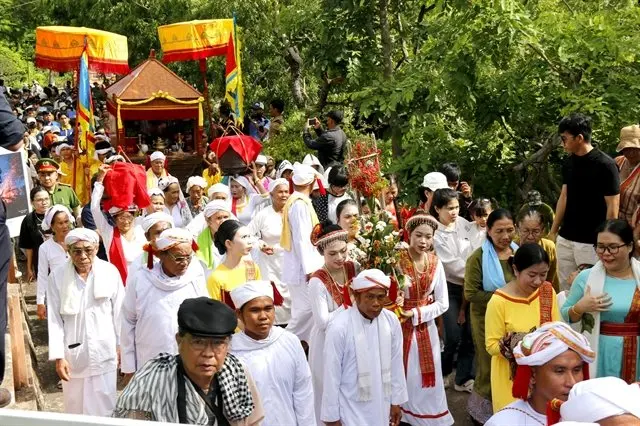
One act carried particular weight: a performance of Cô Đôi Thượng Ngàn, a ritual from Vietnamese Mother Goddess worship that UNESCO added to its Representative List of the Intangible Cultural Heritage of Humanity in 2016. For Slovak audiences, it was a rare live introduction to a spiritual tradition most had likely never encountered.
Beyond the stage, the Vietnamese pavilion handed out souvenirs and decorative items reflecting the country's cultural identity, giving visitors a starting point for learning about Vietnamese life and traditions. Ambassador Phạm Trường Giang framed the day as a way to spark curiosity about Vietnam's landscapes, heritage, cuisine and people, pointing to the country's diversity — 54 ethnic groups shaped by a long, layered history.
The event also doubled as a showcase for the Vietnamese diaspora in Bratislava, whose community groups drove much of the programme and, in the ambassador's words, contribute to cultural exchange and stronger ties between the two countries.
For travellers, the takeaway is less about the festival itself than what it signals: Vietnam's culture is travelling well. If a lion dance, a UNESCO-listed ritual and a royal costume can stop shoppers in a Slovak square, imagine the real thing in Hanoi or Huế. Mother Goddess worship ceremonies, ao dai traditions and regional cuisine are all accessible to visitors in Vietnam, and the country's cultural depth goes well beyond the usual food-and-beaches pitch. Watch for similar cultural days in European capitals if you want a low-cost taste of Asia before booking the long-haul flight — and if Slovakia is on your itinerary, Bratislava's compact old town around Hviezdoslavovo Square makes an easy base.
Story credit: Vietnam News Life