
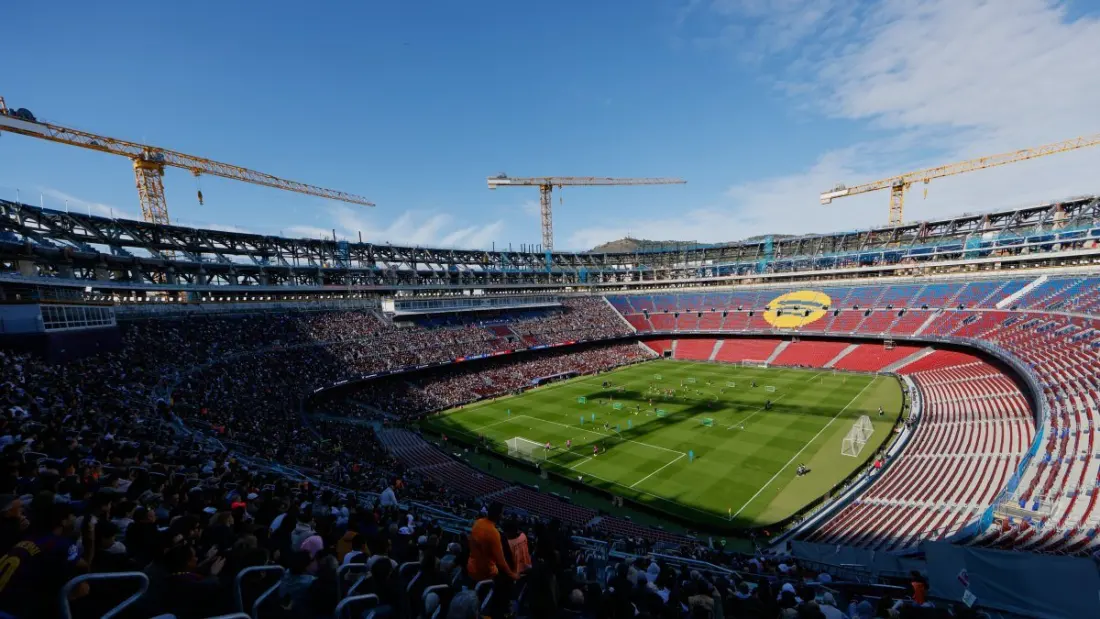
Barcelona is getting Europe's biggest club football match back. UEFA has picked the rebuilt Spotify Camp Nou to stage the 2029 Champions League final on June 2, 2029, edging out London's Wembley in a vote by the executive committee in Thessaloniki. It's the first time the Catalan city has hosted the final in three decades.
The timing is no accident. With Spain co-hosting the 2030 World Cup alongside Portugal and Morocco, Barcelona now lands a marquee global event a year earlier — and gets a huge platform to show off its renovated stadium. Once finished, Camp Nou will seat more than 104,000, making it one of the largest football venues in Europe, with upgraded hospitality, accessibility and tech built in. Construction has dragged on with delays, and the upper tier and roof are still being completed, but UEFA clearly liked what the finished product promises. Capacity was a real factor: recent finals have gone to stadiums above 70,000 seats.
The bid itself was a team effort, put together by FC Barcelona, the city council and the Catalan government, with backing from the Spanish Football Federation and the local hospitality industry. President Joan Laporta called the decision a source of immense pride and framed it as international recognition of the rebuilt ground. For travellers, it's easy to see the upside — expect a packed events calendar, hotel demand and a city very motivated to impress in the run-up.
History leans in, too. Camp Nou last staged the final in 1999, when Manchester United's stoppage-time double sank Bayern Munich 2-1 in one of the competition's great comebacks. AC Milan thrashed Steaua Bucharest 4-0 there back in 1989. Wembley, by contrast, has hosted the final eight times since 1955, including 2011, 2013 and 2024 — which made losing out to Barcelona a notable result.
UEFA's wider schedule is worth a glance if you're planning a football-themed trip. Bayern Munich's stadium takes the 2028 final, Madrid's Metropolitano hosts this season's decider, and the Europa League goes to Bucharest's National Arena in 2028 and Serbia's new national stadium near Belgrade in 2029. The Women's Champions League final is headed to Lyon in 2028 and Cardiff in 2029, while the Conference League settles into Turin's Juventus stadium for 2028 and Budapest's 67,000-seat Puskas Arena for 2029 — a sign the competition is graduating from its early small-venue era in Tirana and Prague.
For fans, this is a genuine excuse to build a Barcelona trip around matchday. The final lands in early June, when the city is warm but not yet at peak-summer swelter, and the stadium sits well connected to the rest of town. Even if you don't land a ticket, final weekends bring fan zones, big screens and a city humming with visitors. Hotel rates will spike, so booking early — or staying slightly outside the centre — is the smart move.
For everyone else, the news signals that Barcelona's long stadium saga is nearing its payoff, and that the city is positioning itself as Europe's go-to stage for the biggest sporting occasions this decade.