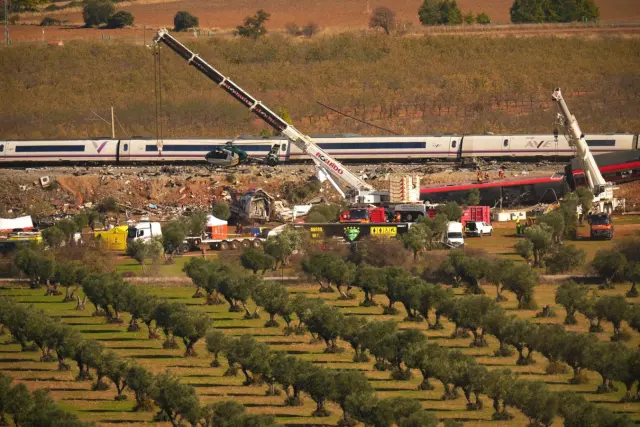
Spain is reckoning with its fourth deadly rail incident of the year after two high-speed trains collided in rural Toledo province on Wednesday 28 October, leaving 69 people dead and more than 100 injured. The crash has pushed a railway safety expert to say publicly that he would avoid Spain's high-speed network until he sees real change.
The collision happened around 9am on the busy corridor between Madrid and Seville, one of the country's most travelled routes. An Iryo express train had stopped because of a signal fault when it was hit by a Renfe-operated train. In total, 544 passengers and crew were on board the two services. Authorities are still identifying victims.
Spain's transport minister Óscar Puente has suggested human error may be to blame. A computer failure earlier that morning halted six trains, handing control to the control centre — standard procedure. Officials there then allowed the trains to resume without speed restrictions, a decision Puente described as inexplicable. But Francisco Badea Romero, a mechanical engineering professor at Madrid's Nebrija University and railway certification expert, told The Independent that a single bad instruction from a control room should be practically impossible to cause a disaster. Trains run on automatic blockage systems that detect nearby trains, calculate the distance between them, and warn both drivers and controllers. Several layers of protection failed at once, he argues, and that points to Adif, the state-owned infrastructure manager that oversees the network.
Badea Romero's wider point is statistical. Crashes like this are vanishingly rare in European rail history — so when several happen within a single year, it suggests systemic problems rather than bad luck. Alongside the Toledo collision, a high-speed train derailed and hit an oncoming service near Adamuz in Cordoba province on 18 January, killing 46 people and injuring more than 120. Spain also saw a fatal commuter train crash in Barcelona and a death at a Toledo railway crossing.
His personal verdict is stark: he would look at alternatives to high-speed trains in Spain until there is visible evidence that the system has improved, and he wants independent scrutiny of Adif, which he says currently lacks any real counterbalance to government control.
For travellers, this matters because the Madrid–Seville and Madrid–Andalusia high-speed routes are among Spain's most popular for visitors. Millions of tourists ride Renfe and its competitors every year without incident, and rail remains statistically one of the safest ways to move around the country when operated properly. But if you're planning a trip that relies on Spain's high-speed network, it's worth following the official investigations and any reforms that follow. Conventional slower trains, regional services and long-distance coaches remain practical alternatives for the affected corridors in the meantime.
The investigations launched by Spanish officials should determine which systems failed and why. Until then, the expert's advice amounts to a simple test: watch for change before trusting the network again.