
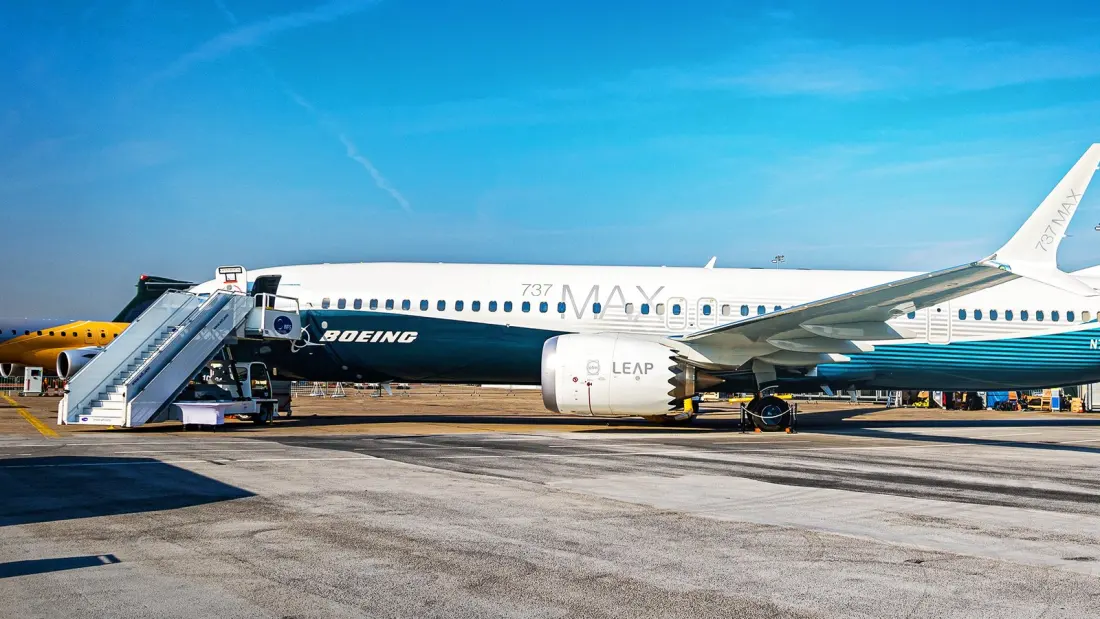
If you have flown an Airbus A320neo or Boeing 737 MAX through Dubai, Delhi or anywhere else where sand meets runway, there is a good chance the engine beneath you was wearing out faster than anyone planned. CFM International's LEAP engine, the successor to the workhorse CFM56, has been suffering premature removals in hot, dusty environments across the Middle East and South Asia. Fine airborne sand melts into molten glass inside the combustion chamber, clogging the microscopic cooling holes in turbine blades and stripping their ceramic protective coatings in as little as three to four years.
The financial impact was serious. Engines were expected to log around 15,000 flight hours before their first shop visit, but some were coming off wings after just 3,000 hours, forcing airlines like IndiGo to lease costly spares and absorb downtime. For passengers, that translated into a higher risk of delays and cancellations on some of the world's busiest high-frequency narrowbody routes.
The fix, developed jointly by GE Aerospace and Safran, targets the stage 1 high-pressure turbine. Engineers redesigned the blade and nozzle so sand particles can pass through the cooling channels instead of blocking them, and added an automated reverse-bleed system that purges fuel lines on shutdown to prevent carbon build-up. To prove it works, CFM built test cells that inject synthetic sand and CMAS compounds directly into running engines at full takeoff thrust, replicating thousands of desert flight cycles. The redesigned blades lasted twice as long as the originals.
The upgrade was certified for the LEAP-1A in December 2024 and earned dual FAA and EASA approval for the 737 MAX's LEAP-1B in July 2026, with full production cutover set for early 2027. Rather than pulling engines off wings early, CFM is installing the kits during scheduled overhauls, backed by a five-year, $2 billion investment in its global maintenance network. Unusually, this is a hardware redesign rather than a software patch, and it restores LEAP ownership economics to something close to the legendary CFM56 standard.
Why should a holidaymaker care? Because roughly 40% of active A320neo-family aircraft already carry the upgrade, and fleet-wide adoption means steadier schedules on the dusty routes where engine trouble hit hardest. With more than 10,000 LEAP engines in service, if this works in the field, it quietly removes one of the biggest causes of technical delays on flights across the Gulf and South Asia. Real-world telemetry through late 2027 will show whether the lab results hold up, but the direction of travel is encouraging for anyone flying these routes in the next few years.