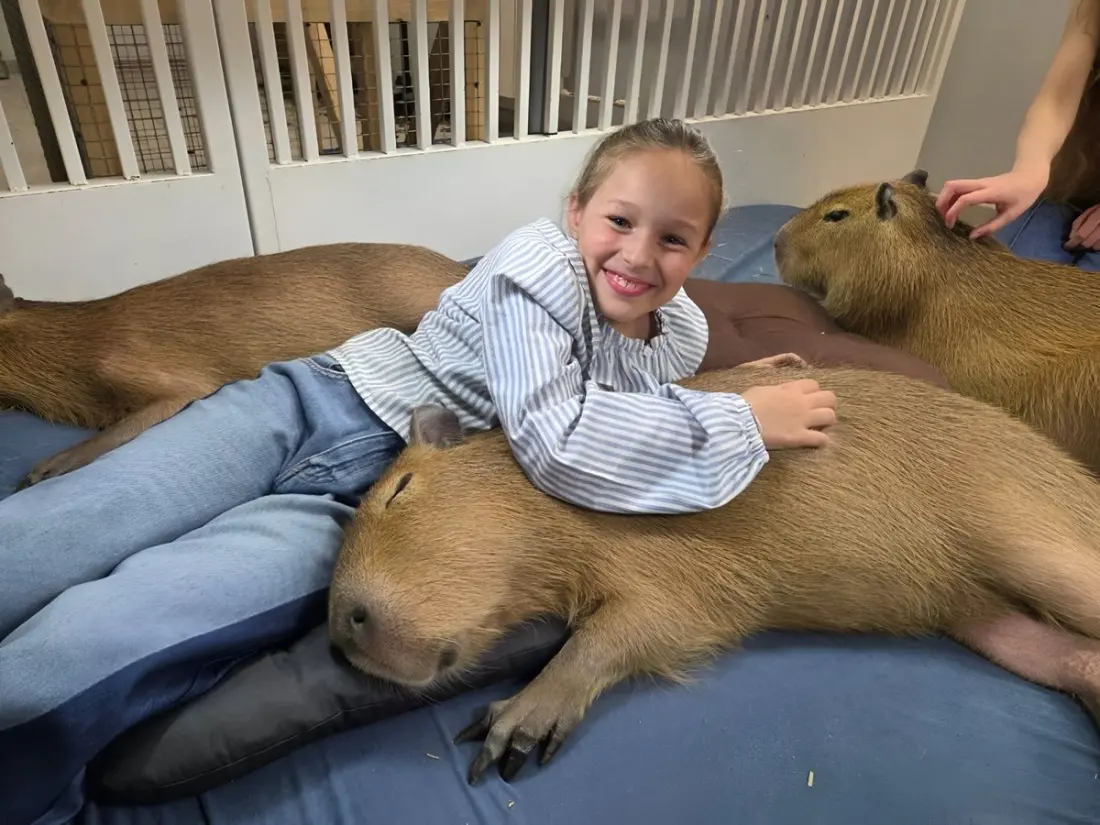
The internet's favourite chill animal is, in reality, a Colombian wetland rodent with a complicated story. The chiguiro — known everywhere else as the capybara — is the world's largest rodent, and Colombia hosts it in nearly every major river basin, from the Caribbean coast down through the Magdalena and Cauca valleys to the Llanos Orientales, Caqueta, Putumayo and the Amazon.
The numbers alone make it worth spotting. Adults run 106 to 134 centimetres long and typically weigh 35 to 66 kilograms, with a barrel body, a blunt square muzzle and effectively no tail. Built for water, they have slightly webbed toes and eyes, ears and nostrils set high on the head, letting them float almost submerged and stay underwater for up to five minutes when threatened. They live in groups of 10 to 20, swelling to 50 or even 100 in the dry season when water sources shrink, and their daily routine is rest in the morning, soak in the afternoon, graze through the night.
Their famously relaxed vibe is partly real. Birds like yellow-headed caracaras and cattle tyrants perch on them to snag insects and parasites, and the capybaras barely react. But life is shorter than the memes suggest: jaguars, caimans, anacondas and eagles all hunt them, and wild capybaras rarely live past four years.
The online fame is a modern phenomenon built far from Colombia. Japanese zoos such as Izu Shaboten made steaming capybara hot-spring baths a viral genre, inspiring the Kapibara-san character. A 2022 TikTok song repeating the word capybara, endless memes, and the 2025 Oscar-winning animated film Flow — which features a capybara aboard a boat in a flooded world — sealed the animal's status as a symbol of calm.
At home, the picture is less serene. Though the IUCN lists the species as Least Concern, conservationists point to indiscriminate hunting, cattle and farming expansion, water engineering works, oil extraction and climate change as pressures. In Casanare, one study recorded a population drop from 12,802 animals in 2005 to 6,928 in 2017, and Colombia has suspended legal harvesting since 2020. Ranchers and experts still debate whether regulated, sustainable use could fund wetland protection, with proposals capping any harvest at 10% of a local population.
For travellers, that mix of ecological story and viral fame makes the Llanos an underrated wildlife destination. The seasonally flooded plains of the Orinoquia hold some of Colombia's densest herds, and seeing a family of chiguiros grazing at dusk — with caracaras riding on their backs — beats any meme. Ranch-based ecotourism in the region also gives the conservation debate a practical stake: visitors help make living capybaras worth more than hunted ones. Medellin's Parque de la Conservacion offers a fallback for city itineraries, caring for a rescued group found oddly in the Aburra Valley, where the species isn't naturally found.
Anyone planning a Colombia trip with wildlife in mind should put the capybara on the list alongside the country's better-known birds and monkeys. It's the rare animal that's both an internet icon and a genuine reason to explore a little-visited region.