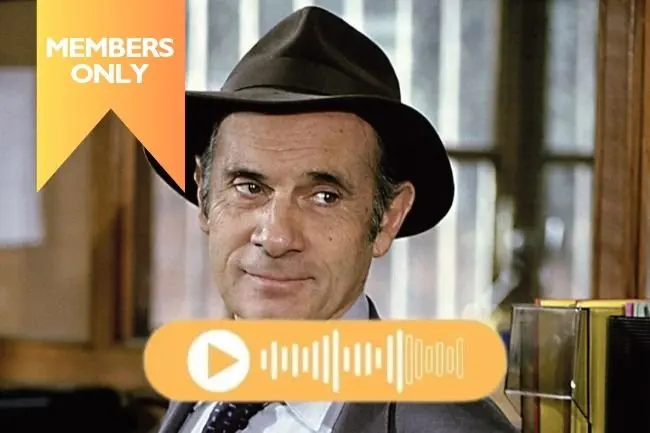
Long before literary walking tours became a Paris staple, one pipe-smoking private eye was mapping the city's dark side, arrondissement by arrondissement. Nestor Burma, created by novelist Léo Malet, remains one of French fiction's most distinctive detectives — and his Paris is still there to be walked.
Burma runs his own agency, Fiat Lux, on the Rue des Petits Champs, with a staff of exactly one: his sharp-tongued, devoted secretary Hélène. Unlike the brooding American gumshoes he's often compared to, Burma is a chatty, well-read Parisian who quotes literature, loves jazz, and keeps one foot in the criminal world he polices. He and his creator shared an anarchist past — which means Burma is always a little ironic about restoring law and order.
The autobiography baked into the character is striking. Malet and Burma were both born on March 7, 1909, in Montpellier. The orphaned Malet landed in Paris as a teenager and sang in a Montmartre cabaret, drifted through anarchist circles, and counted André Breton and René Magritte among his Surrealist friends in the 1930s. He even dabbled in poetry and a street-art technique of torn posters, décollage d'affiche, before prisoner-of-war years left him broke and turned him to fiction.
Burma's debut came in 1943's 120, rue de la Gare, written under Nazi occupation — which explains why a detective named 'let there be light' set about restoring some scraps of social justice to a fog-bound city. Malet's inspirations ranged from Arsène Lupin to the Fu Manchu novels, the latter giving Burma his Asian-sounding name. His supporting cast still reads like a good TV drama: the broadly sympathetic Commissioner Faroux, the perpetually exasperated Inspector Fabre, and the reformed burglar Zavatter on the wrong side of the law.
The most interesting thread for a visitor is Malet's ambition in the 1950s: a series called The New Mysteries of Paris, meant to place one noir novel in each of the city's 20 arrondissements. He managed 15 before death intervened, leaving five districts permanently unsolved. Illustrator Jacques Tardi, who gave Burma his scowling visual identity starting with 1982's Brouillard au pont de Tolbiac, filled one of those gaps in 2024 with an original comic set in the 20th arrondissement.
Malet won three major literary prizes, and Burma reached a wider audience through the TV series that ran from 1991 to 2003 with Guy Marchand in the lead role.
Why should a traveller care? Because Burma is a literary guidebook to a grittier Paris — the fog, the back streets, the arrondissements beyond the postcard core. Fans can visit the detective's Rue des Petits Champs addresses in the 1st and 2nd, then build their own noir itinerary through the districts Malet actually wrote about. It pairs naturally with Simenon's Maigret territory on the other side of the Seine, and the Tardi graphic novels make excellent plane reading before you land.