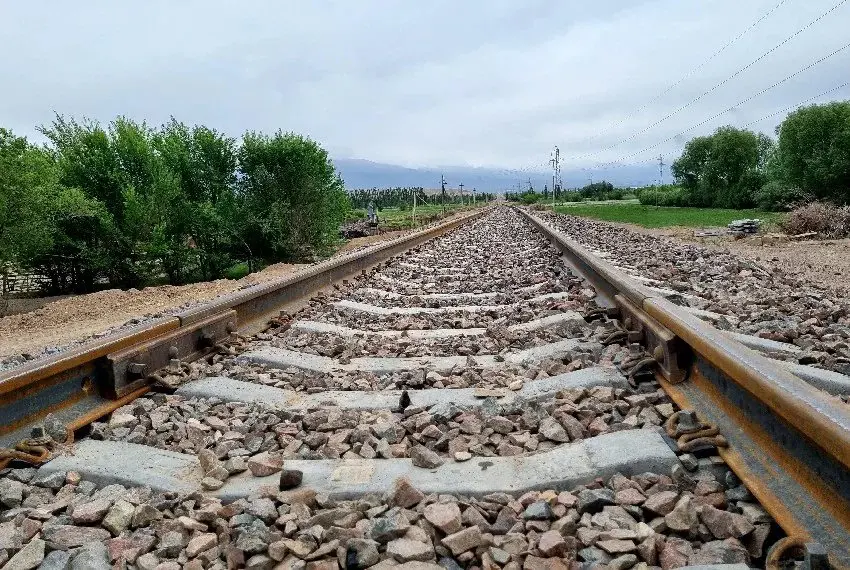
One of Central Asia's biggest infrastructure projects is steadily taking shape in the mountains of Kyrgyzstan. The long-mooted China-Kyrgyzstan-Uzbekistan railway is now under active construction across nearly every section of its route, according to Kyrgyzstan's national railway company, Kyrgyz Temir Zholu.
The numbers show real momentum. Of the 29 tunnels planned for the line, work is happening on 28, and one tunnel has already been fully excavated. Bridge building is similarly advanced, with construction under way on 47 of the 50 planned bridges. That's a lot of engineering for a single railway — but this line has to cross some of the roughest terrain in the region, which is why tunnels and bridges dominate the project.
When finished, the railway will run roughly 532.5 kilometres, linking China and Uzbekistan through Kyrgyzstan. Around 304 kilometres of that falls on Kyrgyz soil, including all those tunnels and bridges. The idea is to open a new transport corridor connecting East and Central Asia, with onward reach towards Middle Eastern and European markets. For Kyrgyzstan, a mountainous country that has long punched below its weight in regional trade, the line is expected to boost freight capacity and transit income.
The project has an unusually long backstory — it was first floated back in the 1990s but sat on paper for decades. Things only moved recently: the three governments signed a cooperation agreement in Beijing on June 6, 2024, and construction was officially launched in Jalal-Abad on December 27, 2024, with the leaders of all three countries present. Less than a year on, work is running at full pace across the route.
So why should a traveller keep an eye on this? For now it's a freight line, but new corridors through the Tian Shan tend to reshape how people move through Central Asia too — potentially opening up overland routes between China's west, Kyrgyzstan's lake-and-mountain country and the Silk Road cities of Uzbekistan. Even before any passenger service appears, the construction itself is a sign that one of the region's least-connected stretches is being plugged in, which usually means better roads, services and access around places like Jalal-Abad in the years ahead. Anyone dreaming of the full Beijing-to-Tashkent-overland trip should watch this project closely.