
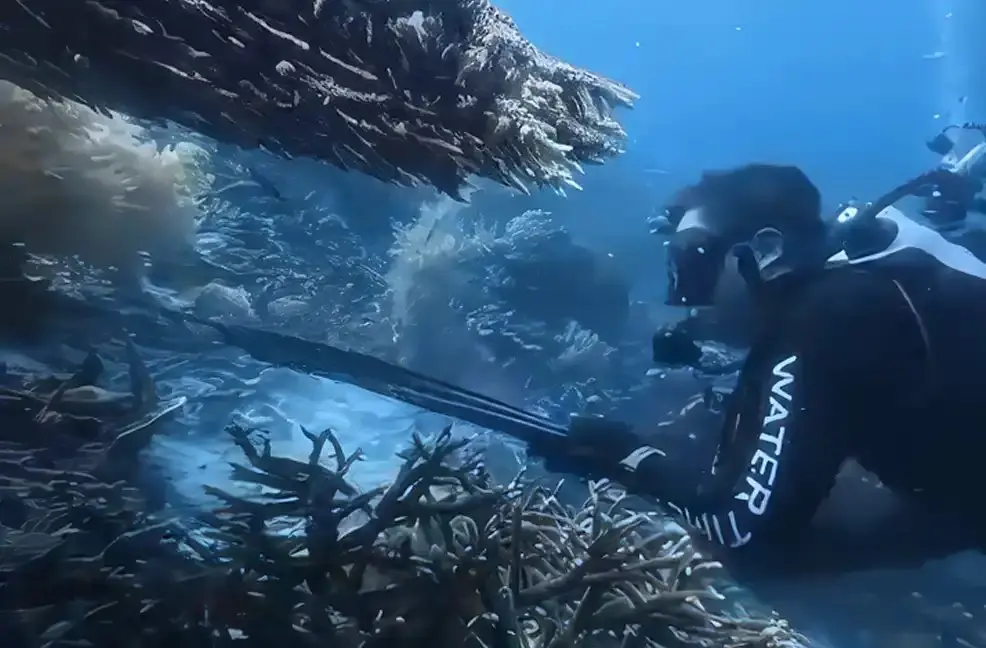
A Chinese dive instructor has been stopped from leaving Indonesia after a video circulated online allegedly showing him spearing a hawksbill turtle in Raja Ampat, one of the world's most strictly protected marine areas.
Wei Shang was detained at Sultan Hasanuddin International Airport in Makassar on 14 September, after Raja Ampat's deputy regent sent immigration a formal request to block his departure. Officers checked the passenger manifest and pulled him before he could board. Plans were made the next day to send him back to Raja Ampat, with conservation authorities taking him to Sorong for investigation. He reportedly denies involvement.
The case centres on a 36-second clip allegedly filmed between 9 and 11 September in the Fam Islands, near the popular Piaynemo viewpoint. It appears to show a diver on scuba aiming a speargun at a turtle resting on a reef. Other images allegedly posted by Shang to Chinese social media appear to show the turtle cooked and served as food.
What's striking is how fast the diving community moved. Divers and instructors across Indonesia tracked him down and reported him, and the Mansaur Marine Park Indigenous Community Patrol filed a police complaint with supporting photos. Shang is described in the request to immigration as an AIDA instructor-trainer with an 'Active 2025' card, and media outlets list him as an SSI professional too — which is why the case has hit a nerve among pros who argue instructors should be modelling good diving ethics.
The legal footing is clear: all six turtle species in Indonesian waters are protected, hawksbill turtles are Critically Endangered on the IUCN Red List, and all spearfishing is banned in Raja Ampat's marine protected areas. The head of Raja Ampat's marine conservation unit has called for a transparent investigation into the species, location and method involved, and authorities say they'll now be checking homestays and tour operators in the area for compliance — they had already warned businesses about guests bringing spearguns into conservation zones.
For anyone planning a Raja Ampat trip, this is a useful reminder of how tightly the rules are enforced and how seriously local communities take them. The Indigenous patrol groups and local government act quickly when they see violations, and visitors should expect no leniency around wildlife or fishing gear. If you dive or freedive there, leave anything resembling a speargun at home, follow your operator's briefings, and you'll be in one of the healthiest reef systems on the planet — largely because of this level of protection.