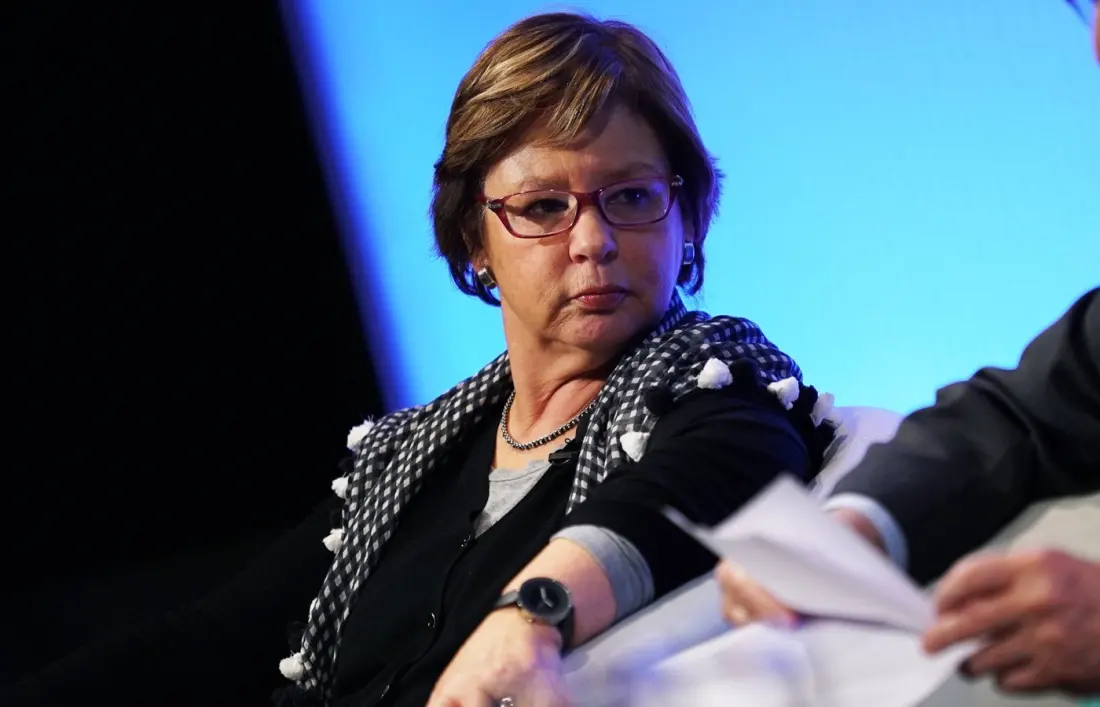
Colombia has a new reason to feel proud of its literary exports. Piedad Bonnett, the 75-year-old poet from Amalfi in Antioquia, has won the 23rd Federico García Lorca International Poetry Prize, one of the highest honours in the Spanish-speaking literary world. Granada's mayor, Marifran Carazo, announced the decision on 13 October after a jury meeting at the Federico García Lorca Center in the southern Spanish city, with contenders from 14 Spanish-speaking countries in the running.
For Bonnett, the news landed barely a month after another major Spanish award — she admitted to EFE she was astonished, but above all moved that the honour bears Lorca's name. It also carries a practical weight she welcomed openly: visibility. Colombian literature travels abroad largely on the coattails of a handful of household names, and she hopes these prizes push readers in Spain and across Latin America toward the wider range of writing coming out of the country today.
The jury singled out her unflinching but unsentimental handling of loss, fear, fragility and the contradictions of love — complex territory handled in plain, direct language, as Jordi Doce of the Fundación Federico García Lorca put it. Bonnett's career spans nearly four decades and multiple genres: her debut collection De círculo y ceniza appeared in 1989, El hilo de los días won Colombia's National Poetry Prize, Explicaciones no pedidas took the Casa de América prize in 2011, and her recent books — the 2021 anthology Lo terrible es el borde and 2024's La mujer incierta — keep circling themes of childhood, memory and mortality.
Her most famous work is arguably not poetry at all but Lo que no tiene nombre (2013), a devastating prose account of her son Daniel's suicide in 2011 at 28. The book refuses easy answers, instead exploring where language breaks down when a parent tries to make sense of such a loss. It's this ability to turn personal history into something larger than memoir that the Granada jury found so compelling.
Beyond the €20,000 purse, the prize brings an anthology of her work and a season of literary events in Granada, with the ceremony expected in spring 2027. Previous winners include Colombians too — Darío Jaramillo Agudelo took it in 2018 — alongside Blanca Varela, Ida Vitale and Raúl Zurita.
Why should travellers care? Because literature is one of the best doorways into a country, and Colombia's is having a moment. Reading Bonnett alongside García Márquez gives you a far richer sense of the place before you set foot in Bogotá's book-lined La Candelaria district or the Lorca-haunted streets of Granada itself. And there's a fitting symmetry: the poet who writes about slowness as a form of resistance — protecting the pace her gaze needs from a noisy world — is being honoured in a city built for wandering slowly. Whether your next trip is Colombia or Andalusia, this is a name worth knowing before you go.