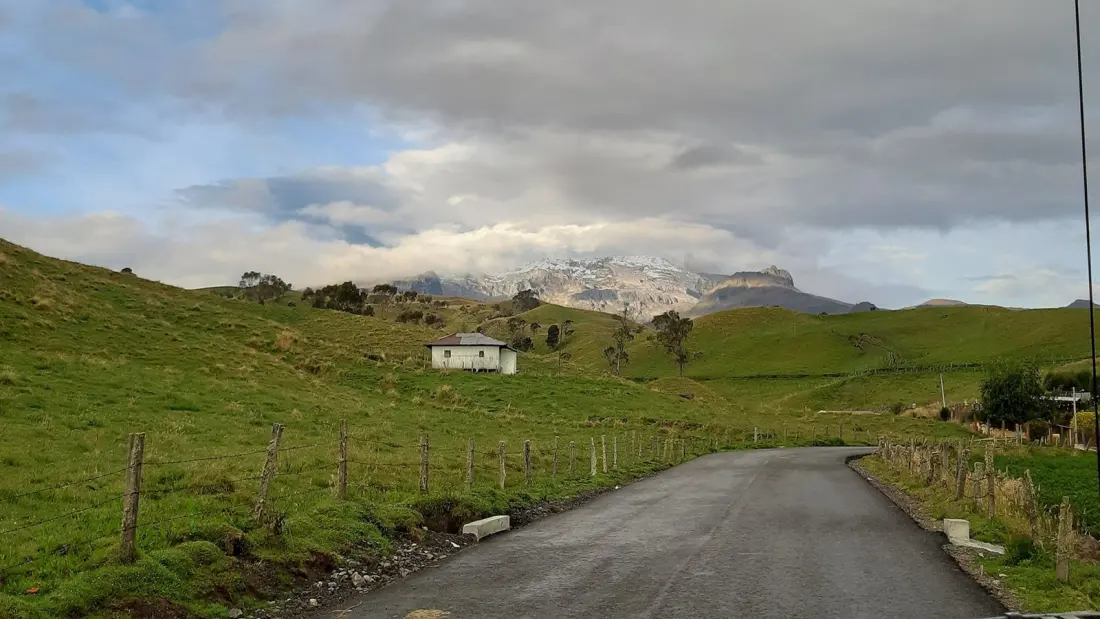
A high mountain pass between Murillo in Tolima and Manizales in Caldas is being billed as Colombia's highest road, topping out around 4,149 metres above sea level near a spot called El Sifon. Even by the more conservative figure of 4,100 metres quoted by the highway concession's manager, it puts Colombia's highest drivable route in rarefied air, just below the altitude where most visitors start feeling the thin oxygen.
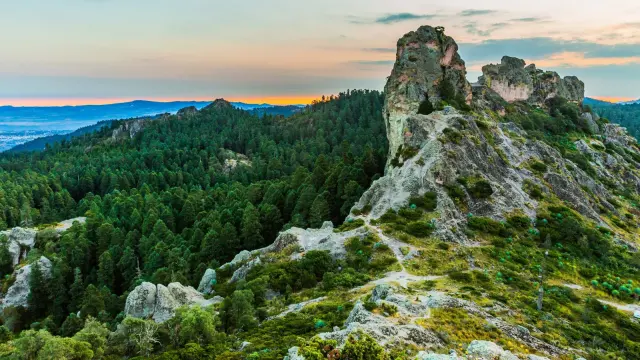
The route has quietly become a tourist corridor. Coming from the Armero junction, drivers pass through Libano and Murillo before climbing towards La Esperanza in Caldas, with Los Nevados National Natural Park on one side and a forest reserve on the other. The surrounding paramo, a high-altitude wetland and grassland ecosystem, stores and releases the water that millions of Colombians depend on, which is why the road's construction in this fragile zone has drawn attention. Francisco Romero, manager of the Alternativas Viales concession, says builders worked without damaging the protected areas, though that claim rests on his account alone.
Here's the catch: nobody fully agrees which road actually holds the record. Caracol gives two different elevations for Murillo-Manizales, while the national roads agency Invias has pointed to a 3,860-metre crossing of the Almorzadero paramo on the Troncal Central del Norte, part of a 305-kilometre project across 23 municipalities in Boyaca, Santander and Norte de Santander. Cycling guides go higher still, citing a pass between Chita and El Cocuy in the Sierra Nevada del Cocuy at roughly 4,240 metres, though it has unpaved stretches. And then there's Alto de Letras, around 3,700 metres, famed among cyclists as the world's longest paved climb even though it isn't the tallest.
The disagreement comes down to definitions: paved versus unpaved, official surveys versus concession statements. Until Colombia publishes an official ranking, treat all these figures as ballpark estimates.
For context, the world's highest road is Umling La in Ladakh, India, at 5,798 metres, built in 2021. Colombia's contenders are lower, but at 4,000-plus metres the air still holds noticeably less oxygen, and altitude sickness is a real possibility for visitors arriving from Bogota or lower ground.
For travellers, this corner of the central Andes is one of the country's most rewarding road trips. Los Nevados offers snow-capped volcanoes, thermal springs and terrain more reminiscent of the Andes further south than of tropical Colombia. Cyclists, motorcyclists and drivers all use these corridors, and the debate over which pass is highest is partly a testament to how many high routes the region now offers. Go slowly, acclimatise a day or two, and pack for near-freezing temperatures even in a tropical country.