
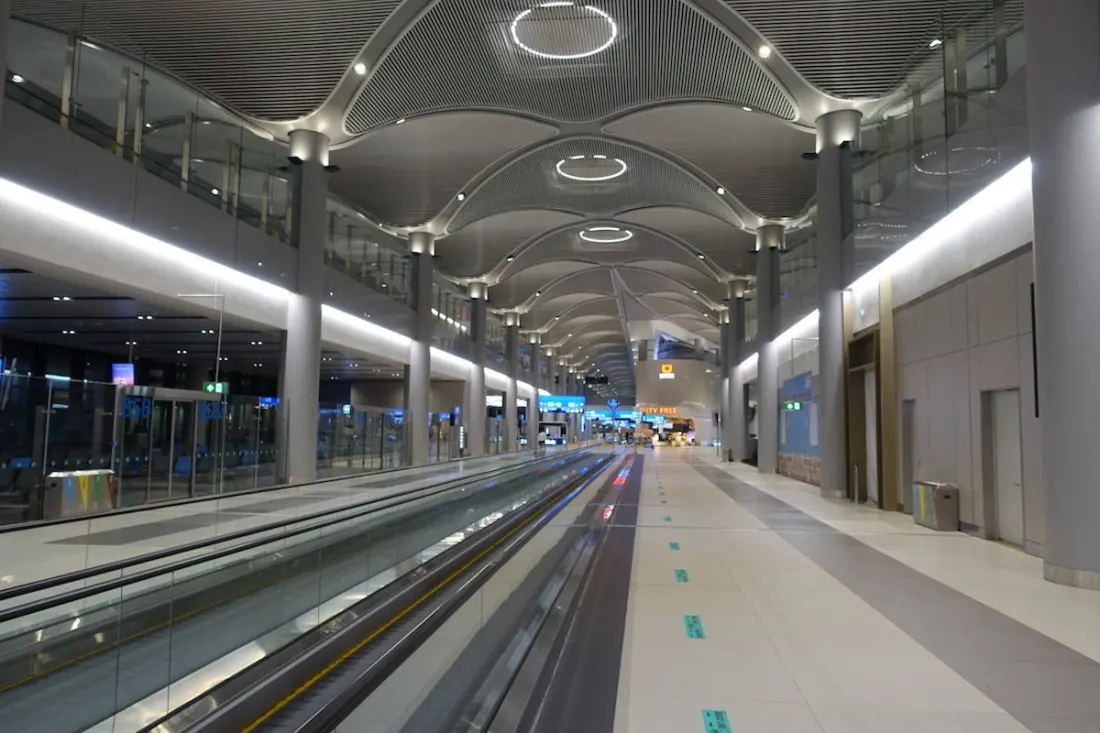
A first-hand report from a traveller whose companion uses a wheelchair due to knee osteoarthritis paints a rough picture of assistance at Istanbul Airport (IST), the massive hub of Turkish Airlines. Their trip, in early August, involved three separate passages through IST — and each one followed the same frustrating pattern: long waits, vague instructions, and stretches where the wheelchair user had to walk or find their own way.
The core problem seems to be how transfers work. Instead of one staff member escorting a wheelchair passenger door to door, the process is chopped into stages. Passengers are dropped at benches near the gate, told to wait for "the next staff," then loaded onto shared buggies that collect wheelchair users from several gates until every seat is gone. Companions are often told to walk alongside or jog to the next checkpoint on their own. At the transfer security checkpoint, wheelchair passengers must get off and climb a ramp themselves before rejoining the flow.
From there it repeats: a "wheelchair passenger transfer area" counter, hand over your boarding pass, sit and wait, then another crowded buggy where companions once again walk. On the outbound connection — a tight 1 hour 45 minutes — the slowest passenger in the group took nearly ten extra minutes to cover a 50-metre stretch, and the group reached the gate just as boarding began. Even then, wheelchair passengers had to cross the jet bridge on foot.
The arrival experience was little better. A buggy packed with passengers from multiple flights stopped at transfer security, then domestic passport control, then a transfer area — to the confusion of one elderly woman who believed she was still being taken to immigration. The final departure day started smoothly, with a dedicated business class escort through security and passport control to the lounge, but outside the lounge sat yet another waiting area, followed by a buggy ride, another holding point, and a long delay for the special boarding vehicle at a remote stand — after two buses of able-bodied passengers had already left.
The writer's own staff interactions were positive — the individual employees were consistently helpful and kind. The failure is systemic: an understaffed, fragmented process that leaves some of the least mobile passengers doing the most walking, with no clear communication about what happens next.
Why does this matter? IST is one of the busiest connecting hubs in the world, and Turkish Airlines routes millions of transfer passengers through it. If you or someone you travel with needs mobility assistance, the practical lessons are clear: book the longest connection you can reasonably manage, don't assume a business class ticket guarantees smooth handling at boarding, expect companions to be separated from the wheelchair user at multiple points, and be ready to advocate — asking staff directly what you're waiting for was often the only way to get information. Frequent flyers with reduced mobility may also want to consider routing through alternative hubs where one-to-one assistance is standard. Credit: One Mile at a Time.