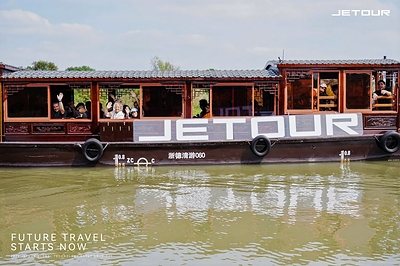
At Xiazhu Lake National Wetland Park in Deqing, Zhejiang Province, an unusual scene played out on October 22: international guests in town for the 2026 JETOUR Global Technology Experience Day spent the day not test-driving, but checking nesting boxes, releasing fish fry and watching crested ibises — one of the world's rarest birds — in their restored wetland habitat.
The event sits at the heart of the Chinese automaker's "Travel+" strategy, which pitches the brand as an enabler of outdoor journeys rather than just a seller of SUVs. The idea is simple enough: off-road vehicles open access to wild places, so the brand says it has a stake in keeping those places intact. Whether that's genuine commitment or clever marketing, the on-the-ground activities in Deqing gave travellers a hands-on way to contribute to a real conservation project — preparing and installing nesting facilities for the ibises and supporting the wetland's ecosystem.
The wetland event isn't a one-off. JETOUR has built a portfolio of species protection projects across multiple continents: a "Return of the Cheetah" campaign with Discovery Channel and the Cheetah Conservation Fund in Africa, which produced an award-winning documentary series; sea turtle conservation work in Malaysia with TCS and PULIHARA; a markhor protection programme in Pakistan; and a harpy eagle project in South America. The brand frames this as "Travel + Public Welfare" — a long-term, cross-border effort rather than a series of one-off press moments.
For context on the brand behind it: JETOUR launched in 2018 and now sells in more than 100 countries and regions through over 2,000 sales and service outlets, claiming upwards of 50 million fans worldwide and more than 300 JETOUR CLUB owner communities. Its line-up splits into the T-Series for light off-road use and the G-Series for the premium off-road segment — vehicles aimed squarely at road-trippers, campers and long-distance overlanders.
Why should a traveller care? Because the line between travel brands and conservation is increasingly where the interesting experiences happen. If you drive or rent in one of JETOUR's markets, the club communities and organised self-driving trips — some now paired with conservation activities — offer a way to see remote areas and put something back. And for birders specifically, Xiazhu Lake and its crested ibis programme are a legitimate reason to add Deqing, a leafy county near Hangzhou, to a Zhejiang itinerary.
Crested ibises, once down to a handful of birds in the 1980s, have become one of conservation's quieter success stories in East Asia, and wetland parks like this one are where recovery efforts play out. Getting to see one in the wild, let alone help build its nesting platform, beats any souvenir.
Full story via Laotian Times.