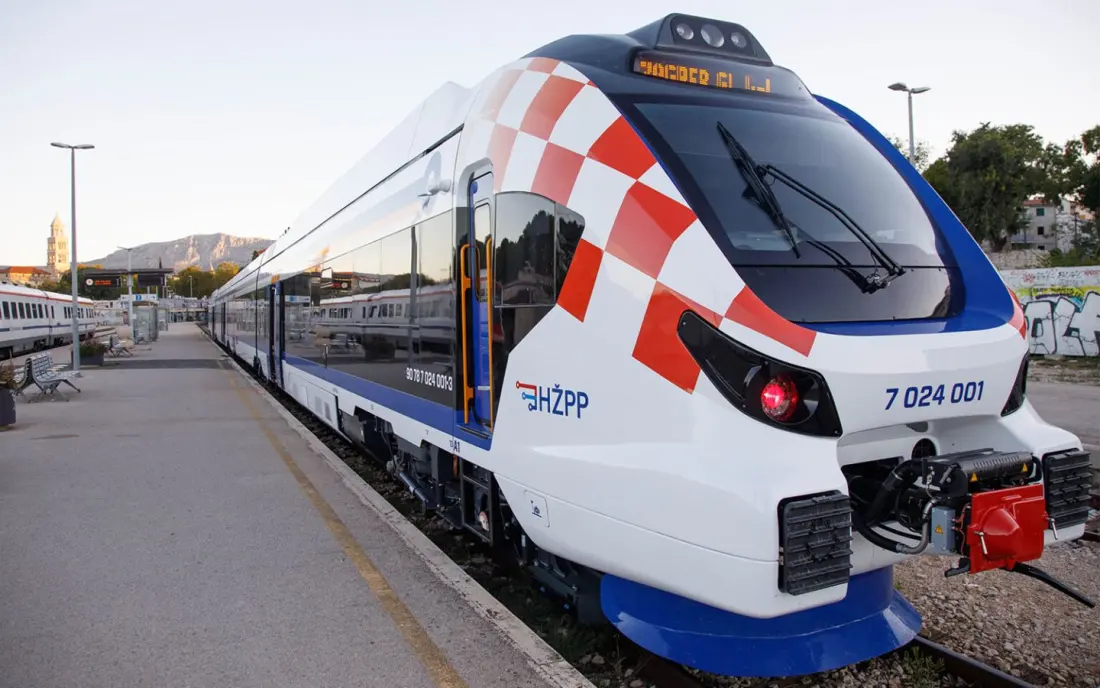
A Croatian-built train that can run on both overhead electric wires and its own diesel engines has just had its global debut at InnoTrans, the world's biggest transport technology fair, held in Berlin. The maker, Končar, unveiled the bimodal electro-diesel train designed for long-distance routes — and it is not just a showpiece. The first train of this type already entered regular service on the Zagreb to Split line about a week before the fair, working with operator HŽ Passenger Transport.
For anyone who has taken the Zagreb–Split railway, that is big news. The route cuts through some of Croatia's most dramatic scenery, and a modern, more comfortable train on the line should make rail a far more appealing alternative to the busy coastal highway. The second train in the series was the one presented to the international crowd in Berlin.
Končar is no newcomer to this stage. The company has exhibited at InnoTrans ten times, and two years ago it showed a battery-powered train there — the only battery train at that fair — which then became the first such vehicle in commercial use in Europe and one of the first anywhere in the world. At this year's edition, the new hybrid train sat on one of the most prominent spots in the outdoor display, on 75-metre tracks. The wider fair featured an outdoor exhibition with 3,500 metres of track, 113 vehicles from 130 exhibitors across 17 countries, plus indoor halls covering electrification, digitalisation and urban mobility.
Why should travellers care? Because Croatia's rail fleet is quietly being overhauled. Longer-distance travel between the capital and the Dalmatian coast by train has historically meant older rolling stock and slow journeys. With domestically built hybrid trains now in service, expect quieter, more comfortable rides and fewer places where the line is unpowered — the hybrid setup lets trains switch to diesel on non-electrified stretches without changing vehicles.
For now, the practical takeaway is simple: the Zagreb–Split train is worth considering if you have time to spare. The ride takes several hours longer than driving, but you trade motorway traffic for views of the Dinaric Alps, rivers and karst country, arriving in Split close to the ferry terminals for the islands. As more of these trains roll out across the HŽ network, rail in Croatia is shifting from a fallback option to a genuine part of the trip — which is exactly the kind of news that makes a coast-and-capital itinerary easier to plan without renting a car.