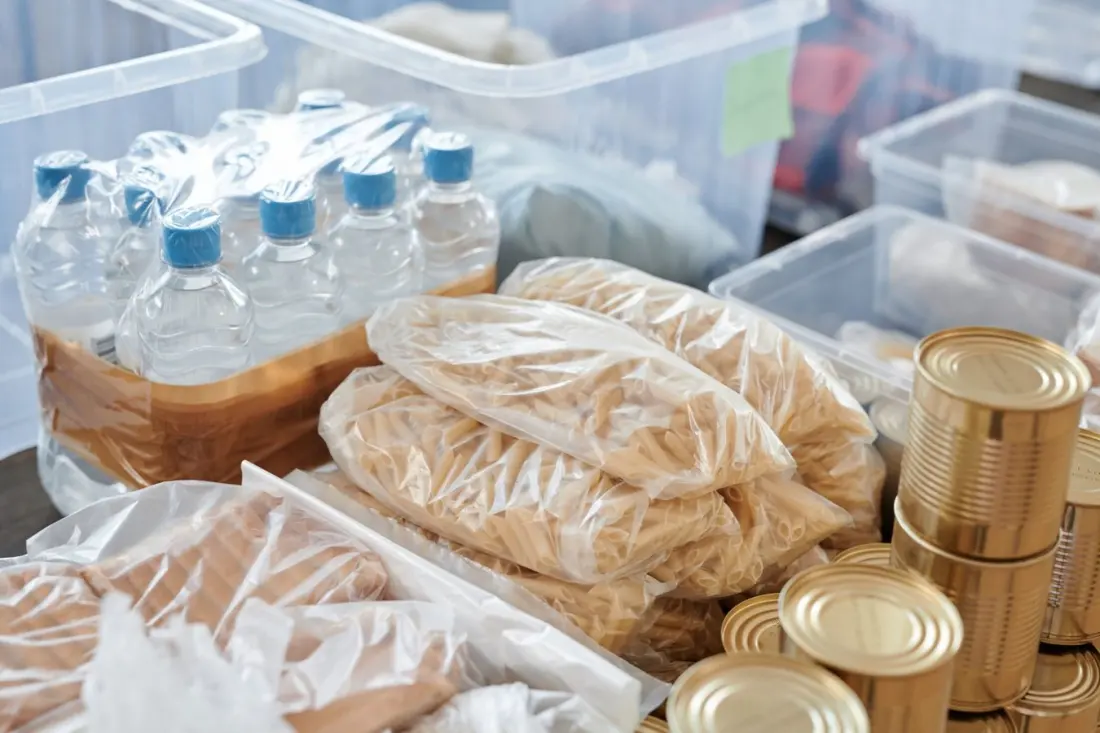
The European Commission has published guidance urging households across the bloc to be ready to look after themselves for at least 72 hours in a crisis — and Croatia's ability to do that is looking shakier than most. The guidelines, which landed in early November 2026, recommend families keep stocks of food, water and medicines, plus a pre-packed bag for emergency evacuation. They also call for crisis education from kindergarten age, better protection for people with disabilities, and clearer public warnings about risks.
The recommendations aren't legally binding, but the Croatian Government's silence on them is notable. It hasn't publicly presented the new guidelines or said whether it plans to act on them. Croatia does already have domestic advice: the Directorate of Civil Protection publishes instructions for a survival kit, though it only recommends two days' worth of food and water.
The bigger worry is what's happening behind the scenes. A 2024 State Audit Office review found that of 476 shelters managed by 14 cities, 306 weren't regularly used and no action was taken to fix that. Seven cities only did visual inspections with no proper documentation. The Directorate of Civil Protection itself lacked reliable data on shelter conditions, and city risk assessments didn't even cover war or terrorism scenarios. The audit resulted in 158 orders and recommendations.
Then there's medicine. Despite a 2022 law requiring medicines, vaccines, antidotes and medical supplies to be held in strategic reserves, Croatia ended 2025 with none of the 106 required medical product types actually stocked — procurement has been promised for years, and legal obstacles persist into 2026. Overall, the state's reserves were only 51.39 percent filled, though food stocks did hit 72.4 percent. Warehouses held cereals, oil, sugar and tents, but even basics like soap and water disinfectant were missing.
Why does this matter to visitors? Croatia's risks aren't hypothetical. The country has had major earthquakes in Zagreb and Banovina, serious fires and floods, and official risk lists include earthquakes, floods, extreme heat and epidemics. On 21 June 2024, a grid failure knocked out power across much of Dalmatia — nearly 200,000 Croatian users were affected, some for close to four hours — and the outage also hit Bosnia and Herzegovina, Montenegro and Albania. It showed how fast disruptions cross borders in an interconnected system.
For travellers, the takeaway is straightforward rather than alarming: Croatia remains a hugely popular and generally safe destination, but if you're heading there in earthquake season or visiting remote Dalmatian areas, the usual sensible habits apply — keep a charged phone, some water and any essential medication with you, and know your accommodation's emergency exits. The infrastructure questions are ultimately ones the Croatian government will have to answer; the European Commission, for its part, clearly wants national authorities to step up and localise its preparedness advice for their own populations.
Whether Croatia will respond to the new EU guidance with anything more than silence is still an open question — reporters have already asked the government directly, and the answers are pending.