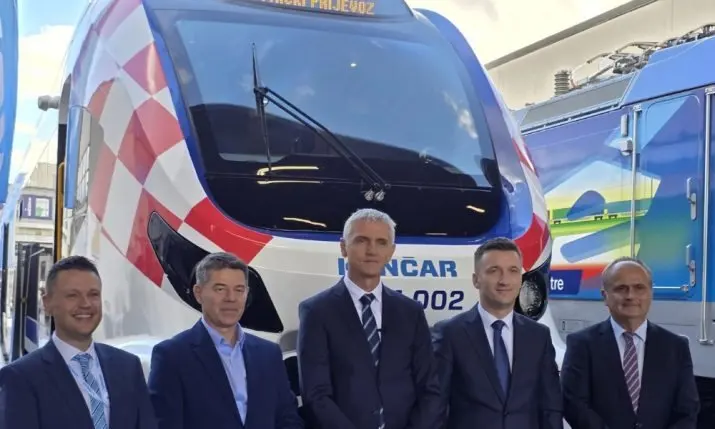
A Croatian-built train that can switch between electric and diesel power has been unveiled at InnoTrans 2026 in Berlin, one of the world's biggest transport technology fairs, where more than 3,000 exhibitors from 59 countries are showing off their kit this year.
The train comes from Končar, the Zagreb-based manufacturer better known until recently for supplying components rather than entire vehicles. This one is a 75-metre unit with a top speed of 160 km/h, room for around 150 passengers, and a hybrid propulsion setup: it draws power from overhead lines where they exist and switches to diesel where they don't. For Croatia, that's a big deal — large stretches of the national rail network remain unelectrified, so a train that handles both can run routes that would otherwise need a change of traction.
Passenger-facing details are solid too. There's first-class seating, a catering area, and accessibility features for travellers with reduced mobility. Up to three sets can be coupled and run from a single cab, so capacity can flex with demand — handy on summer coastal routes that swell with tourists.
This is the second train in a series built for HŽ Passenger Transport, and the first is already earning its keep: it entered regular service on the Zagreb–Split line just days before the Berlin unveiling. That corridor matters most to travellers — it ties the capital to Croatia's second city and its main Adriatic tourism gateway. Končar positions the new units for longer-distance services rather than urban commuting, so the practical effect is a slowly modernising intercity fleet on the routes visitors actually use.
For anyone planning a Croatian trip, the takeaway is that the Zagreb–Split rail journey is getting a quieter, more comfortable ride with a modern train on one of the country's classic routes. It's also worth watching: a domestic manufacturer producing complete trains suggests more fleet renewal is coming, and hybrid capability hints at improved service on routes where electrification work hasn't yet reached.
It's not a revolution overnight — the fleet is small and Croatia's rail speeds remain modest by Western European standards — but for travellers weighing train against bus or car between Zagreb and the coast, the balance is shifting in the railway's favour.
Credit: Croatia Week.