The John Muir Trail doesn't announce itself. At Happy Isles in Yosemite Valley, the start of the famous 211-mile route to Mount Whitney, there's only a small sign — a surprisingly modest send-off for one of the world's most celebrated treks. One hiker, an ICU travel nurse writing for The Trek, still managed a selfie before beginning the first leg: a 13.77-mile day with more than 5,700 feet of climbing, ending near High Sierra Camp.
Her morning got off to a sluggish start. Yosemite's shuttle, nominally running every 12 to 22 minutes, took 45 to arrive — long enough that she could have walked the 0.6 miles to Yosemite Village twice over. A slow coffee at the village followed, but the delays turned out to be lucky. On the trail she bumped into a man she'd shared the bus from Fresno with, and the two ended up hiking and camping together for the day.
The company made the brutal climb out of the valley easier. Temperatures were forecast to plunge into the 20s overnight, and her new hiking partner — a urological oncology surgeon, as it happened — was on his longest backpacking trip ever and visibly nervous about the cold. Their shared healthcare backgrounds gave them plenty to talk about, including a memorably awkward moment when she complained about working with surgeons before learning his profession. At camp they added a third voice: a Brit who'd spent over a decade living and working in the Americas, including Washington, DC and Colombia.
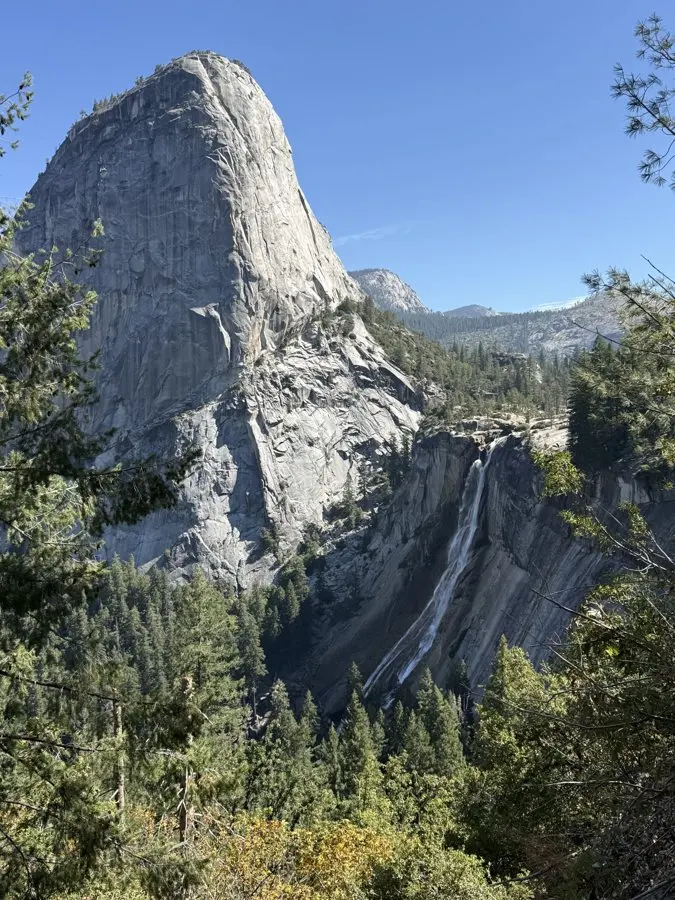
The route itself follows the classic climb past Vernal and Nevada Falls, the only two waterfalls currently flowing in the valley. With the Mist Trail closed for maintenance, crowds thinned out faster than expected — after the Half Dome junction, the pair saw almost nobody until High Sierra Camp. She was surprised to find the trail overgrown in places, despite its renown, and noted that a summer spent at sea level did her lungs no favours above 8,000 feet.
For anyone eyeing the JMT, day one is a useful reality check. Expect a long, steep, largely paved opening haul out of Yosemite Valley, cold nights even in season, and resupply logistics that demand carrying a lot of food between points. It's a trek for fit, self-sufficient hikers with permits secured well in advance — but as this account shows, the people you meet along the way are half the experience.