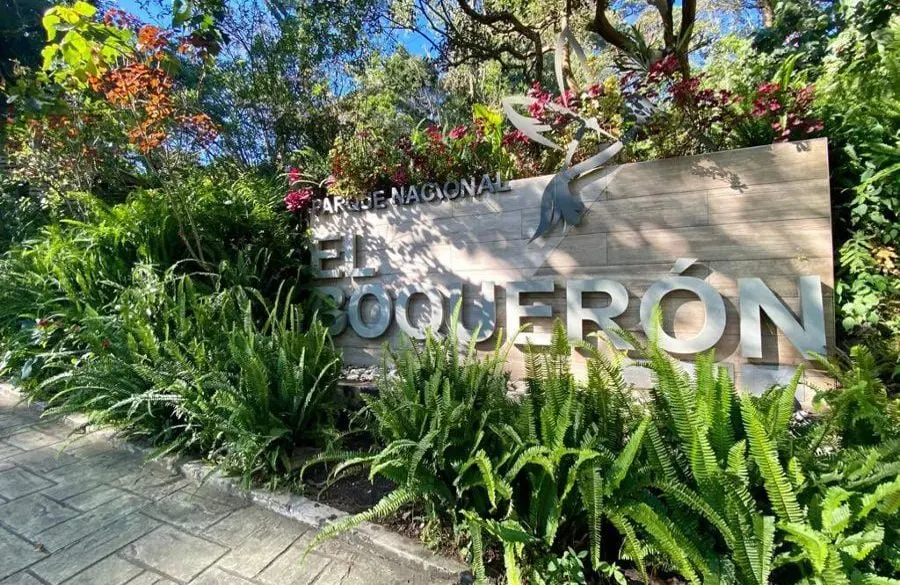
Twenty-three kilometres from downtown San Salvador, the road climbs to the rim of a crater more than half a kilometre deep. El Boquerón National Park sits near the summit of the San Salvador Volcano at around 1,950 metres, where the air is noticeably cooler than the capital below and the main sight is a hole in the earth roughly 1.5 kilometres across.
The star attraction has a nested quirk: inside the vast main crater stands El Boqueroncito, a small cone about 30–37 metres tall, born during the June 1917 eruption that also drained the lagoon which once filled the crater floor. You can see it clearly from the rim viewpoints without breaking a sweat.
And that's the appeal for most visitors — this is not a demanding trek. Marked trails lead to three lookouts in about a 20–25 minute walk, passing pine and cypress woodland with a decent chance of spotting birds along the way. There's a small interpretive centre and a museum at the entrance covering the volcano's history, plus restrooms and parking. Budget one to two hours for the main trails, or stretch it into a half-day with lunch at one of the restaurants and cafés dotting the mountain road, several with outdoor terraces and views over San Salvador and Lake Ilopango.
For the ambitious, there's a far tougher option: descending into the crater itself. There are no built trails down to El Boqueroncito — hikers use ropes and whatever footholds the terrain offers, navigating loose rock and steep drops. Some camp overnight inside the crater, but this requires authorisation and real experience. It is absolutely not a casual add-on.
Practicalities are simple. Entry is listed at $1 for Salvadorans and $2 for international visitors, with opening hours of 8:00 a.m. to 5:00 p.m. (children and seniors may enter free; parking may cost extra). Check CORSATUR's website before you go for current details. By car, the route runs through Santa Tecla and Ciudad Merliot before a winding, well-paved climb — allow time for traffic and sharp curves. Without a car, taxis, rideshares and organised tours work, and some buses serve the area, though you may face a walk to the entrance. Sort out your return transport in advance; options thin out in the mountains later in the day.
Timing matters mostly for the view. The dry season brings the clearest crater vistas, while the rainy season turns everything lush but adds showers, slippery paths and fog that can swallow the crater entirely — clouds often build by midday, so mornings are the safest bet year-round. Bring decent walking shoes, a light jacket, water and sun protection.
El Boquerón suits almost anyone: families wanting an easy outdoor outing, photographers chasing volcanic scenery, or travellers with a spare morning in the capital who fancy standing on the edge of something enormous. Low cost, short distance, big payoff.