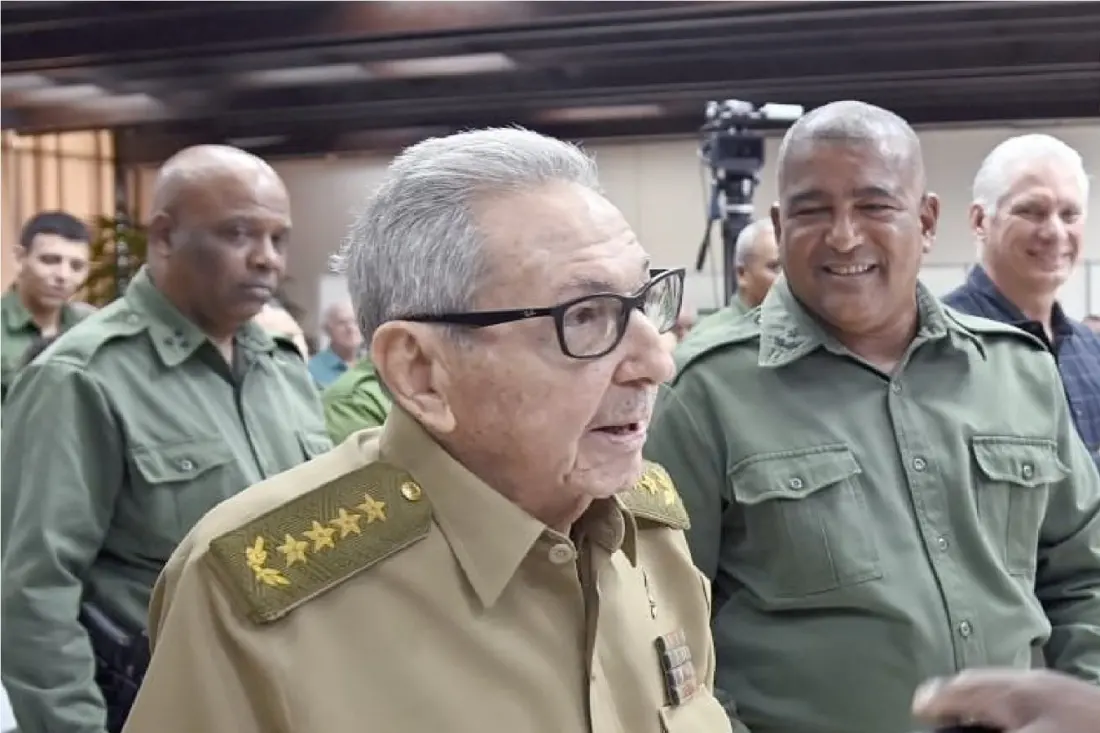
Three decades after two civilian planes were blown out of the sky over the Florida Straits, Florida prosecutors have filed state murder charges against Raul Castro, the 95-year-old former Cuban president. The arrest warrant, announced Monday, Oct. 19, by Florida Attorney General James Uthmeier, charges him with conspiracy to commit first-degree murder — with no right to bail.
The case goes back to Feb. 24, 1996, when Cuban Air Force MiG fighters attacked three Cessna C-337 aircraft flown by Brothers to the Rescue, a Miami-based volunteer group that patrolled the straits to find Cuban rafters, drop them food, water and life jackets, and tip off the US Coast Guard. Two of the planes went down in international waters; a third escaped. All four men aboard the downed aircraft were killed: Armando Alejandre, 45, Carlos Costa and Pablo Morales, both 29, and Mario de la Pena, 24.
What tipped the case was a recording published in 2026 by Cuban journalist Wilfredo Cancio, in which Raul Castro appears to admit giving the shootdown order: shoot them over the sea, he says, and those with the authority need not consult anyone. Fidel Castro had previously taken responsibility for the attack, but this recording — now the centrepiece of the evidence — pointed directly at his younger brother, who was Cuba's defence minister at the time. Judge Ariana Fajardo Orshan of Florida's Eleventh Judicial Circuit ruled the evidence sufficient and signed the warrant.
This is not purely symbolic, according to officials. Uthmeier said Castro cannot travel freely: if he sets foot in any country with a US extradition agreement, Florida will pursue him. The state action runs alongside a federal case — the US Attorney's Office for the Southern District of Florida filed its own indictment against Castro in May 2026, announced by US Attorney General Todd Blanche on May 20. US Attorney Jason Reding Quinones stressed that federal and state prosecutions can proceed independently, and that Washington "stands with Florida" in seeking justice for the four men. The announcement comes at a low point in US-Cuba relations, with the Trump administration having imposed an oil blockade and dozens of sanctions on Miguel Diaz-Canel's government this year.
For travellers, the story is a reminder of why the Brothers to the Rescue case still looms large in Miami, home to a Cuban American community that has carried this loss for 30 years. A memorial to the four airmen stands at Miami's Tamiami Park, and the Florida Straits between Cuba and the Keys remain a sensitive and heavily patrolled maritime zone — private flights and charters toward Cuban airspace operate under strict rules that trace directly back to this incident. Anyone visiting Little Havana's Cuban Memorial Boulevard will see the case's lasting imprint on the city's identity.
FDLE special agent Michael Stein put the state's position plainly: the passage of time does not diminish the pursuit of justice. Miami-Dade Sheriff Rosie Cordero-Stutz called the warrant a historic step toward accountability for the four murders. Whether it ever leads to an arrest is another matter — Castro is 95 and remains in Cuba — but for Miami's Cuban exile families, the charges close a circle three decades in the making.