A new Martin McDonagh film is about to put two very different sides of Chile on the travel map: the politically charged capital of Santiago and Rapa Nui, the remote Polynesian island better known as Easter Island. Wild Horse Nine, a dark comedy starring Sam Rockwell and John Malkovich, follows two CIA agents on a week-long holiday from Santiago to Rapa Nui in the days before the 1973 military coup that toppled president Salvador Allende. Set-jetting tour operator Abercrombie & Kent has already built a nine-day itinerary tracing the film's route, and it's a trip with real substance beneath the movie tie-in.
In Santiago, the film's shadow history is everywhere. La Moneda Palace, the presidential seat bombed during the coup, appears in the film through the window of a CIA bureau chief played by Steve Buscemi — and the production reportedly shot that scene from an office that was actually used by the agency at the time. Away from the filming locations, the Salvador Allende Museum of Solidarity in Barrio República makes a powerful stop: this elegant former family home became a left-wing exhibition space in 1971, then a Pinochet-era detention and surveillance centre, and curators have since found phone-tap transcripts hidden in its ceilings. On the city's outskirts, Villa Grimaldi, once a notorious detention centre, is now a memorial where survivors in their seventies lead visitors through gardens and mosaics rather than a 'horror museum', as one puts it.
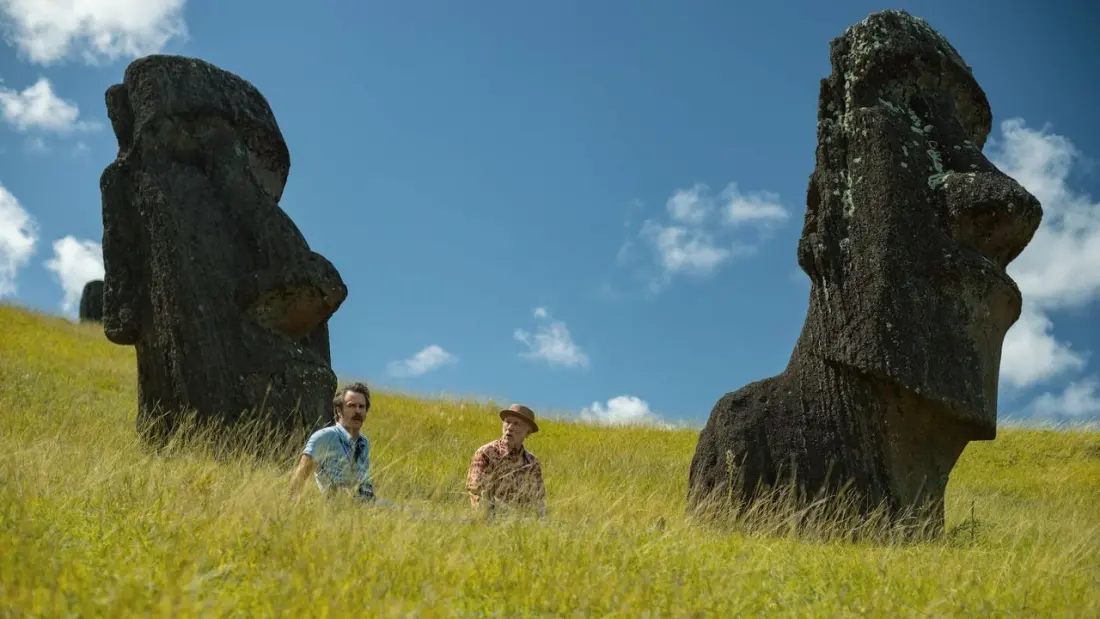
Then comes the payoff: Rapa Nui, reached the same way the film's characters arrive — a single daily flight from Santiago to a small thatched-roof airport where chickens wander near baggage claim. The island's moai are the film's emotional anchor, and the standout sites include Ahu Tongariki, where 15 colossal statues stand with their backs to the Pacific, and Ahu Akivi, whose seven figures face towards Polynesia, the ancestral homeland of the Rapa Nui people. Between sites, the coastal road passes wild horses, black volcanic rock and roadside guava trees, with local guides often drawing on family stories — some helped archaeologist William Mulloy restore the statues in the 1960s, before the first commercial flight landed in 1967 and tourism began.
The film's characters are deliberately oblivious 'ugly tourist' types who shrug off the island's Indigenous culture — an inversion that arguably makes the case for travelling better than they do. Locals hope the spotlight does for Rapa Nui what the Kevin Costner-produced Rapa Nui did in the 1990s, when a wave of film-related jobs transformed the island's economy and spurred family-run hotels like the eccentric, ocean-view Iorana.
Who is this for? Travellers who want a film-location trip with genuine depth: a few days of Santiago's political history, pisco sours and bohemian Barrio Lastarria, then the surreal, once-in-a-lifetime experience of standing before the moai at the edge of the world. Just note the islanders' etiquette — the statues are sacred, and climbing on them is off-limits.