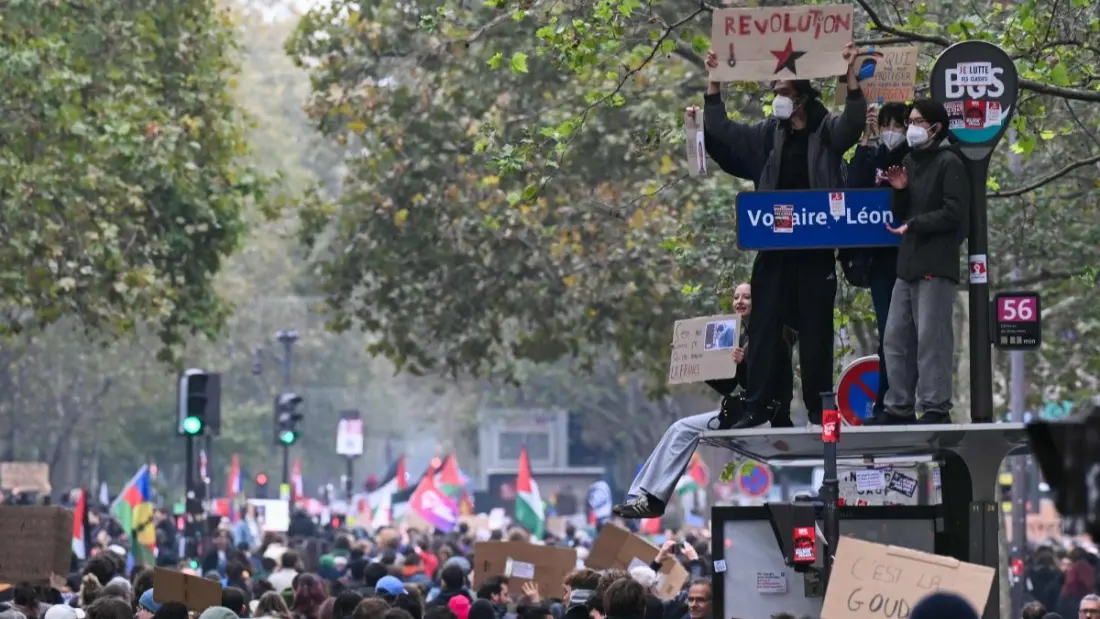
France is heading into another weekend of large-scale demonstrations, with up to 170,000 people expected to march nationwide on Saturday, including around 60,000 in Paris. It is the fourth consecutive weekend of unrest, and the timing matters for visitors: presidential elections are five months away, and the protests show no sign of fading.
The immediate trigger goes back to late September, when high school students walked out over conditions in their schools. University students joined, and young people have stayed at the centre of the movement ever since. Unions have also mobilised — there were strikes and demonstrations on Nov. 5, just two days before this weekend's marches — and a further education strike is planned for Tuesday.
In Paris, the main union march follows the classic route from Place de la Republique to Place de la Nation. Separately, the Yellow Vests movement called a rally at Place de la Concorde, right beside the Elysee Palace and parliament. Police banned that gathering, and officers were out in force on Saturday morning to keep people away, having already carried out more than 840 identity checks at train stations across the capital and inner suburbs. Around 70,000 security personnel have been deployed across the country.
Protest marches were also under way in Marseille, Bordeaux and Lille, and shop windows in Paris and other cities have been boarded up again to guard against looting. That follows Oct. 17 demonstrations that turned into some of the worst riots France has seen in years. Interior Minister Laurent Nunez warned that violence from fragmented, sporadic incidents remains a real risk, while the Yellow Vests urged supporters to defy the ban on their rally.
Politically, the pressure is mounting. Prime Minister Sebastien Lecornu is due to meet unions and employer federations on Monday to discuss wages and purchasing power, but the government has limited fiscal room given France's mounting public debt. Polls currently put far-right leader Marine Le Pen in front for the 2027 presidential vote, with hard-left figure Jean-Luc Melenchon her main rival.
Why should travellers care? If you are in France this weekend or planning a trip soon, expect disruption around major squares and protest routes in Paris and big regional cities, possible metro or rail delays near rally points, and a heavier police presence at stations. Keep an eye on local news, avoid large crowd gatherings as a precaution, and consider that central Paris sights around Concorde and the Elysee area may be inaccessible for stretches. The situation could evolve quickly ahead of next year's election, so build some flexibility into any French itinerary over the coming months.
Reported by Daily Sabah Travel