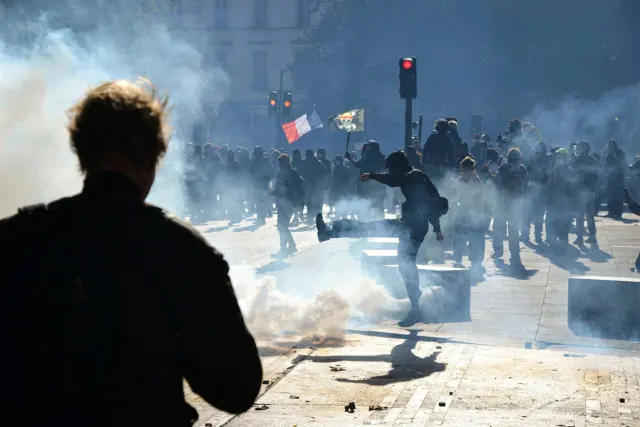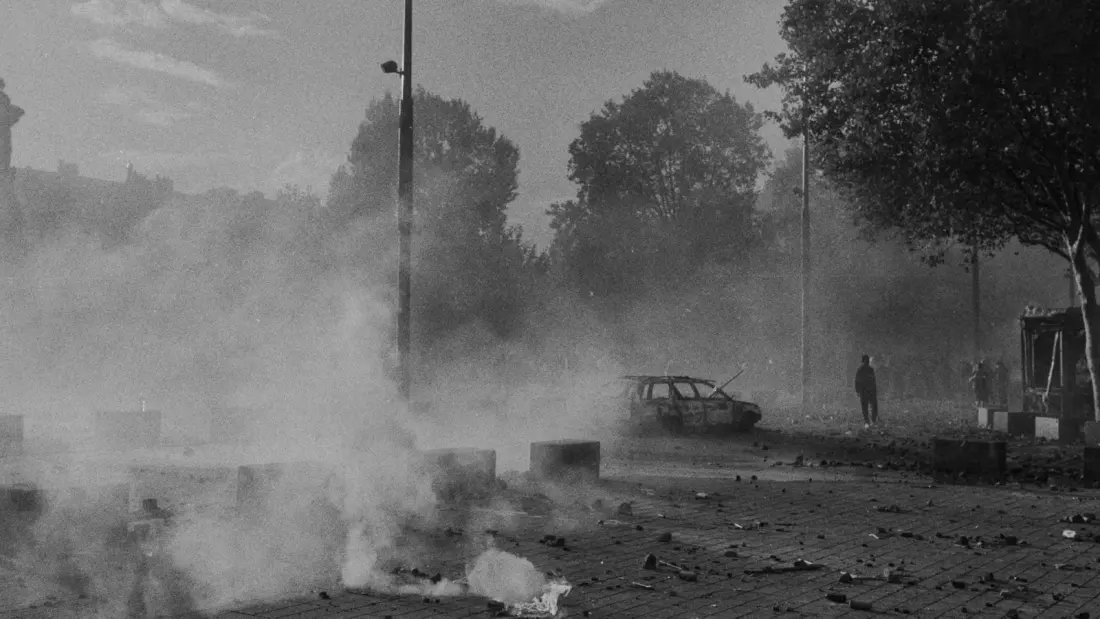
Travellers in France this weekend are navigating a heavily policed capital. Authorities mobilised 70,000 security personnel nationwide on Saturday after a wave of cost-of-living demonstrations that, the previous weekend, spiralled into riots and looting in multiple cities. The Interior Ministry described the risk of further violence as high, and Interior Minister Laurent Nunez said plainly that unrest would not be tolerated.
The impact on visitors is immediate. In Paris, many shopfronts were boarded up, several major retailers closed for the day, and the Louvre and Musée d'Orsay both shut their doors over security concerns. Police also ordered a union-organised march relocated at short notice from the Bastille area to Porte d'Italie on the city's southeastern edge — a move unions grudgingly accepted but the Yellow Vest movement said it would defy. Anyone with weekend plans in central Paris should assume closures and route changes can happen with little warning.
The scale of the unrest is significant. Last weekend, fringe groups clashed with police, vandalised public buildings and looted hundreds of shops; around 2,700 people were arrested and courts have since sentenced 217 to prison, about half of them first-time offenders. Retailers put losses in the hundreds of millions of euros. This Saturday, tear gas was used in Lyon to disperse roughly 150 protesters near the city centre after some tried to block a road in a banned area. Marseille initially banned all protests before allowing a union march as an exception.
Politics is the backdrop. Demonstrators targeted both President Emmanuel Macron and Marine Le Pen, whose National Rally party held a congress in Orléans to launch its campaign for a presidential election six months away. Polls suggest Le Pen is well placed to succeed Macron, who cannot run for a third consecutive term. Organisers blame the government for inflation squeezing households and poor conditions in schools. Rights groups, including Amnesty International and Human Rights Watch, have criticised blanket protest bans as a threat to peaceful assembly.
The turbulence isn't only French — similar demonstrations have swept Italy, Belgium, Spain and Portugal, with inflation and education among the common grievances. Italy has deployed 500 troops to help control street violence in Milan.
For travellers, the takeaway is practical rather than alarmist: peaceful demonstrations are proceeding in many places, and the violence has largely come from fringe groups. Still, if you're visiting Paris, Lyon, Marseille or Milan in the coming weeks, check museum opening hours before setting out, keep away from large gatherings, and expect a visible police presence in city centres. Major attractions can close at short notice, as the Louvre and d'Orsay did this weekend.