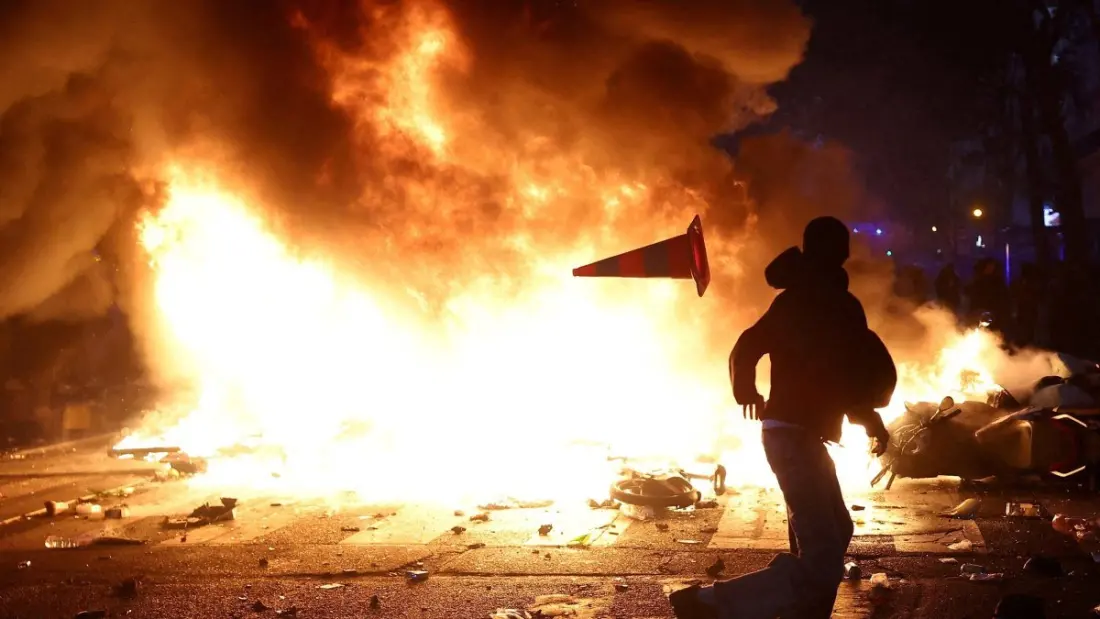
France is bracing for a fifth straight Saturday of nationwide demonstrations, and the movement has grown well beyond its origins. What started in September as school blockades over conditions in state schools has merged with cost-of-living protests, trade union strikes and a revival of the Yellow Vest movement, producing some of the country's worst civil disturbances in years.
The main flashpoint this weekend is Paris, where a rally is set for 1 p.m. near the capital, with dozens more gatherings planned across the country. The trigger is a contested bill that would create a presumption of legitimate self-defence for police officers who use their weapons — supporters, including Marine Le Pen's National Rally, back it; critics call it a licence to kill. The bill has cleared the lower house and now waits on the Senate.
The numbers give a sense of scale. More than 500,000 people demonstrated nationwide on Oct. 17, including 110,000 in Paris, when violence overwhelmed police in parts of Paris, Marseille and Lyon. Official counts for last Saturday dropped to around 146,000, though unions have called another strike for Tuesday after rejecting a proposed 0.6% minimum-wage rise as "crumbs." The Interior Ministry's watchdog has opened 161 investigations into alleged police violence since September, and rights groups have questioned the detention of nearly 7,000 minors during school blockades.
The fallout has hit places travellers actually visit. Marseille's city hall was stormed and a bust of Marianne toppled; Limoges' city hall was set on fire; Lyon's tourism office was torched. More than 4,900 people have been taken into custody since mid-October, and the government has deployed tens of thousands of officers, imposed curfews and banned numerous demonstrations.
For anyone with a trip to France on the books, the practical picture is this: city-centre areas on Saturday afternoons are where disruption concentrates — road closures, tear gas, transport diversions. Museums, shops and restaurants near rally routes may close on the day. None of this means cancelling a trip; weekdays and ordinary tourist districts are largely operating normally, and the movement has been showing signs of fatigue in turnout. But it's worth checking local news and official advisories before travel, keeping Saturday plans flexible, and steering clear of any large crowd, however peaceful it looks.
With a presidential election next year, a minority government and strained public finances, expect the unrest to stay in the headlines for months — and potentially to flare again around strike days. Travellers with flexible dates and a habit of checking the morning news will be fine; those with tightly packed Saturday city-break itineraries may want to build in a plan B.
Story first reported by Daily Sabah Travel.