Nearly ninety years after Amelia Earhart vanished over the Pacific, a research team has set sail for one of the ocean's most isolated specks of land to examine a shape in a lagoon that might — just might — be the wreck of her plane.
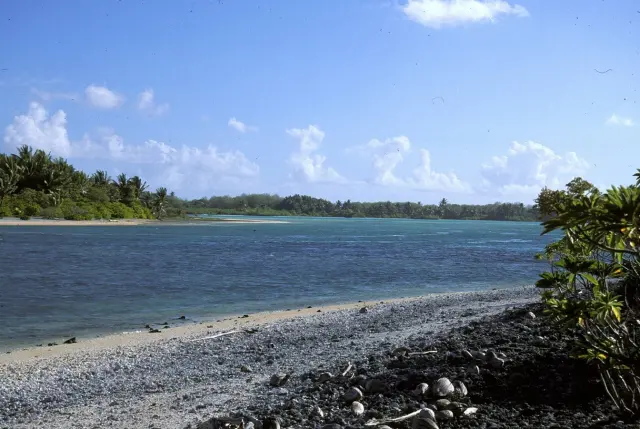
The destination is Nikumaroro, a coral atoll in Kiribati's Phoenix Islands, more than 230 miles from its nearest inhabited neighbour. The object at the centre of the trip, dubbed the Taraia Object, was first noticed in satellite imagery in 2020 and has since been spotted in aerial photographs going back to 1938. Its form resembles parts of an aircraft, though no one has confirmed that yet. Sceptics, including veteran Earhart investigator Ric Gillespie, argue it could simply be a fallen tree.
The expedition, led by Richard Pettigrew of the Archaeological Legacy Institute with Purdue University and the Purdue Research Foundation, left Tarawa aboard the vessel Marin Mainiku on 7 October, bound for an 830-nautical-mile crossing and a 13 October arrival. On the atoll, the team plans to deploy sonar and magnetometers before attempting to expose whatever lies in the shallow water. Purdue has a personal stake in the story: the university helped develop the Lockheed Electra Earhart was flying when she disappeared.
The backstory remains aviation's great whodunit. On 2 July 1937, Earhart and navigator Fred Noonan left Lae in Papua New Guinea for Howland Island, a tiny refuelling stop. They never arrived. Radio calls described dwindling fuel and difficulty spotting the island, and despite a massive search neither the plane nor the pair was ever found. The mainstream theory is that the aircraft ran out of fuel and went down near Howland. But one persistent alternative holds that Earhart and Noonan instead reached Nikumaroro and died there as castaways — a theory given some (unproven) support by skeletal remains found on the island in the 1940s that have never been conclusively identified. A 2024 sonar 'discovery' near Howland turned out to be a rock formation, so hopes are riding on the Taraia Object for now.
For travellers, Nikumaroro is essentially unreachable — which is part of its allure. But Kiribati itself is real-world reachable, and the story shines a light on one of the least-visited nations on Earth: a scatter of 33 atolls straddling the equator, where fly-fishing, WWII relics and utterly untouristed lagoons are the draw. If this expedition does confirm wreckage, expect a spike of interest in the region's pioneering-era and wartime history. Until then, Nikumaroro stays the kind of place you read about rather than land on — a raw, bird-heavy uninhabited atoll within the Phoenix Islands Protected Area, one of the largest marine conservation zones on the planet.
The verdict on the Taraia Object is still open. Whether it turns out to be a Lockheed Electra or a big tree, the answer will either crack the world's most famous aviation mystery or add yet another layer to it.