South Africa's most memorable natural attractions aren't all mountains and coastlines. Some of the country's biggest draws are trees — a few older than a millennium, others simply enormous or tied to strange chapters of history. Scattered across Limpopo, the Cape and the arid north, they make excellent anchors for road trip detours.
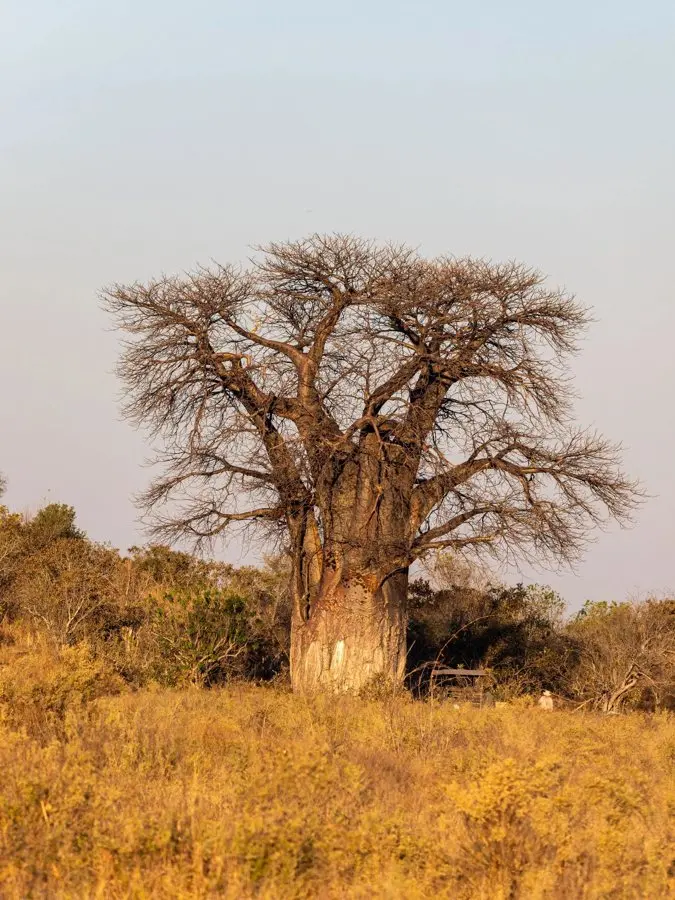
The headline act is the Sagole Baobab near Tshipise in Limpopo's Vhembe region. Estimated at around 1,200 years old, it's considered South Africa's largest indigenous tree, with a trunk circumference of roughly 34 metres. Its hollows shelter birds, and local communities regard baobabs as links to ancestors. Check access arrangements before you go — it's a rural site.
Closer to civilisation, Pretoria's Wonderboom Nature Reserve protects a wild fig that has effectively cloned itself: branches touching the ground have rooted, creating 13 interconnected trunks with a canopy spanning about 55 metres. Legend ties the tree to a buried Indigenous chief, and it has survived fire and disease to remain one of the city's best-known landmarks.
Along the Garden Route, two giant yellowwoods dominate the itinerary. The King Edward VII tree at Diepwalle near Knysna stands about 39 metres tall and is over 800 years old — a survivor of the logging that once stripped the Knysna forest. Further east, the Tsitsikamma Big Tree (600–800 years, roughly 36.6 metres) is reached by a short boardwalk off the N2 near Storms River, making it an easy stop between the Western and Eastern Cape.
History lovers have options too. In Mossel Bay, a milkwood at the Bartolomeu Dias Museum is said to be where Portuguese captain Pêro de Ataíde left a letter in a sailor's boot around 1500–1501, retrieved by a later fleet — hence a boot-shaped postbox where you can still mail cards with a special cancellation. In Cape Town's Company's Garden, a saffron pear believed planted in the mid-1600s is the country's oldest cultivated tree, a relic of the Dutch East India Company's provisioning garden.
The Western Cape adds more: five 300-year-old camphor trees at Vergelegen Wine Estate in Somerset West (declared national monuments in 1942), and the sprawling Moreton Bay fig known as the Wedding Tree at Arderne Gardens in Claremont, its branches reaching more than 30 metres.
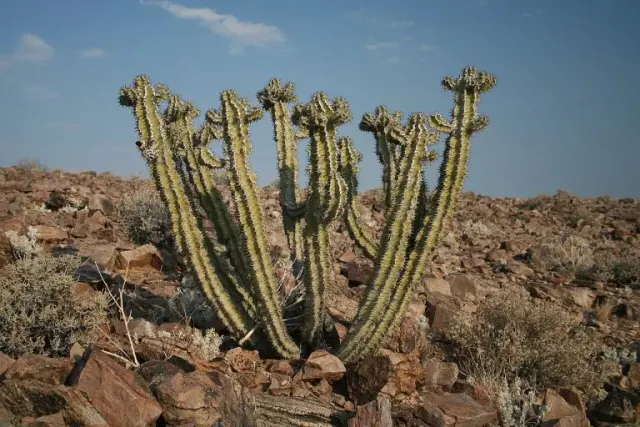
Two wildcard stops round out the list. A stand of saligna gums planted in 1906 at Woodbush, near Magoebaskloof in Limpopo, produced a tree measured at 81.5 metres in 2011 — then the tallest in South Africa and Africa. And in Namaqualand's Northern Cape, the forked, otherworldly quiver trees at Gannabos make for striking photos against rocky hills.
Anyone road-tripping the Garden Route, exploring Limpopo, or based in Cape Town for a few days can slot several of these into an existing itinerary without major detours. Pack a postcard for Mossel Bay and check forest access before driving out to the remote ones.