Ask ten Louisiana cooks how to make gumbo and you'll get ten different recipes — plus ten firm claims that theirs is the best. That's the point, according to the chefs behind the state's most famous dish: gumbo isn't one recipe, it's a portrait of everyone who ever landed in Louisiana.
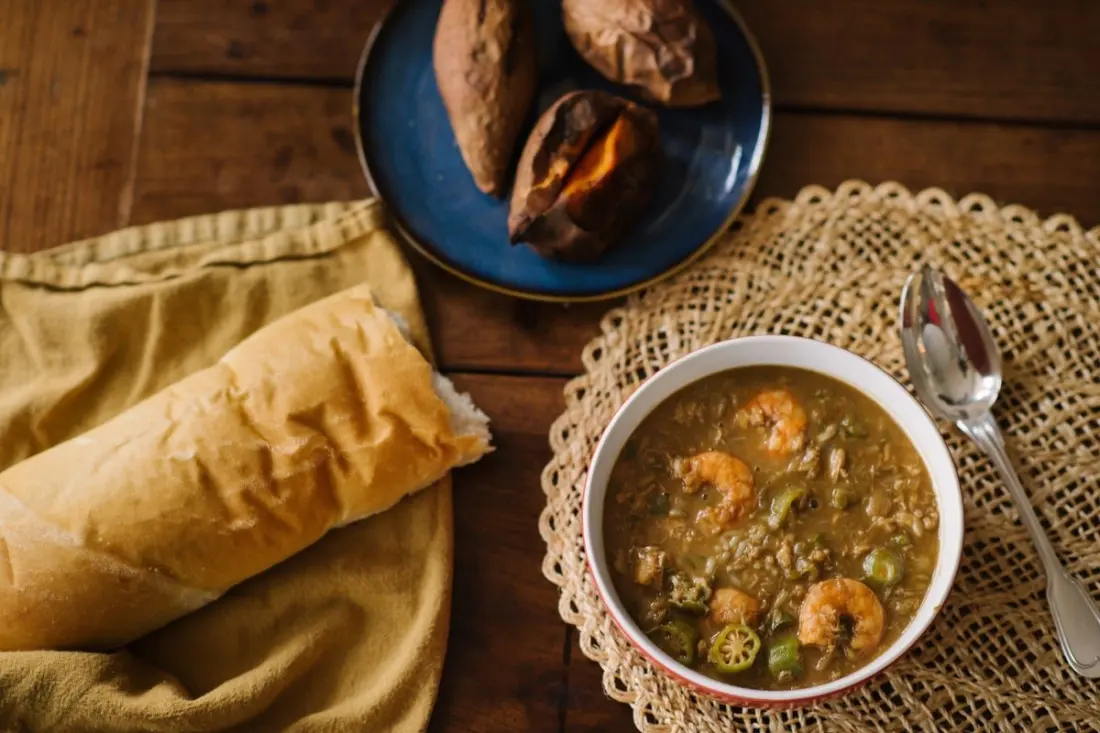
The basics go like this. Heat oil, stir in flour, and cook a roux until it turns dark chocolate-brown. Add the so-called Louisiana Holy Trinity of onions, bell peppers and celery, then your protein — chicken, andouille sausage, blue crab, shrimp or crawfish — and serve it over rice. New Orleans versions usually include tomatoes; in Cajun country to the west (Lafayette, Lake Charles) they typically don't. Lake Charles locals often pair it with potato salad and saltine crackers on the side.
But the dish carries more history than technique. The name likely comes from "gombo", a West African word for okra, carried to the American South by enslaved Africans. Native American Choctaw cooks contributed filé powder, ground from dried sassafras leaves. French tradition brought the roux; Spanish colonial settlers, Acadians who sailed down from Nova Scotia, and later German, Irish, Italian and Vietnamese communities all added their own touches. New Orleans chef Dee LaVigne, who runs the Deelightful Roux School of Cooking, is blunt about one part of that story: Black cooks built and preserved Louisiana's culinary traditions, often without the credit they deserved.
The regional split matters if you're eating your way across the state. New Orleans gumbo leans Creole; Lafayette, about 135 miles west, tilts Cajun. Lafayette chef Patrick Mould, who runs Louisiana Culinary Enterprises and makes a smoked duck gumbo, also points travellers towards one of the state's most memorable traditions: the Courir de Mardi Gras, when costumed riders on horseback go door to door collecting ingredients — sometimes chasing a chicken for the pot — before a giant communal gumbo is cooked and shared.
For visitors, gumbo is the easiest possible entry point into Louisiana. It's on menus everywhere from New Orleans' Creole kitchens to roadside stops in Cajun country, alongside the state's other signatures: jambalaya, crawfish étouffée, boudin, muffuletta and po'boys. Cooking classes in New Orleans will teach you the roux; food trails through Cajun country will show you where the ingredients come from — the Gulf coastline, swamps and bayous that supply the seafood.
Why should this matter to someone planning a trip? Because Louisiana is one of the few US states where you can literally taste its migration history in a single bowl, and because the people cooking it are happy to talk. Chefs here treat gumbo as family heritage as much as food — ask about someone's recipe and you'll hear where they grew up and who taught them. The consensus on the best version, per Chef Mould with a laugh: the one your momma made.
If a food-first Louisiana trip is on your list, build it around both cities and the stretch between them — and time it for Mardi Gras season if you want to see the courir in action.