Hà Nội has spent the weekend dressed in its best. The Hà Nội Áo Dài Tourism Festival 2026 opened at the Hà Nội Museum on November 21 under the theme Traditional Beauty – Contemporary Breath, and it is the city's most ambitious attempt yet to position itself as Việt Nam's áo dài capital — not just as a place to admire the national dress, but to see how it's actually made.
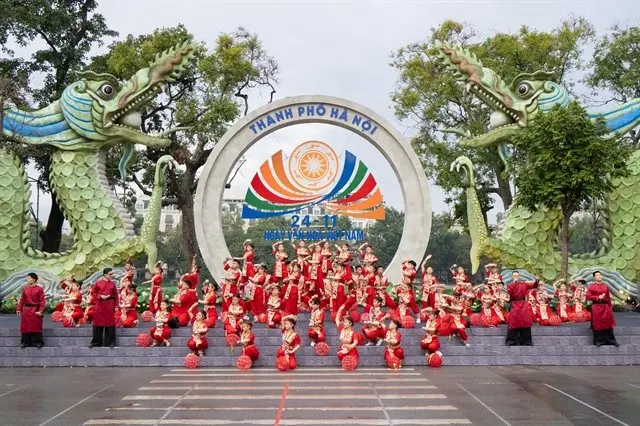
The opening night, called Hà Nội in Four Seasons, staged the capital's shifting moods through costume: the autumn light around Hoàn Kiếm Lake and the Old Quarter, the quieter historical tone of winter, spring's energy and summer's youthful pace. Nine designer collections followed, with names including La Hằng, Lan Anh of La Sen Vũ, Quang Huy, Miss Vietnam 2010-turned-designer Ngọc Hân, and Nghiêm Văn Đạt, an artisan from Trạch Xá, a village known for traditional tailoring.
The big set piece came on November 22: a parade themed Heritage Flow circling Hoàn Kiếm Lake with more than 2,000 participants expected, plus a record attempt for the largest gathering of men wearing áo dài — around 500 of them. That last detail matters, since the dress is often framed as women's wear; the festival is deliberately widening who it belongs to. The Hà Nội Women's Union ran a parallel programme at the museum, and there was a children's fashion showcase, Seeds of Heritage, from designer Nhật Thực.
There's a next-generation angle too. The final of the Traditional Beauty – Contemporary Breath design contest put ten student collections from five Hà Nội universities on stage on the evening of November 22, before the festival closes on November 23 with a show featuring Nhật Thực and designers from the Vietnam Áo Dài Cultural Association, including Trung Beret, Hương Beful, Cao Thu Vân, Hàn Phượng and Phùng Thu Thủy.
For visitors, the most hands-on part is at the museum itself. Its grounds have been turned into an áo dài experience space with four exhibition areas running throughout the festival: workshops on embroidery, jewellery making and painting on fabric, demonstrations of the garment-making process, tea and traditional arts, folk games and photo spots.
Why care? City officials are explicitly building the áo dài into Hà Nội's tourism offer — the pitch is that travellers will eventually be able to meet artisans, visit tailoring craft villages and see the creative process behind the dress, not just photograph it. If you're in the capital in late November, this is a rare chance to see that idea in action, with the spectacle concentrated around Hoàn Kiếm Lake, one of the city's most walkable districts.