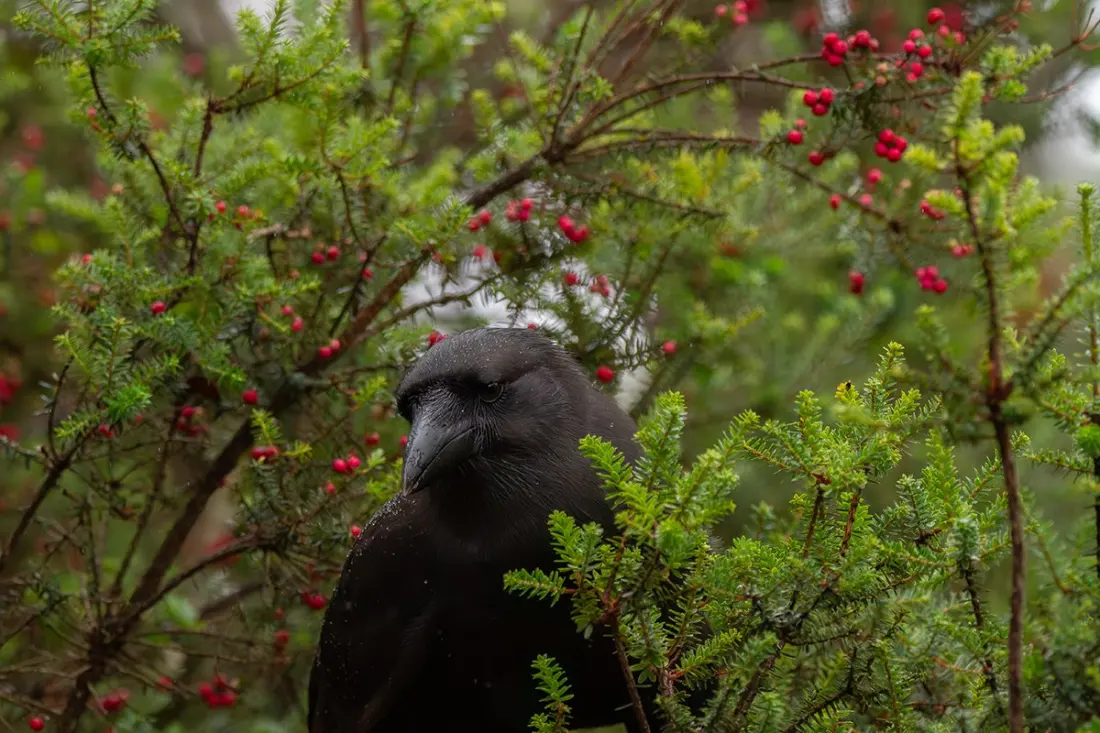
High on the wet, windward slopes of Haleakalā, a sound that vanished from the wild more than 20 years ago has returned. In late 2024, the Maui Forest Bird Recovery Project, working with The ‘Alalā Project, released five young ‘alalā — the Hawaiian crow — into the remote Kīpahulu Forest Reserve on East Maui. Nearly two years on, the birds are thriving, foraging on native plants like pūkiawe and ‘ōlapa, and showing the clever, raucous personality that made them a familiar presence in Hawaiian forests for centuries.
‘Alalā were last seen in the wild in 2002 on Hawai‘i Island, their numbers crushed by habitat loss, invasive predators and disease. A captive breeding program began in 1993 as a last resort, and earlier reintroduction attempts on Hawai‘i Island struggled — largely because the ‘io, or Hawaiian hawk, preyed on the released crows. The solution was a new address: Maui Nui has no ‘io, and fossil records hint a similar crow once lived there anyway. The long-term ambition is still to return ‘alalā to their home island, but for now, East Maui offers a safer proving ground.
The birds passed an unexpected test in March 2026, when back-to-back Kona low storms kept field crews away for weeks and cut off the automatic feeders the team normally services almost daily. Rather than faltering, the crows ramped up their natural foraging. For the technicians who watch them, it was proof the instincts run deep — and a genuine step toward full independence from human support.
Why does this matter to a traveller? Because Maui’s forests are losing voices fast. Just two centuries ago the island supported at least 13 native forest bird species; six remain today, and two are critically endangered, threatened by mosquitoes carrying avian diseases alongside habitat loss and predators. The MFBRP works daily on the ground — banding birds, sampling for disease, suppressing mosquitoes and restoring habitat — and visitor interest and support genuinely help. Even if you never spot an ‘alalā (the Kīpahulu reserve is deliberately remote and protected), the story adds depth to any hike through Haleakalā’s native ‘ōhi‘a lehua forests, where you may still hear ‘apapane and ‘amakihi calling, or glimpse a scarlet ‘i‘iwi at a blossom.
The return of the ‘alalā is a rare good-news chapter in Hawaiian conservation — a culturally sacred ‘aumākua species, an important seed disperser, and a bird once written off as effectively extinct in the wild, now learning to live free again. Groups like the Maui Forest Bird Recovery Project (mauiforestbirds.org) show that with persistence, extinction doesn’t have to be the final word.