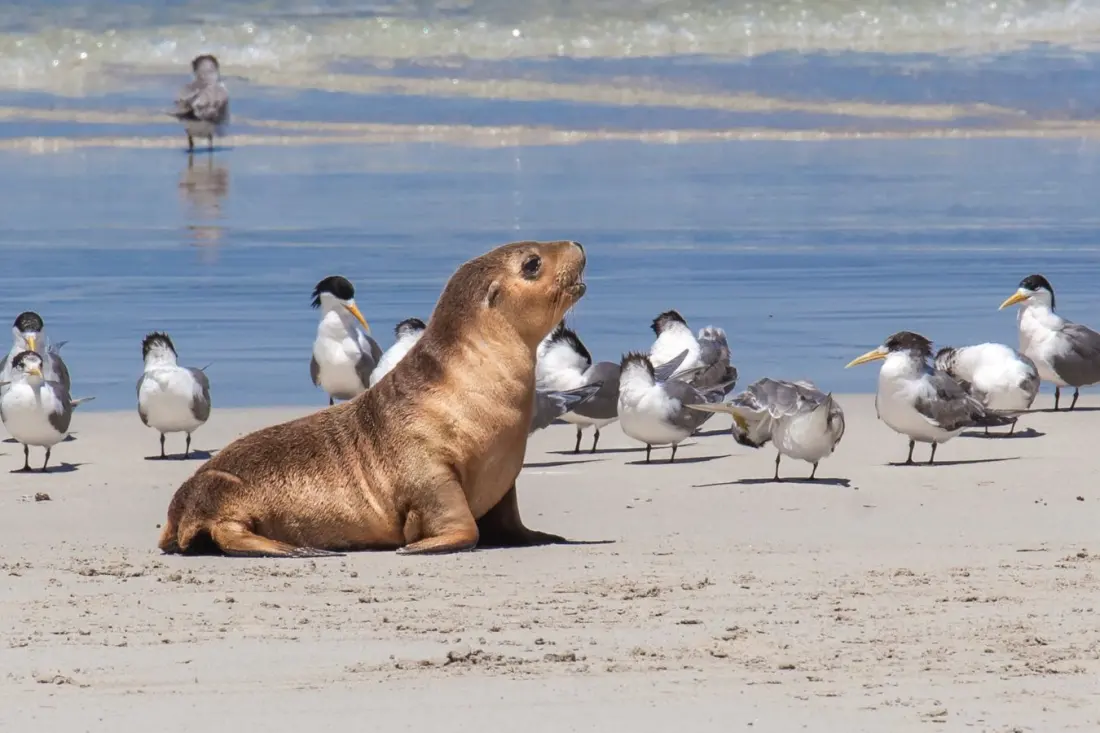
A dead Australian sea lion on Kangaroo Island has become the first of its species confirmed to have died from the H5N1 bird flu in Australia. The animal, already weakened after a shark attack, tested positive for the highly pathogenic strain that has been sweeping wildlife populations worldwide since 2021. A second dead sea lion from the same area is under investigation.
This matters because the Australian sea lion is in a precarious position already. It's the rarest pinniped breeding on Australian coasts, listed as endangered, with fewer than 12,000 animals left. The species also breeds slowly, so even a limited outbreak could hit colonies hard. These are animals travellers specifically come to Kangaroo Island to see — seal colonies are one of the island's headline attractions.
The story behind how the virus spreads is a reminder that coastal wildlife tourism now carries new responsibilities. The current H5N1 strain first appeared in birds in 1996, but a 2020 mutation made it deadlier and able to infect mammals — attacking not just respiratory systems but the brain and nervous system. It has wiped out huge numbers of seals and sea lions overseas: more than 17,000 southern elephant seal pups died in Argentina, and after the virus reached Australia's remote Heard Island, drone surveys counted over 13,000 dead pups of the same species.
Transmission routes are still being pieced together. Sick seabirds dying on the islands where sea lions breed can pass the virus through direct contact, scavenging carcasses, or contaminated sand, rocks and water. Rapid die-offs among densely packed elephant seals suggest mammal-to-mammal spread is likely too — seals and sea lions cough and sneeze just like birds. Dolphins are vulnerable as well: a bottlenose dolphin in Florida had the highest virus concentration in its brain, and a dolphin that washed up near Goolwa in South Australia was Australia's first confirmed H5N1 case, likely after eating or closely interacting with an infected bird. Large whales appear mostly unaffected so far.
For anyone planning a trip to Kangaroo Island or other coastal wildlife hotspots, the practical takeaway is to keep your distance from seals and any dead animals on beaches, never touch carcasses, and follow local guidance on colony access. The virus survives longest in cool, moist conditions — it can stay infectious in water for days or weeks — making breeding colonies and beaches transmission hotspots. Since there's no way to stop the spread now it has arrived, wildlife authorities are focused on safely removing carcasses, better monitoring, and reducing human pressure on already vulnerable colonies.
Australians hoping to see sea lions in the wild should treat current access rules as the minimum, not an inconvenience. The animals are endangered, slow to breed, and now facing a virus capable of collapsing entire colonies. Your best contribution as a visitor is distance, patience and no exceptions.
Australian Geographic