Some of Ho Chi Minh City's best-known museums are quietly rebuilding themselves around data. The shift is turning Vietnam's cultural institutions from glass-case collections into spaces you can explore on a screen — and, in some cases, before you even land in the country.
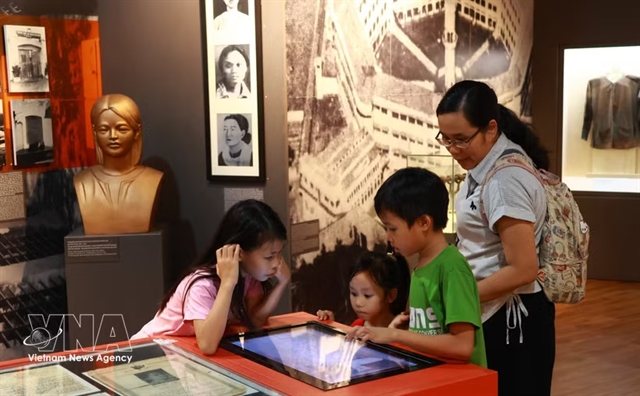
The War Remnants Museum is the standout example. It has digitised all of its artefact records and standardised 130 terminology pages for cataloguing. For visitors, that translates into practical upgrades: automated ticketing, audio guides covering 119 content points in 10 languages, 3D scans of artefacts, online exhibitions and projection technology. The payoff is being able to linger over details you'd struggle to see behind glass, and to move at your own pace rather than following a crowd.
The Southern Women's Museum shows the growing pains. It has digitised 1,113 artefacts but only 113 are currently viewable by the public — thousands more are waiting for a new exhibition system targeted for 2027. The bottleneck isn't the scanning itself; it's storage, content creation and the fact the museum has no dedicated IT staff to turn raw data into something a visitor can actually use.
Change is also filtering down to the neighbourhood level. Tân Định Ward wants to digitise Ngọc Hoàng Pagoda, a nationally recognised architectural and artistic heritage site, followed by three municipal relic sites — part of a local push for a "digital ward". Officials there have asked the city's Department of Culture and Sports for clearer technical guidance, which tells you how early-stage much of this still is.
At the national level, the Department of Cultural Heritage is building a shared database spanning five categories: relic sites, museums, artefacts, intangible cultural heritage and documentary heritage. It would pull together listings, drawings, photos, films and 3D models for research, education and online access. Academics and tech firms are adding ideas — a proposed three-step approach for lacquer art (document, build experiences, then create) would let visitors rotate and enlarge 3D models or watch interactive demos of traditional techniques, while others are pairing heritage data with AI and immersive spaces.
For travellers, the practical upshot is that HCM City's museums are getting easier and more rewarding to visit, especially if you don't read Vietnamese. Multilingual audio guides and self-paced digital displays remove a lot of friction. And over the next few years, expect a growing slice of Vietnam's heritage to be viewable online — handy for planning a trip around what actually interests you, or for armchair exploring when a visit isn't on the cards yet.
The bigger point for anyone who cares about cultural travel: the digitised stuff only works when the underlying data is accurate and well-managed. HCM City's museums are a live test case of how a city gets that right — and where it still falls short.