Before the Australian film industry found its feet in the 1970s, it was outsiders who put the country on the world's cinema screens — and their locations read like a traveller's wishlist. Between the late 1920s and early '70s, American and British crews rolled in to shoot what are now affectionately called 'meat-pie westerns', leaving behind a record of outback stations, Sydney Harbour and the Flinders Ranges as they looked decades ago.
The first attempts were oddities: US productions like The Bushranger (1928) and Captain Fury (1939) shot in the Hollywood Hills with American stars. The breakthrough came with Rangle River (1936), filmed for real around Rawdon Vale, Burragorang and Sydney's new Pagewood Studios. Then in 1946, Britain's Ealing Studios delivered The Overlanders, an epic cattle drive across the Northern Territory that made Chips Rafferty a star and sparked a mini-boom of roughly 15 British pictures by 1970.
Ealing's run left a rich location trail. Bush Christmas (1947) chased horse thieves through the Blue Mountains; Bitter Springs (1950), the first feature to give First Nations actors major roles, was shot in Warren Gorge and the Flinders Ranges. Even the flops are interesting: Eureka Stockade (1949), the most expensive film shot in Australia at that point, used the Hunter Valley to stand in for Ballarat.
Hollywood eventually made the trip too. Kangaroo (1952) became the first Technicolor meat-pie western, filmed in the Flinders Ranges, while The Sundowners (1960) put South Australia's sheep-shearing country — Carriewerloo Station near Port Augusta — on screen. Nevil Shute adaptations brought cameras to Alice Springs and Tennant Creek for A Town Like Alice (1956), and to Wilpena Pound and Bourke for Robbery Under Arms, Peter Finch's farewell to Australian cinema.
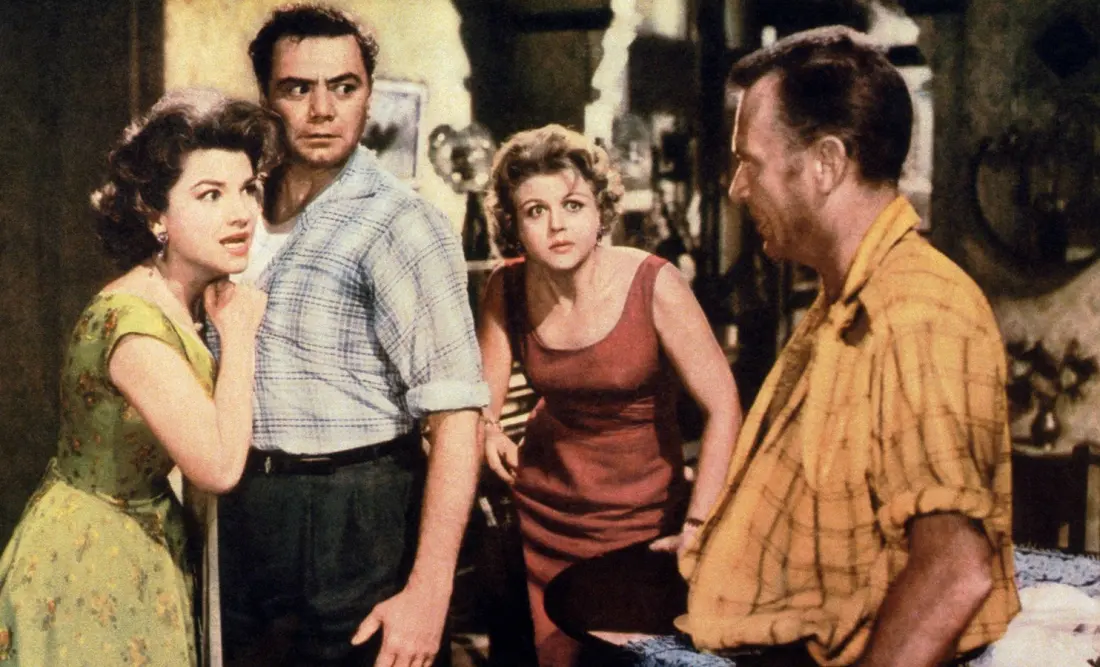
The most striking shift came in 1959, when three films turned to contemporary, urban Australia. On the Beach turned Melbourne into a temporary mini-Hollywood (suburban Berwick still honours it with Kramer Drive and Shute Avenue); Summer of the Seventeenth Doll caught a New Year's Eve crowd at Luna Park; and The Siege of Pinchgut — Ealing's final feature — filmed a thriller on Fort Denison with remarkable footage of the Sydney Harbour Bridge and the tram depot site that would later become the Sydney Opera House. Today it's a cult favourite of Quentin Tarantino.
The wave crested with Wake in Fright and Walkabout in 1971, whose Outback Gothic vision, backed by new government funding, triggered the local revival that ended the industry's 'Dark Ages'.
Why care? Because these films double as travel documents — a 1950s Flinders Ranges, a pre-Opera House harbour, a working shearing station. Film-location pilgrims can trace a route from Wilpena Pound to Port Augusta to Fort Denison, watching each movie beforehand as an unusual guidebook.