
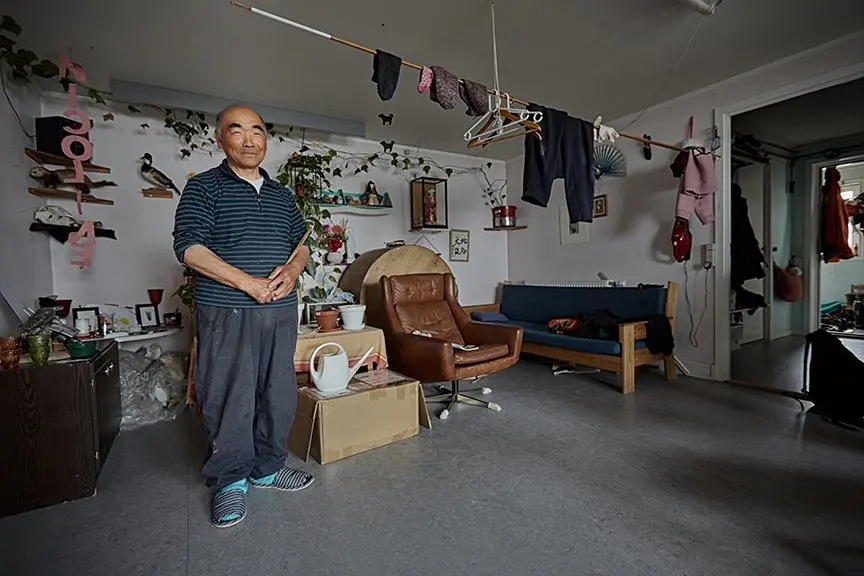
In Siorapaluk — the northernmost village in the world — one of its most familiar faces was a man born in Tokyo. Ikuo Oshima, who arrived in northwest Greenland in 1972 and spent more than fifty years there, has died in nearby Qaanaaq at the age of 79.
The story of how he got there is the stuff of local legend. Oshima came north as a young Japanese mountaineer, reportedly planning Arctic expeditions alongside Naomi Uemura, Japan's celebrated climber and polar explorer. Then he met a girl named Anna in Siorapaluk. The expedition plans faded; he stayed, married, and set about the far harder task of becoming Inughuit.
The early years were brutal. He had poor dogs and inadequate clothing, and by his own account his first decade was the hungriest of his life. He learned the language, the ice, the weather, and how to survive. In time he earned the title of piniartorsuaq — a great hunter — known well beyond his village. He also embraced a local economy in which nothing was wasted: skin, sinew, bone and fur all had a use, and gratitude to the animal was part of the deal.
Oshima became a bridge between Japan and Avanersuaq, the far northwest of Greenland. Japanese explorers, students and researchers passed through him; some called him their master. He taught outsiders dogsledding, hunting and the skills needed to get through the polar night, and he is credited with helping build the Japanese scientific presence around Qaanaaq that continues today, notably involving Hokkaido University. Filmed years ago repairing abandoned hunting huts at Etah, further north, he fixed shelters that weren't his — on the logic that whoever came next might need them.
For travellers drawn to Greenland's far north, his story is a reminder of what Siorapaluk and the Qaanaaq region actually are: tiny, demanding communities where hunting remains a way of life and visitors are few. Roughly 800 people live in the wider Qaanaaq area, with Siorapaluk home to only a few dozen, accessible by boat in summer or by dogsled and helicopter in the cold months. Oshima's daughter Tuku became a hunter herself, and his children and grandchildren remain in the region — so the Tokyo man who chose the Arctic isn't really leaving. When the sea calms, he will be brought home by boat and buried in Siorapaluk's small cemetery.
His life says something useful to anyone dreaming of the extreme north: the Arctic doesn't reward ambition so much as patience. As Oshima himself put it when asked to forecast the weather for an expedition: it will be what it will be. Not much help for a schedule. Good advice for everything else.
Story via ExplorersWeb.