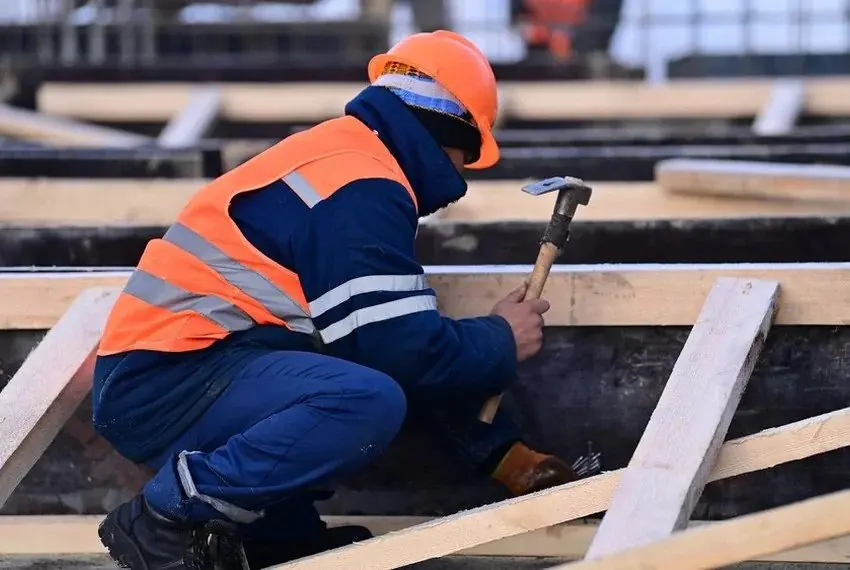
Karakol, the mountain town at the eastern end of Lake Issyk-Kul that serves as Kyrgyzstan's main ski and trekking base, is in the middle of a sizeable construction project. A modern sports complex is rising in the Kashka-Suu microdistrict, covering a full 12 hectares of land. The money comes from the Stabilization Fund, with the state-owned Kyrgyzkurulush enterprise acting as general contractor. Work started in June, and around 120 workers are currently on site.
The scale is ambitious for a town of Karakol's size. Plans call for a multifunctional arena with seating for 5,000 spectators, built to international standards, plus an Olympic-standard swimming pool. There is also a tourist-friendly piece: a 200-bed hotel is part of the development, alongside a 275-bed boarding school aimed at young athletes.
Construction is progressing floor by floor. Crews are currently laying gas concrete block walls on the fourth and fifth levels of the hotel building. Reinforcement work is underway on the second floor of the educational and training school and the first floor of the dormitory. In other words, the project is still some way from opening, and no completion date has been announced.
Why should a traveller care? Karakol already draws visitors for its ski resort in the Terskey Alatau mountains, its proximity to the Jety-Oguz red rock valleys, and its role as the jumping-off point for treks around Issyk-Kul and towards the high passes. A purpose-built arena, pool and hotel suggests the town is positioning itself for sports tourism, competitions and training camps through all seasons — not just the winter ski run. An Olympic-standard indoor pool, in particular, would be a rare facility in Central Asia's mountain regions, useful for altitude training and, for regular visitors, simply something to do beyond the slopes and trails.
For now, treat this as a watch-this-space story. If you are planning a Karakol trip in the near term, your itinerary will still revolve around skiing, hiking and the lake. But if the complex opens as designed, it adds a genuinely new dimension to one of Kyrgyzstan's most rewarding corners — a reason to extend a stay, or to return in summer when the mountains shed their snow.