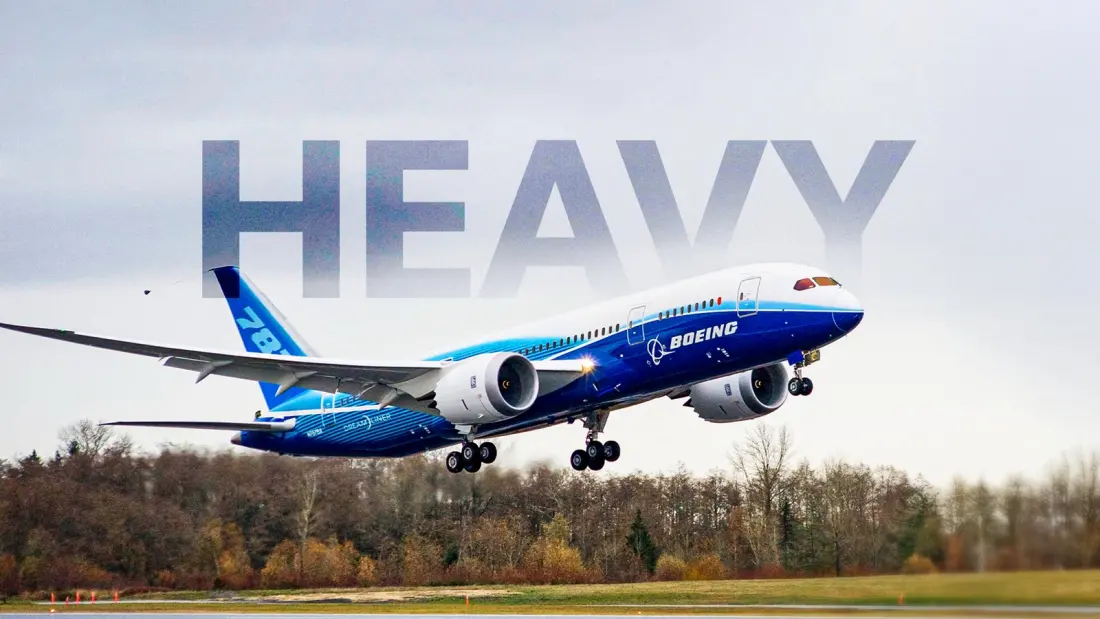
The Boeing 787 Dreamliner is now the best-selling widebody jet ever, but the earliest examples were a very different animal. The first aircraft off the line came in dramatically overweight - the prototype alone was nearly 22,000 pounds (about 9,979 kg) above its design target - and several of those early jets, nicknamed the 'terrible teens', never found airline buyers at all.
The root of the problem was timing. Racing a next-generation Airbus rival to market, Boeing began building planes before the design was finished. In May 2009, a ground test that bent a 787 wing to simulate flight loads revealed unexpected stress where the wing joins the fuselage: the carbon-fiber layers were delaminating at the ends of 17 stringers, a failure mode engineers described as 'flowering'. Since the test aircraft were already built, Boeing had to retrofit all 34 affected stringer locations with dense titanium brackets and metal fittings - thousands of pounds of permanent dead weight per plane.
Weight crept in elsewhere too. With no history of all-composite airliners, the FAA demanded a 150% safety margin, so early fuselages were laid up with overly thick carbon plies. Meanwhile, the jet's revolutionary all-electric architecture - four 250 kVA starter generators, cabin air compressors, liquid-cooling loops and heavy-gauge copper wiring to move roughly 1.5 megawatts around the aircraft - was far heavier than projected. Analysts estimated early jets could be up to 8% overweight, costing 10-15% of their range. Only after years of flight data did Boeing safely thin the composite layers and drop the titanium patches from later production.
Some of the unwanted teens had sadder endings than others. One, built for Royal Air Maroc and later earmarked by luxury outfit Crystal Luxury Air for private world tours, ended up stored at Victorville, California, from 2017 with barely 13 hours of flying on the clock. It was eventually torn up in Roswell, New Mexico - the first scrapping of a never-entered-service 787 anywhere - because its engines and components were worth more than the airframe. A sister ship intended for the same airline now sits at Moses Lake, Washington, and may be next.
Why should a traveller care? The 787 you fly on today is a far better machine than those first attempts: lower cabin altitude, better humidity, quieter cabins and stronger fuel economy all trace back to the tech those early jets pioneered, and modern production finally delivers it at the intended weight. The program's 2,489 orders and 1,178-aircraft backlog mean the Dreamliner will keep appearing on long-haul routes for decades - whether you're flying ANA, Ethiopian or anyone else.
Story via Simple Flying.