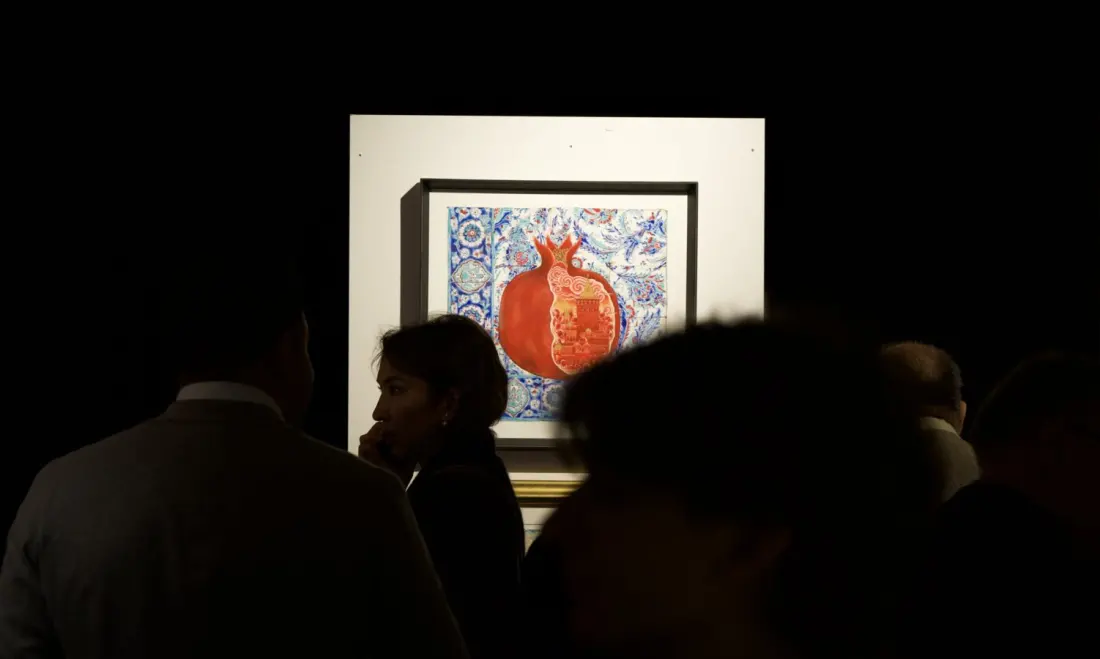
A small exhibition in Astana is making a big case for one of the world's most intricate art forms. On November 5, Turkish miniature artists Taner Alakuş and Yasemin Akyol opened 'IZLEK' at the OzgeEpic center, presenting traditional Ottoman-style miniature painting reinterpreted for contemporary audiences. The show runs until November 30 and is backed by the Embassy of Türkiye in Kazakhstan.
The title itself is a conversation between two cultures. Akyol explained that 'IZLEK' refers to a central theme in Turkish literary tradition, but its echo of the Kazakh word for 'trace' shaped the whole concept: the artists came to Kazakhstan, in her words, to find their traces there. That idea of shared roots runs through the entire show. Both artists point to overlapping Kazakh and Turkish traditions — reverence for ancestors, strong family ties, a deep food culture — as reasons the work should resonate locally.
Alakuş is a major name in the field. Practising miniature art since 1983, he founded the Taner Alakuş Miniature Art Workshop in Istanbul and has produced roughly 400 works, shown in Türkiye, France, South Korea, China, Russia and beyond. His stated aim is to carry traditional lines and colours into a universal visual language, and the exhibition pairs classical technique with modern approaches rather than treating miniature art as a museum piece.
Akyol brings a lighter touch. She deliberately works humour and playful details into her paintings, arguing that art should offer relief from daily life and invite people in who might otherwise feel intimidated by tradition. She also raises a practical point: keeping younger generations connected to cultural art depends on education, training and real support for emerging artists.
The diplomatic angle matters too. Türkiye's Ambassador to Kazakhstan, Mustafa Kapucu, framed the exhibition as people-to-people connection rather than official state culture — the kind of direct contact through art, tourism and education that he believes strengthens ties between the two countries more broadly. Alakuş has already signalled hopes for joint exhibitions with Kazakh artists, so this may be the start of a recurring exchange.
For travellers, this is a good excuse to look beyond Astana's famous futuristic architecture. The city has been quietly building a serious cultural scene, and a free-flowing exhibition like this offers an easy hour or two between sightseeing. If you're in the Kazakh capital before the end of November, the OzgeEpic center is worth a detour — and even if you miss this show, it's a signal that Astana's gallery calendar increasingly features international contemporary and traditional art. Keep an eye on what the OzgeEpic center programmes next, especially if Kazakhstan–Türkiye artistic cooperation expands as the ambassador suggests.
Story reported by The Astana Times.