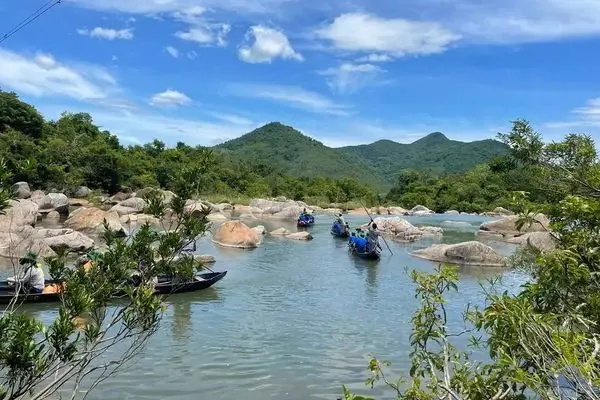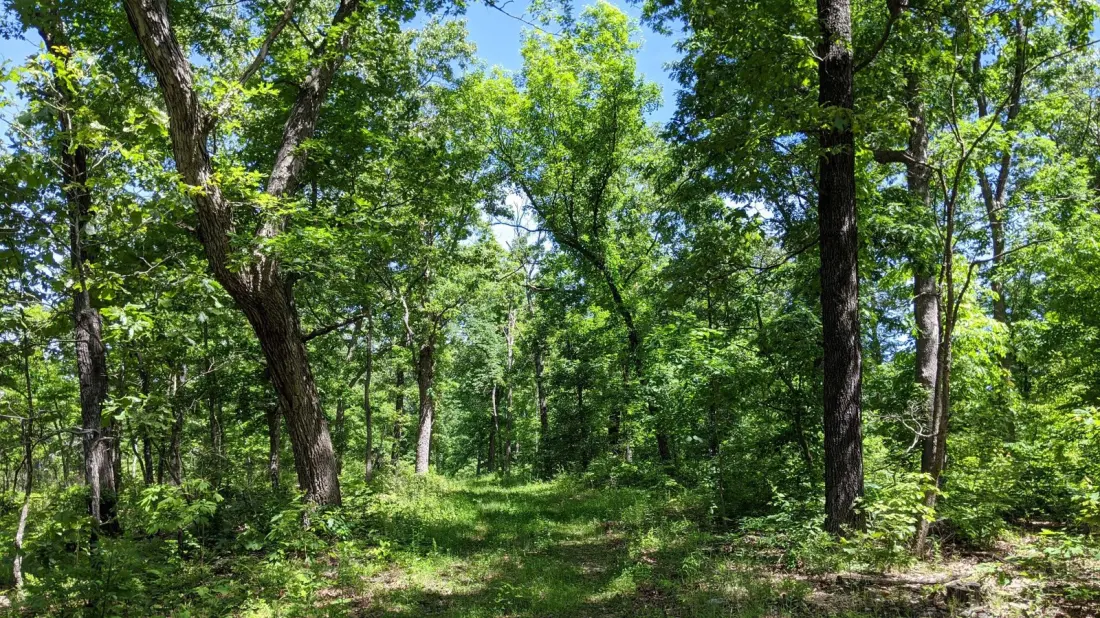
Tucked between the towns of St. Clair and Sullivan, about 47 miles southwest of St. Louis, Little Indian Creek Conservation Area is the kind of place you go when you want the Ozarks without the crowds. Spread across more than 4,200 acres in Franklin and Washington counties, it sits just an hour from the city yet feels genuinely remote — a patchwork of oak and shortleaf pine forest, rocky glades, open woodland, and creeks cutting through wooded hollows.
Missouri bought the land in 1978 after decades of grazing, logging, and row cropping, and the state's conservation department has been actively restoring it ever since with prescribed burns, glade restoration, and tree planting. That mix of habitat is what makes it interesting: the namesake creek runs through the property for about half a mile, tributary streams thread through the campground loop, and in spring you can spot Virginia bluebells along the banks.
Hiking is the main draw. There are more than 20 miles of multi-use trails and access roads, anchored by a loop of roughly 10.5 miles with about 1,400 feet of elevation gain — challenging by Midwest standards, and decidedly unpaved. Expect slopes, wet creek crossings, and bugs, so bring sturdy footwear and insect repellent. A map is worth carrying, since some of the best views sit several miles past the entrance, though service roads offer shortcuts if you want to cut a loop short. Birders report warblers and flycatchers among the dense forest, and mountain bikers and horse riders can use designated trails — but note that trails close to bikes and horses during hunting seasons.
Camping here is about as primitive as it gets: 12 sites, three vault toilets, no running water, no electricity, no RV hookups. You'll need to bring all your own water, and camping requires a permit from the Missouri Department of Conservation, requested at least 10 days ahead by phone. Anglers can fish the creek, a pond marked on the official map, and assorted streams — sunfish are the listed staple, with bass and pumpkinseed also reported. Check the regulations before you go: black bass between 12 and 15 inches must be released, and there are limits on catfish, crappie, and others. Campers and anglers can stay past the normal 4 a.m. to 10 p.m. public hours.
This isn't a polished park, and that's the point. Little Indian Creek suits travellers who want solitude over amenities — a full day on the trails, an hour by the water, and a basic campsite under the trees. It also works as a gentle warm-up for the much larger Mark Twain National Forest further south, or as an easy overnight escape for St. Louis locals. Check hunting schedules before a fall or spring visit, since the area doubles as hunting ground.