Six luxury resort general managers have pushed back on the clichés their destinations carry — and some of their corrections could genuinely change how you plan a trip.
Start with Santorini. The old advice was simple: avoid July and August, go in May or September instead. Andronis managing director George Filippidis says that rule has expired. The island's season has stretched and evened out, so July and August are often calmer than visitors expect, while May and September can already be busy. He also wants people to look past the Oia sunset: Santorini has the Bronze Age ruins of Akrotiri, volcanic-soil vineyards and wineries, serious food, and plenty beyond the postcard towns.
Crete, meanwhile, is often filed under generic Greek food — gyros, moussaka, Greek salad. Daios Cove GM Kyrillos Chalkiadakis argues Cretan cuisine deserves its own billing. It's central to the Mediterranean diet story, built on wild greens, standout local olive oil and recipes still cooked in mountain villages a short drive from the coast. Even other Greeks, he says, treat it as a distinct tradition rather than a regional upgrade.
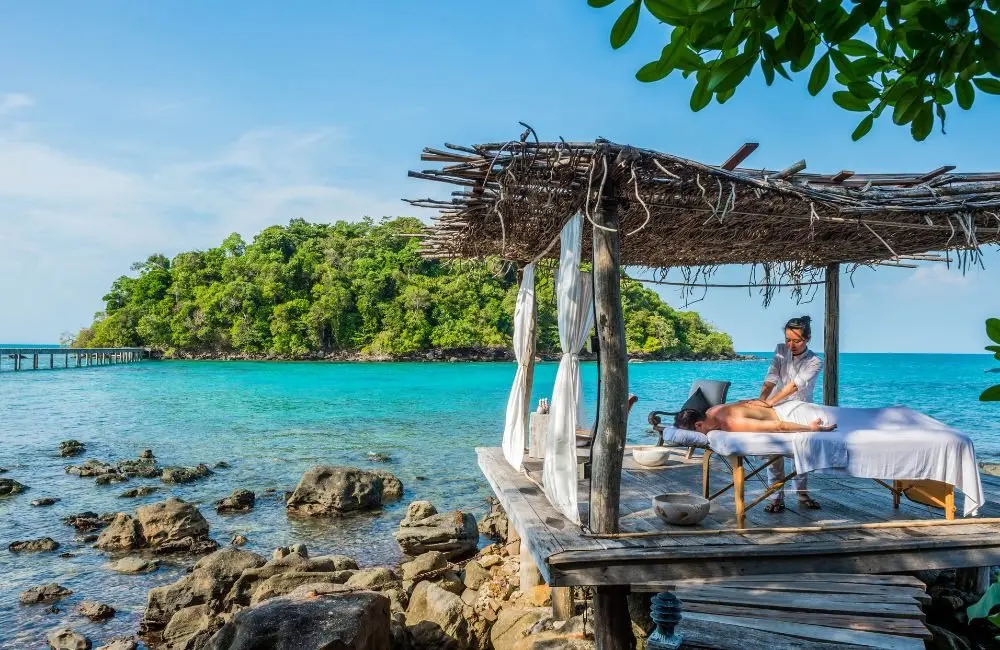
Cambodia's reputation has two problems, according to Song Saa's Manish Sharma. First, travellers assume the country equals Siem Reap and Angkor Wat — extraordinary, but only part of it. There are rice paddies, floating communities on the Tonle Sap, rivers, mountains and islands, plus a warmth of everyday hospitality he describes as genuine rather than transactional. Second, people worry about safety. His take: he's often felt safer walking around Cambodia than in Rome or Milan. Roads are slower than in more developed corners of Asia, but he frames that as a feature — you actually see the country.
The Maldives has the opposite image problem. It's marketed as a couples' playground of floating breakfasts, yet Gili Lankanfushi's Rodrigo Buanafina says it's a strong family destination — safe, child-friendly, and surprisingly active. Guests surf, freedive, swim with whale sharks and mantas, go big-game fishing, or join expert-led masterclasses. You can do nothing; you can also fill every day.
In Vietnam, Zannier Bãi San Hô's Alain Bachmann says remoteness gets misread as poor infrastructure, when it's the whole point — silence, space, nature and local culture untouched by mass tourism. The long journey is part of the experience.
And Byron Bay, the Australian beach town famous partly through its celebrity residents, has a rep for crowds and high prices. Elements of Byron's Michael Skinner counters that most visitors never leave the town centre. Head into the hinterland, rainforest and wetlands and you'll find the quieter version — wildlife, diverse ecosystems and genuine space.
The common thread: these places reward travellers who arrive with looser expectations and dig one layer deeper. If you've been putting off Santorini's peak months, skipping Cretan tavernas, or writing off the Maldives as a honeymoon-only zone, it may be time to rethink.