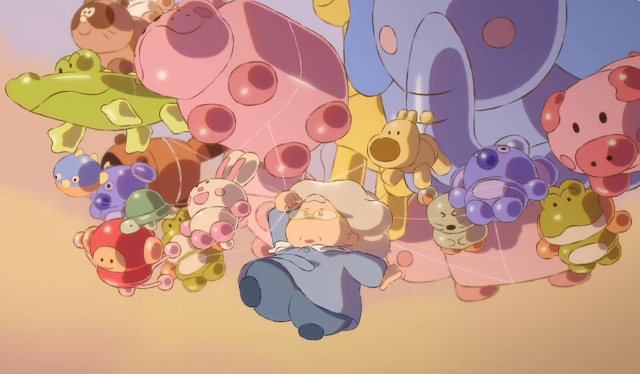
A mountain made entirely of matcha powder. An elderly woman living alone on its green slopes. An injured balloon dog with a dessert addiction. If that sounds like a fever dream, welcome to Matcha Mountain, a short animated film that has been quietly taking the internet by storm.
The film follows Granny, a refreshingly elderly protagonist — a rarity in animation — whose solitary life on the matcha-covered mountain changes when she rescues a balloon-made dog. The dog turns out to be mad for matcha desserts, and the two form a happy little household. Naturally, that's when things get stranger: danger looms, and hordes of additional balloon animals arrive on the scene. The creators' advice to viewers, more or less, is to abandon any attempt at logic and simply enjoy the surreal ride.
What makes the film worth knowing about is who made it. Matcha Mountain is a student production from Gobelins, the celebrated Paris animation school whose graduates consistently end up at major studios and whose shorts are perennial favourites on the festival circuit. Six students — Seiya Carpentier, Zijin Chen, Pauline Gisèle Gautschi, Jiamin Li, Yuanxin Ling and Alexane Pierrot-Zago — created the film, and it has been drawing real attention online since its release in October 2026.
The comparisons being made are charming rather than hyperbolic. Some viewers see it as a spiritual successor to The Magic Roundabout, the British stop-motion classic known for its gentle absurdism — a tone many have spent decades trying to find again. Others simply call it a lovely watch, which may be the most honest review of all. The visuals lean whimsical and dreamlike, all soft greens and floating squeaky creatures, with the kind of hand-crafted character work that short student films often do better than big-budget features.
There's even a faint travel trigger buried in the premise. Matcha itself — the finely ground bright green powder made from specially grown and processed green tea leaves — is firmly rooted in Japanese tea culture, and anyone charmed by the film may find themselves craving a proper matcha experience, whether that's a whisked bowl in Kyoto or a dessert café in Tokyo. The film won't plan your trip for you, but it might just plant the idea.
For travellers, this is a light one: not a destination guide, but a pleasant ten-minute detour for anyone who loves animation, offbeat storytelling or the growing global love affair with matcha. It's the sort of thing that plays well on a long-haul flight, and it costs nothing but a few minutes of your attention.