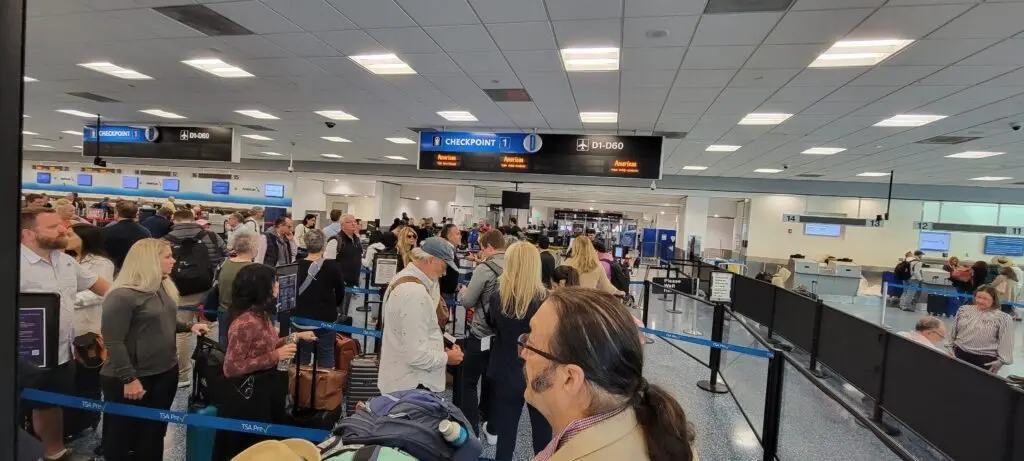
If you're flying out of a large US airport in the coming months, you may notice a new queue cutting ahead of you at security. The TSA is actively promoting a scheme that gives current service members — and at many airports, veterans — priority access through checkpoints, whether or not they're in uniform or travelling on duty.
The programme, branded "Serve with Honor, Travel with Ease", was actually launched on 2 July 2025, just before Independence Day. What's new is the publicity: a mid-September social media push from the TSA set off a wave of coverage across US news outlets. The original package included free PreCheck enrolment for Gold Star families, a $25 discount for military spouses, and enrolment events near bases. But the most eye-catching element is the queue-jumping itself.
It works two ways. At some airports there's a dedicated military screening lane; at others, eligible travellers simply show their military ID to the lane monitor and get waved to the front. That applies even where no specific lane exists — and it can put a service member ahead of other PreCheck-vetted passengers who arrived earlier. Military personnel already get PreCheck free of charge via their Defense Department ID number when booking, so this stacks an extra layer of priority on top.
Thirty-three airports are involved, including major hubs like Atlanta, Denver, LAX, Seattle, Charlotte, Phoenix Sky Harbor, Las Vegas, Miami and Honolulu, plus smaller ones such as Casper, Sioux Falls and Jackson. Note the fine print: Phoenix currently restricts the benefit to active-duty personnel only, despite the national messaging covering veterans.
So why should an ordinary holidaymaker care? Partly because the maths of security lines affects everyone. The argument against the scheme is that carving out dedicated lanes for a limited group can stretch TSA resources thinner — a fully staffed lane reserved for a small pool of eligible passengers may leave everyone else waiting longer. Frequent fliers, who already spend the most cumulative time in security lines, and families on tight connection windows bear that cost. Critics also point out that the practical justifications — military readiness, security vetting — don't obviously extend to someone off duty or on vacation, and that other public servants like nurses and firefighters receive no such treatment.
For eligible travellers, the takeaway is simple: if you're active duty or a veteran, check whether your departure airport is on the list and carry your credentials — it could save you real time at busy checkpoints. For everyone else, the practical advice is to arrive with even more buffer at these 33 airports, since lane arrangements may change how quickly the standard queues move. Either way, it's worth knowing before you fly.
View from the Wing