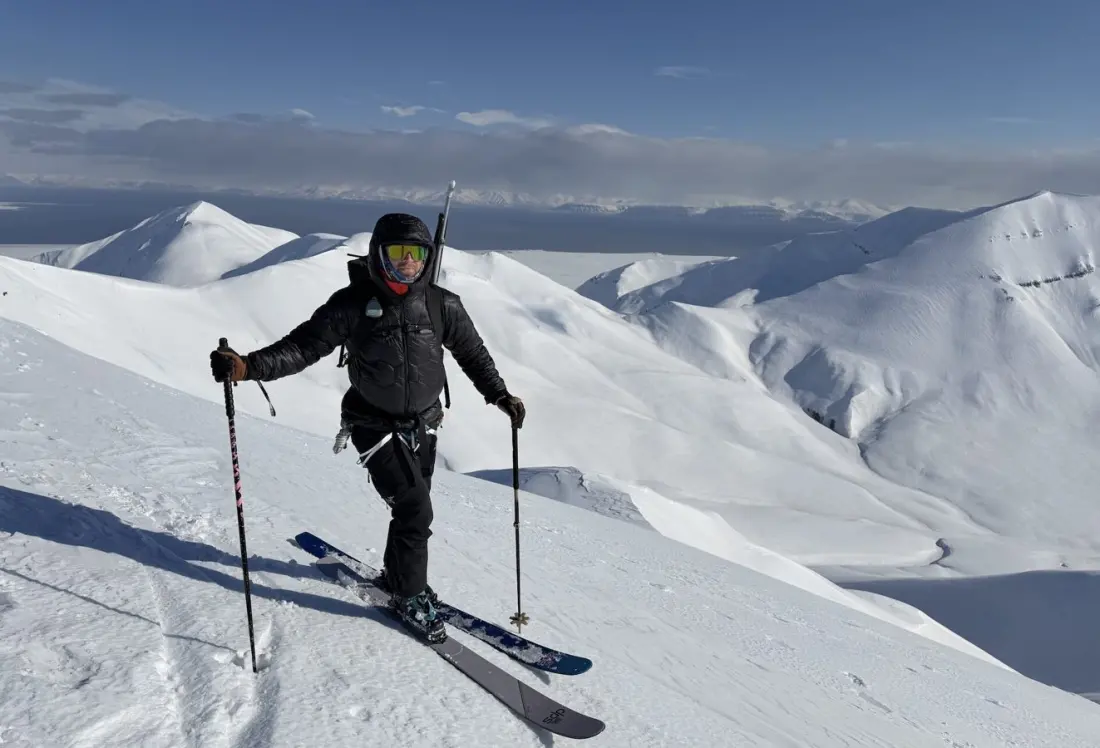
A jacket that weighs less than a can of soup and squashes down to water-bottle size sounds like a gimmick. But after a month of testing from ski guiding in the Arctic to day hikes in the Sierra Nevada, Mountain Equipment's Xenith Hooded Jacket ($374.95) earned a solid recommendation from IFMGA guide Ryan Huetter in Alpinist's review.
The secret is in the specs. The Xenith packs 100 grams of hydrophobic-treated goose down into a shell made from the brand's Helium 10D polyamide fabric with a durable water repellent finish. The treated down matters: unlike untreated down, it keeps insulating even when damp, which is exactly what you want in a layer meant for unpredictable conditions. The claimed weight checks out too — Huetter weighed his size large at 11.3 ounces on his own scale.
In practice, the jacket performed well at slightly sub-freezing temperatures around 25F (-4C) in Svalbard, and worked as a standalone piece on milder hikes in the Pacific Northwest and Sierra Nevada. It's not a storm shell — anything heavier than drizzle will soak through the minimalist fabric — but it sheds light precipitation and blocks some wind. Layer it under Gore-Tex when the Arctic breeze picks up and it holds its own. Thoughtful details help: fitted cuffs, an adjustable hem, and a zipper baffle that stops cold air sneaking through the main vulnerable point. The helmet-compatible hood also fits over a brimmed hat.
There are quirks worth knowing before you buy. UK-based Mountain Equipment uses left-hand zippers, which takes some getting used to — though the double zipper lets you access a belay loop on a climbing harness without hiking the jacket up. The hood lacks adjustment cords, so with just a beanie it tends to flop over your eyes. Sizing runs small: the reviewer normally wears a medium in US brands and needed a large to layer over base layers. And the hexagonal included stuff sack is fiddly, especially with cold fingers or gloves, so you might swap it for your own.
For travellers, the pitch is simple: this is the 'just-in-case' layer that earns its place in a carry-on or daypack because it takes up almost no room. It suits anyone whose trip mixes climates — a ski tour that turns mild, a shoulder-season hike that drops below freezing, a city break with a cold evening tacked on. In genuinely cold weather it becomes one part of a layering system rather than your only defence, but for its weight and packed size, the warmth-to-bulk ratio is hard to beat.
The bottom line from the review: a quality, versatile down jacket for milder weather on its own, or for stacking in colder temperatures — with a few design quirks you can live with once you know them.
Reviewed by Ryan Huetter for Alpinist.