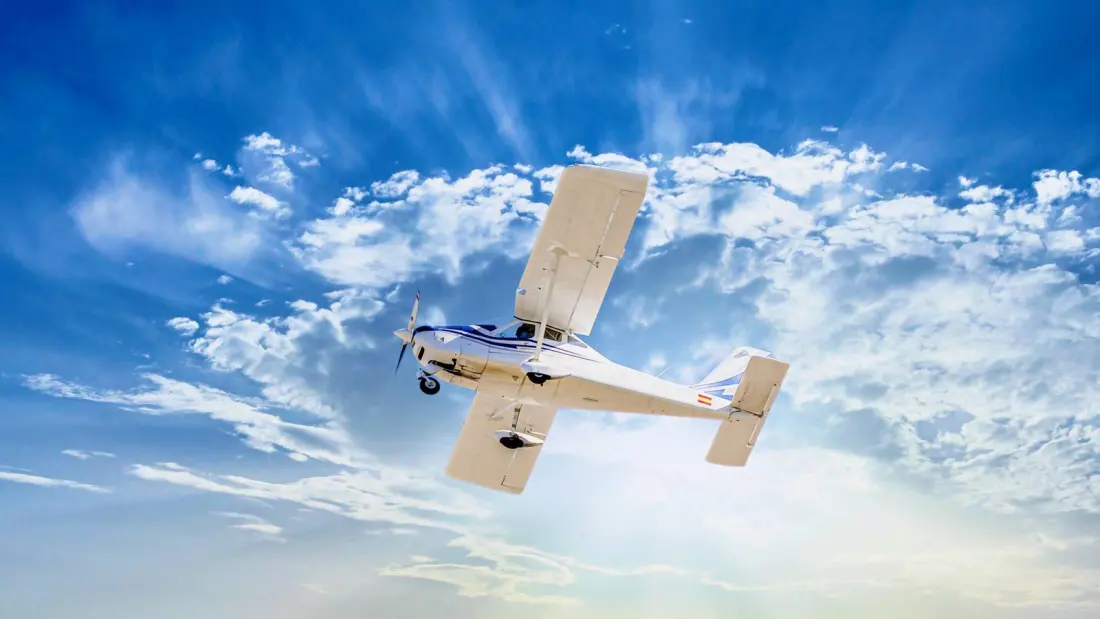
Flying an aircraft in the United States usually means years of training, medical certificates and federal paperwork. But there's one well-kept exception: FAA Part 103 ultralights. These tiny aircraft can be flown legally with no pilot licence, no registration, no airworthiness certificate and no medical — as long as the machine sticks to strict limits.
The numbers are the point. A powered ultralight must weigh under 254 lb (115.2 kg) empty, carry no more than five gallons of fuel, fly no faster than 55 knots in level flight and stall no slower than 24 knots. Only one person aboard, and only for sport or recreation. Unpowered vehicles like hang gliders get an even tighter cap: 155 lb empty. The FAA's logic is simple — instead of certifying the pilot, it constrains the machine, so the aircraft physically can't do what a conventional airplane does.
The freedom has real edges. Ultralights are banned from flying over cities, towns and crowds, must stay in daylight under visual flight rules, and can't enter controlled airspace (Class A, B, C, D or surface E) without prior ATC clearance. They're also governed outside the normal general aviation rulebooks — Part 103 sits apart from Parts 61 and 91. And don't confuse them with Light Sport Aircraft, the next tier up: LSAs can carry a passenger and fly faster, but they require a sport pilot certificate.
Cost is where ultralights shine. Private pilot training typically runs $9,000 to $130,000, while an ultralight needs no licence at all. Ownership is genuinely accessible too: the cheapest new ultralight for 2026 is the Mini-Max 1103R, a single-seat wood-and-fabric kit listed at $10,899.99 for the airframe, or roughly $22,500 ready to fly. Compare that to the price of even a used Cessna.
There are honest compromises. Ultralights are slow, short-ranged and weather-sensitive, with minimal protection from the elements and no room for a passenger or instructor. Wind deserves particular respect — manufacturers' minimums matter. The FAA's advisory guidance also suggests voluntarily staying above 2,000 ft above ground level where possible.
One thing the regulations don't do is replace judgement. Organisations like the Experimental Aircraft Association push structured training hard, and instructors commonly recommend dual instruction in two-seat trainers before going solo. Legally you can skip school; practically, knowing weather, aerodynamics and airspace rules is what keeps you alive. For anyone dreaming of flying on a budget, Part 103 is the lowest-cost doorway into the sky in America — freedom, yes, but a freedom that comes wrapped in rules.