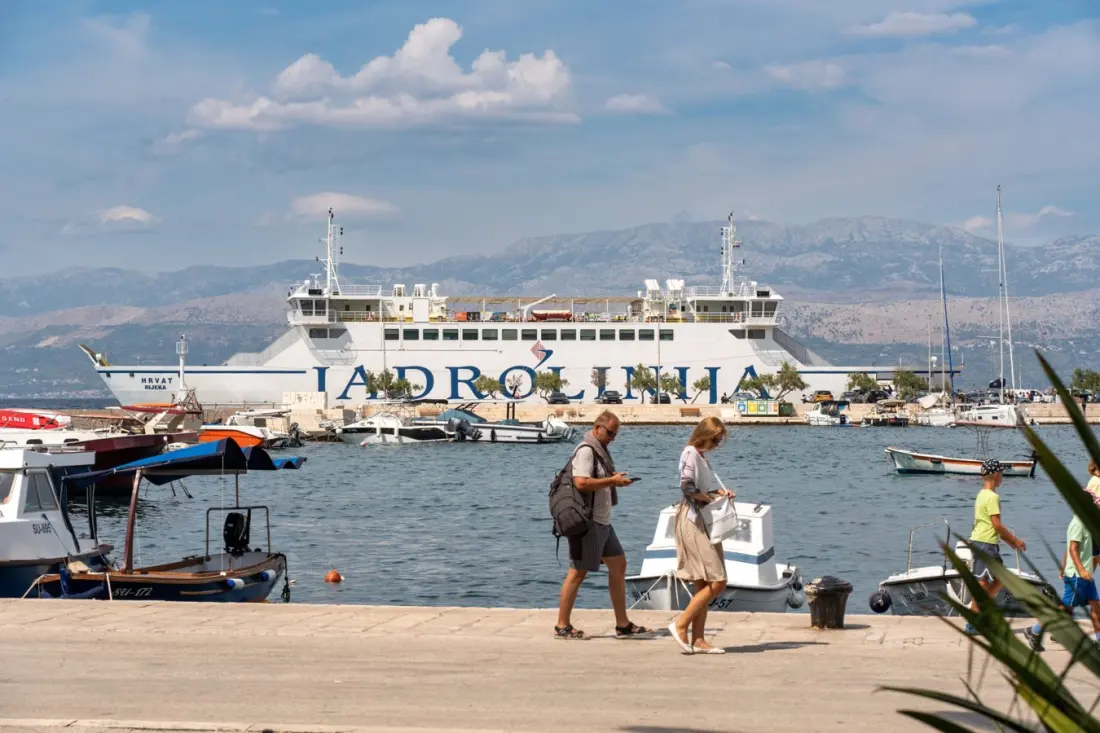
Croatia's state-owned ferry operator Jadrolinija is gearing up for one of the biggest investment programmes in its recent history: a recapitalisation worth up to €100 million that will fund up to ten brand-new vessels, several of them running on alternative or electric propulsion.
The news was confirmed this week by Oleg Butković, the Minister of Maritime Affairs, Transport and Infrastructure, who said the recapitalisation is ready and that contracts for building the first ships could be signed within days. Company CEO Robert Blažinović told Poslovni that tenders for ship construction are already in the implementation phase, with the first vessel expected to go under contract by early December. The programme is designed to keep the company financially secure through 2043.
The greenest of the new ships already have their routes mapped out: they'll serve the waters around Šibenik, Zadar and Dubrovnik — three of the Adriatic's most popular coastal regions and gateways to some of Croatia's most visited islands. The wider plan combines financing from multiple sources, including active cooperation with the World Bank and the International Finance Corporation, plus potential co-financing of green technology from EU funds.
Alongside the newbuilds, there's more infrastructure news on the mainland. Contracts are about to be signed for shore power systems at the Brajdica and Zagrebačka obala container terminals in Rijeka, allowing docked ships to plug into the grid instead of idling their engines — a change that cuts emissions and noise in port.
Why does this matter if you're simply planning a summer holiday? Jadrolinija carries the vast majority of foot passengers and vehicles between the Croatian coast and its islands, so the company's fortunes shape the holiday experience directly. Newer ships mean more reliable schedules, better onboard comfort and capacity matched to the lines that actually need it — a big deal in July and August when ferries to Hvar, Brač, Korčula and the Kvarner islands routinely run at capacity. For travellers who care about the footprint of getting around, the shift toward electric and alternative-fuel vessels on the Šibenik, Zadar and Dubrovnik routes is a genuine step forward.
There's a longer game here too. Blažinović stressed that Jadrolinija has to stay commercially competitive while maintaining the connectivity that islanders' daily lives, the local economy and tourism all depend on — with the green transition requiring serious capital, and progress tied to how quickly alternative fuels and port infrastructure catch up.
If you're travelling to the Dalmatian coast in the next couple of seasons, expect the current fleet to keep doing the heavy lifting for a while yet. But from 2027 onward, bookings on the Šibenik, Zadar and Dubrovnik island routes may gradually come with newer, quieter and cleaner vessels — and a more dependable timetable than the Adriatic ferry network has sometimes managed in peak season.