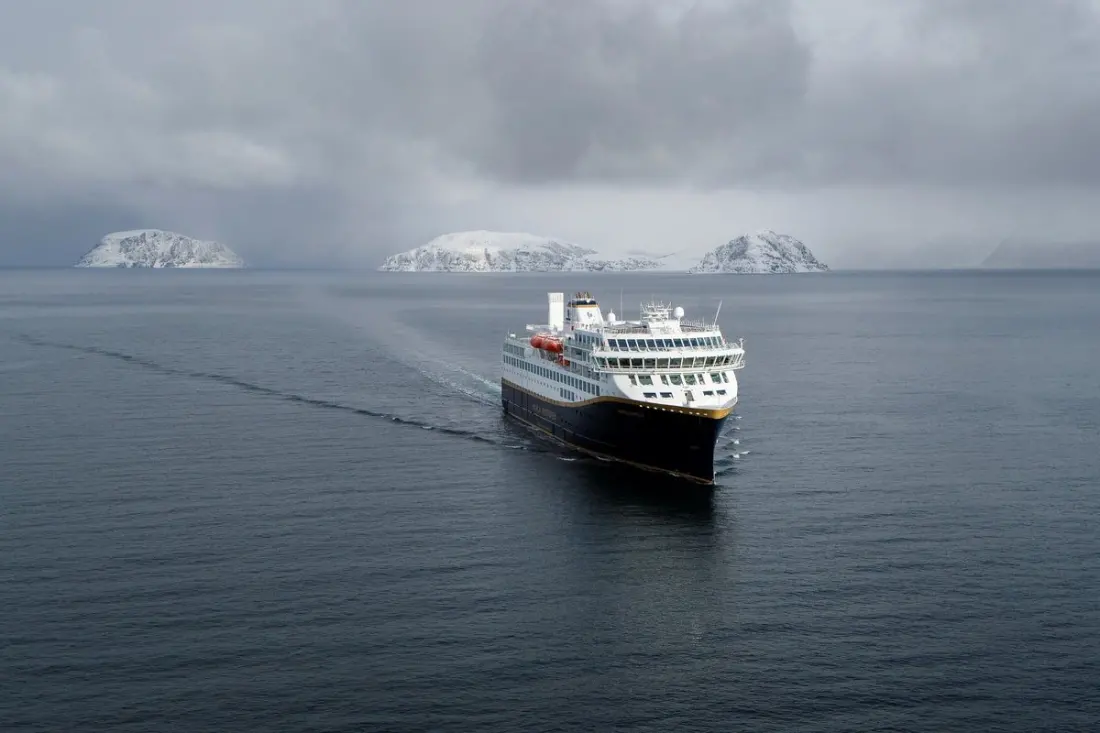
Havila Voyages, the Norwegian coastal cruise line, has just fitted one of its ships with new technology designed to cut underwater engine noise — the first time this kind of retrofit has been done on a cruise ship.
The ship in question is the Havila Capella, which spent a 28-day maintenance period this month at the Ulstein shipyard near Fosnavåg. Engineers installed new propeller blades and a noise-reducing gearbox, both developed by Kongsberg Maritime, to dampen vibration from the propulsion system. Less vibration means less noise travelling through the water, which is good news for whales, dolphins and fish that rely on sound to navigate, communicate and hunt.
The work is part of LowNoiser, a European research project run alongside Maritime CleanTech. The technology was tested earlier this year and will be monitored going forward with hydrophone measurements that track underwater noise levels. Havila expects the changes to significantly reduce the Capella's operating noise, and if the results hold up, the same retrofits could be applied across the rest of the fleet — potentially to the wider shipping industry too.
The noise reduction fits into a broader sustainability push by Havila. The line has pledged to run climate-neutral operations on the Norwegian coastal route from 2028 and to be emission-free by 2030. It plans to power the entire fleet with biogas by the end of 2028, and last year it completed a 12-day roundtrip from Bergen running solely on biogas. Its ships can already sail on battery power for up to four hours.
During the same shipyard stay, the Capella also gained a shore power connection, letting it plug in and switch off its engines at more ports, plus a new cargo door so cars can be loaded at every one of the 34 ports of call on the coastal route. Until now, vehicle loading was only possible in Bergen and Kirkenes.
For travellers, this matters on a couple of levels. If you're considering Norway's famous coastal voyage — the classic route between Bergen and Kirkenes — Havila's ships are becoming quieter, cleaner and more flexible, with rolling car-on/car-off loading opening up road-trip-plus-cruise combinations that weren't practical before. And if you care about the marine environment you're sailing through, this is one line actively trying to shrink its footprint, both above and below the waterline.
It's also worth watching as a signpost for cruising generally. Underwater noise pollution rarely gets the attention that emissions do, but it affects marine life along some of the world's most fragile coastlines. If Havila's hydrophone data shows a real difference, expect other lines sailing sensitive waters — Norway, Alaska, Antarctica — to face pressure to follow suit.