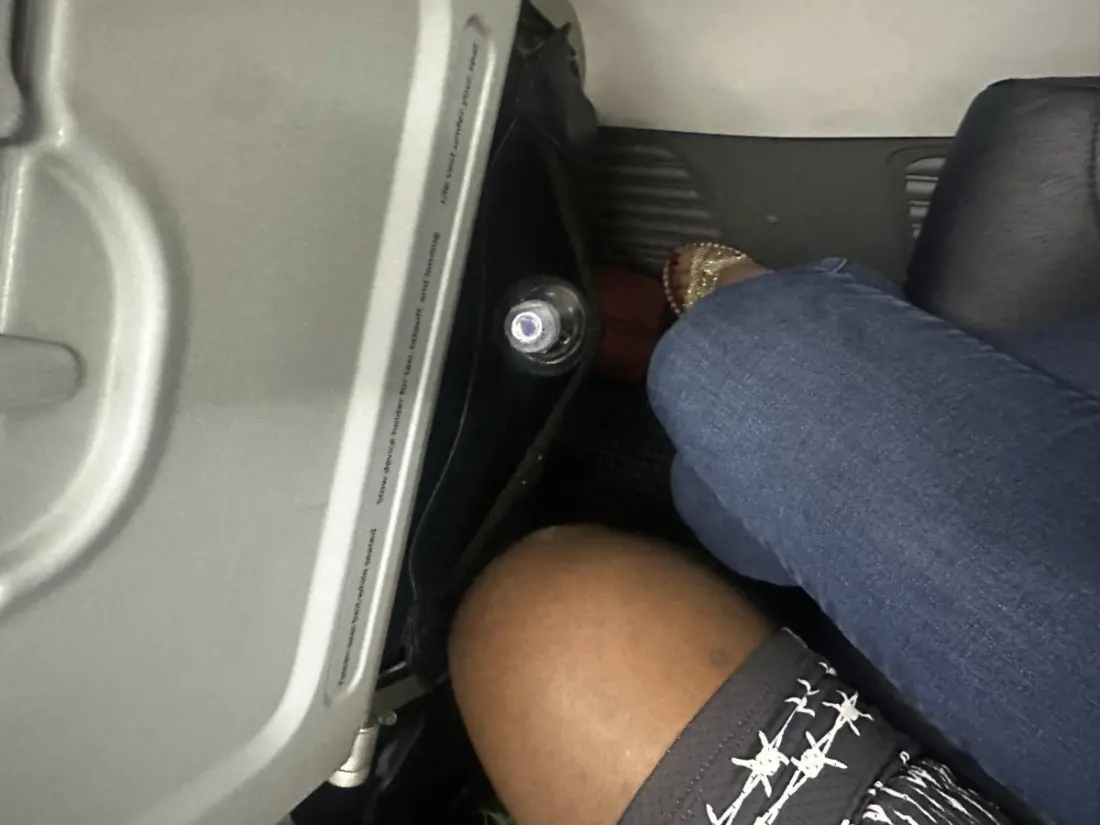
A passenger flying American Airlines says she paid extra to upgrade her seat, then spent the flight unable to use it. Breanna Morello complained that the man next to her was occupying part of her seat, that she was repeatedly touched as a result, and that when she raised the issue, cabin crew did not step in. She also described an unpleasant smell and said the passenger removed clothing mid-flight. Her account, shared publicly on social media and picked up by travel commentators, is one side of the story — American has not given a full response, and it's unclear how much of the contact was deliberate versus the simple physics of two people squeezed into adjoining seats.
The frustrating part for travellers is that American already has a policy for exactly this situation. Passengers who need more than one seat to fly comfortably and safely are required to book a second seat through reservations. If that wasn't arranged in advance, an airport agent is supposed to look for adjacent seating, and when a flight can't accommodate a passenger, American says it will sell seats on an alternative flight at the original fare.
On paper, that's a sensible approach. The problem, according to this complaint and a similar 2024 case in which a passenger said his seatmate took up more than half his seat on a full flight, is enforcement. Flight attendants may understandably dread these conversations — they're awkward for everyone and embarrassing for the passenger involved — but ignoring the situation leaves the person who paid for a seat with an unpalatable choice: speak up and risk looking unkind, or quietly surrender space they bought.
The practical lesson applies whether you're in a paid upgrade or the cheapest economy fare. If a seatmate is encroaching on your space, raise it before the aircraft door closes. That's when crew have real options — moving a passenger to an empty seat, reseating you, or escalating to ground staff. Once airborne on a full plane, there's often nothing anyone can do. When raising it, stick to the facts: you can't use the full seat you purchased, and you'd like help resolving it. No need to comment on anyone's body; describe the space problem and ask explicitly for assistance.
Why does this matter for anyone booking a flight? Because seat space is something you actually pay for, and airlines' obligations don't stop at allocating it. American has spent heavily on improving the onboard experience, but delivering the seat a passenger bought is the baseline. If you need more room — whatever the reason — the airline's own rules say you should arrange it when booking, and if you're the one whose seat is being occupied, you're entitled to ask crew to enforce that before departure.
The writer's bottom line is hard to argue with: sympathy for anyone who finds airline seats too small, but greater sympathy for the person beside them who paid for theirs and would like all of it.